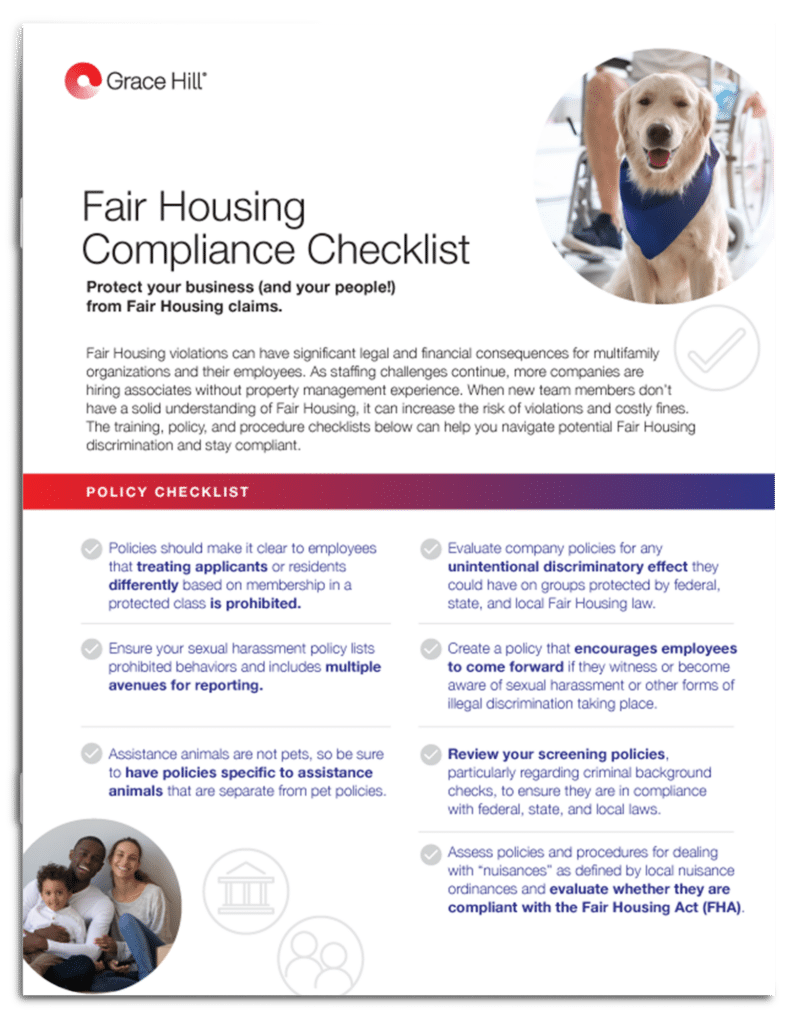
If you've chosen the apartment industry for your career, chances are a lot about Fair Housing laws. But why are discrimination lawsuit so common and what can you do to make sure you're never involved in one? You're probably very familiar with the seven protected classes defined by the Fair Housing Act. You know, race, religion, nationality, color, sex, familial status, and disability status. Chances are good that your state or city has even more protected classes than the federal government. Did in Washington, d.c., it's illegal to treat people differently because of their political affiliation? It's true. If you don't know the additional protected classes in your area, find out. In Fair Housing terms, discrimination means treating someone differently because of their membership in a protected class, and it's against the law. Most multifamily professionals don't intentionally discriminate, but Fair Housing lawsuits happen in many cases because people make mistakes. So let's run through grace hills, top 10 Fair Housing mistakes so you can make sure these missteps never happen at your community. Ready? let's count them down. Number 10. Forbidding kids from doing things like saying children may not ride bikes on the sidewalk. Your rules can't be different for kids or people with kids. They're part of a protected class familial status. Instead, say no bicycle riding on the sidewalk. Number nine, asking a prospective resident, how many children do you have? This may seem like a polite conversation starter, but you don't want your customer to think you're treating them differently just because of their family size. Number eight not realizing your state or city has protected classes in addition to the 7 in the Fair Housing Act. You've got to do your research on this one. The HUD website is a great place to start. Number seven not keeping good records about your leasing tours document everything, including the apartment you showed and the rental rates you offered. Number 6 denying a rental application because you had a bad feeling about a customer. That's totally not OK. Stick to your community's qualification guidelines. Number five, refusing to create a reserved parking spot for a resident with a disability because you have plenty of handicapped parking already. It's always wise to meet a resident's accommodation request if you can involve your supervisor before saying no. Number four telling a resident they can't have a service animal because you don't accept pets. Listen closely because this is important. A service animal is not a pet. You are required by law to allow them, whether it's a dog, a monkey, or even a miniature pony. Number three, not realizing that hoarding isn't just the stuff of reality TV shows, it's a disability. Proceed with caution if you discover a resident is hoarding. Talk with your boss at once. Number two letting your maintenance team complete service requests in any order. They like to avoid any appearance of preferential treatment. Establish a response system and stick to it. And the number one Fair Housing mistake is failing to train everyone who interacts with customers on Fair Housing requirements. And we mean everyone. Leasing, management, maintenance. If they talk to the public, they need to be trained. Don't let these Fair Housing mistakes happen to you or your co-workers. Learn more online. And remember, it's hip, to be fair.



 Customer Support