

 Customer Support


Ready to see how top multifamily professionals are achieving incredible results with Realync?
Watch our exclusive customer panel, where we sit down with real users who are leveraging Realync's virtual tours and video tools to transform their leasing and property management. This isn’t a sales pitch — it's an honest conversation about how our customers are driving remarkable business outcomes.
Hear directly from your peers about how they’re using Realync to:
- Increase conversions by up to 47%. Learn how dynamic video content is turning leads into residents faster.
- Decrease vacancy by 5-11 days. Discover the strategies that are getting units leased quicker than ever.
- Reduce maintenance requests by 35%. Find out how proactive video communication is saving time and resources for their teams.
We also dive into how they’re tackling common industry challenges, from navigating the slower leasing season to beating out the competition and finalizing budget season. Get a behind-the-scenes look at how leading property management teams are using Realync to elevate their portfolio and bottom line.
We are so excited to have you all here with us today for Real Talk, real Reelink customers sharing their success stories. If you're looking for a stuffy corporate sales pitch, you've come to the wrong place. Today, this is all about pulling back the curtain and getting an honest behind the scenes look at how leading property management teams are actually using Reelink to get incredible real world results. And to share how they're doing all of this, we've got some absolute rock stars joining us today. Nikki Crosby from Thompson Thrift and Katrina Green with Gray Residential. Thank you both so much for being here and for sharing your stories. We're gonna dive into everything from navigating budget season and the evolution of multifamily tech to those, AI wins and finally mastering your unit level media. I'll invite you to send any questions you may have during the presentation to our q and a box on your Zoom webinar panel, and we will have some time at the end to answer them toward, the end of our discussion today. So, Matt, let's dive in. Thank you, Kayla. Hello, everyone. Matt Wyrick, cofounder of Reelink. We've got Ellen Timmers along with us today who has been real with Reelink for what feels like the whole time, Ellen. We we go way back at this point, and, you also need no introduction. You've been on your fair share of real talk webinars and, becoming a a face of the brand, and how can't you with a blue blazer like that? So I'm prepared. You are. You are. And speaking of going way back, Katrina, Nikki, thank you both for joining us. I always love anytime we can get together and, discuss because you you never know what we're gonna get with this group. And so we're we're in for a good time today, and we're, from an introductory standpoint, Kayla kinda hit it. Thompson Thrift and Gray Rez. But, Nikki and Katrina, if you two don't mind giving a little broader introduction about yourselves, your current roles at the company, but then also take us down a little, journey of your history with Reelink and, what's kinda brought us to where we are today? I don't know. Nikki, if you wanna you wanna start and share a little bit about what you're doing at Thompson Thrift and, how we've journeyed together over the years. Yeah. Thank you, Matt, for inviting me to join today. I'm so excited to be here. I'm the vice president of marketing with Thompson Thrift. I've been with this organization for two years now, and we use Reolink across our entire portfolio. We develop and manage luxury apartment communities all across the United States, a lot of which are new construction lease ups. So Reelink has been a really valuable tool in that endeavor. I've been in the multifamily industry for twenty four years now. It makes me feel extremely old when I say that, but started my career on-site leasing apartments, spent the first five years of my career on-site, and, you know, really got a chance to get to know the industry from the ground up and then have had just an incredible opportunity in this industry to grow my career to where I am today. I love it. And when it comes to Reelink, believe you you had mentioned it was, back in your Buckingham days when we were very politely, pursuing you. Yeah. I was telling Matt. I may have been a little bit of a skeptic in the beginning. It took Reelink quite some time to court me before I was finally ready to test out a few properties. But once I did, you know, just realized the value of the tool and now, you know, very excited to have the opportunity to use this tool across our entire platform. Absolutely. We we wore you down, and here we are. No. We love the partnership, Nikki. Thank you for being here. And, Katrina, same same thing for you. Tell us a little bit about your current role and, how we got to where we are today. Sure. I find it interesting that he and I are both exactly at twenty four years. My twenty four year anniversary in the industry is coming up in a few weeks, actually. But I started, as many do, as a temporary leasing associate while someone was on maternity leave, and I got hooked. And, the only time I really left, I was on the vendor side. And so I did work for for rent dot com and homes dot com, you know, that whole group. And Nikki Crosby was one of my clients back then Yeah. At Buckingham. Just, you know, reminder to everyone out there how intertwined the industry is and, you know, we just we bump like this all the way through our careers, our twenty four year careers. And so today, I'm the senior vice president of property management at Gray Residential. I seem to thrive in small companies. And, so, really, I wear many, many hats, heavily wear many, many hats. And so, hopefully, today, you know, I can share, you know, maybe things that are a little bit less marketing related, and I'll leave that to the expert, Nikki Crosby, and, you know, maybe talk about how we use it operationally, a little bit. Yep. Absolutely. And that was it twenty seventeen, Katrina? Probably. I was just trying to figure that out as you were talking, yeah, with a lease up. So not dissimilar to, you know, Nikki's world there, but the first use case for us was in, in a lease up in a highly competitive market. So Yep. Absolutely. Yep. And, Ellen, I did not do you justice if you want to give an introduction as well. Sure. I'm Ellen Timmers. I'm the associate director of client success on the railings side here at Grace Hill. I've been with reeling since it's been almost five years. It'll be five years, like, this weekend, which is crazy. I've been in the industry about fifteen years. I also started in a very temporary leasing role. I worked every other weekend, as a leasing agent is how I got my start, before popping over, and on a marketing training role and then heading over here on the vendor side. So, thrilled to be here today and hear, what Katrina and Nikki have to say. Yep. Thank you, Alan. Alright. Kayla, I believe we are going to do a poll. You bet. And we participate. No cheating from our panelists. Alright. How familiar are you with Reelink to our audience? Are you, a, a current current client? Are you getting familiar with Reelink, or are you brand new to Reelink? I always love being able to see it move. I know. It's fun to watch it go. It's like a Price is Right game. Where's it gonna land? So hosts and panelists cannot vote. I was waiting for, like, guru, hyperuser, you know. All the words we It's like we have a split. Yeah. We have a lot of current clients. We have a lot new to Reelink and a few getting familiar. So welcome to you all. I love it. Thank you, Kayla. And then from a q and a standpoint, Kayla, any directions to give to the audience, submit questions throughout? Yes. You can use the q and a box, in your Zoom webinar panel, and we will, answer them towards the end. Perfect. Alrighty. Everyone ready? Yeah. Yeah. Born ready. Do it. Alright. Let's dive in. Let's have some fun, everyone. The the fun thing about RealTalks, we're we're gonna keep it real. And, we we have some good topics that are industry focused, not just Relink. We're not gonna hard focus on just Relink, but we have a couple ReLink champions here. And so I do wanna start with a ReLink question for us. And, you both have a lot of history on ReLink, and we've had different seasons of focusing on and working on different things together when it comes to the platform. So I'm curious, right here, right now, what are each of you actively tasking your teams to do with Reelink? What is priority number one when it comes to Reelink for your teams today? And, Katrina, maybe you wanna start. Yeah. Oddly enough, move out inspections are my number one, sort of not not number one, but I'm just, you know, outside of, I think, what is somewhat obvious on the marketing side. I want to have, you know, access to the condition of the apartment and move out from anywhere. You know, certainly, we're experimenting, if you will, with a litany of different solutions for just, you know, who can do final account statements. You know, how do we see the condition of the apartment? How are we assessing the turn time? You know, how many hours should it take to punch it all the way down to, you know, because we're in acquisitions. You You know, the finishes aren't even always the same in every apartment. And, yes, we find those things during due diligence, but, you know, that that's always being done with a different purpose and intent. And so I really want all my move out inspections to be done, in Relink, in video. And, you know, then if we have to sort of audit or understand some of those expenses down the road, that that is, you know, part of it too. So, oddly, move out inspections. I actually love that. And you're taking us to school on how we need to be doing move out inspections with Reelink and how the technology needs to meet you there, which Yeah. We always have a knack for taking us to school and improving the platform. So thank you. You've made us who we are. But, it's actually interesting that you're doing that because you do not have properties in California. There's actually legislation passing or passed in California mandating media, proving the state of a unit at MoveOn. Yeah. Already passed. Thank you, Emilia. Yeah. So super interesting. You're you're Yeah. I love it. You're in Indiana, should that legislation make its way here. But, yeah, such an incredible use case for Reelink. Nikki? Yeah. So capturing that unit level media is definitely the number one priority for how we're using Reolink today. And like I had mentioned, when we opened, a lot of our portfolio is new construction developments. You might think that, oh, you've got it so easy with new construction. You can go in and record all the units before someone moves in. And if you've never worked in new construction lease ups before, good for you for thinking that. But they come with their own unique set of challenges for those projects. But our teams do a really terrific job of getting in there and capturing as many videos as they can and having that unit level media available on our website so people can actually see what they're going to be getting is just a huge valuable tool for us. But it's certainly not the only way that we're using the platform. In fact, we have a key performance indicator for all of our leasing teams that they have to capture at least two nonunit videos per month to add to their library. And so that could be things like amenity tours. We have some really creative managers that go out and do videos of, of, like, each leasing team member's favorite amenity on the property, and they do a little highlight video for that. We do neighborhood spotlights. We do process explainers. So, you know, have, like, a a playlist of here's how to explain all the different things that you need to know as you're moving into your new apartment, you know, how to use the the access control, and how do you utilize the valet trash service and all of the things that we provide. So there's definitely a lot of additional ways that we're using it beyond the unit level media. I have about eighteen different follow-up questions I'd love to ask here. I'm gonna target it to just one. That's why these are my favorite conversations. But you mentioned unit level media, and that is a topic that is coming up more and more, for Reelink in particular. Ever since the park dot com announced unit level search and with the growth of site maps like Ingrain, having media that allows a prospective renter to see the exact unit in a building has become the way that consumers desire to search for and tour apartments online. Right? I'm curious how those conversations internally or with your site teams have gone when it comes to how you capture that media and how it helps engage your online audience? Well, I think, really, our teams have learned what a valuable tool it is for them. You know, if you just think about an average apartment community, you know, you you might have a two bedroom floor plan, but not every two bedroom is the same rental rate because, you know, it varies by floor level, what kind of view it has, whether or not it has, you know, a a puppy porch on the back or what type of, you know, finish grade might be inside of the apartment. And so being able to have videos of each unit so that if that particular apartment home is a different rate than the one right next door, they're able to clearly show to the customer why. And oftentimes, that's the reason why the customer chooses to lease that unit, sometimes sight unseen, because they see that it's got an amazing view or it has the upgraded finish package, and that really seals the deal for those prospective residents. Yeah. Absolutely. And, Katrina, you guys have prevailingly stabilized communities. Are you still tasking teams to try to get in, capture those units at the turn? Is unit level media less of a priority? Talk to me a little bit about okay. It is not less of a priority. It is definitely not less of a priority. And, you know, again, being in acquisitions, sometimes you've done value add. Sometimes you've got renovated units. We also use revenue management. So to Nikki's point, very specifically, if there's something that explains the difference visually versus waiting on the agent to or worse, someone just feeling like there's some inconsistency in the pricing and and it eroding some kind of trust. You know? Yes. We can do a really good job in our verbiage, but but also just humans aren't as likely to even read. Like, everything's TLDR. You know what I mean? Bullet points are TLDR now. So I you know? Like, we have to, supplement that and really just, like, put it out there, and to the extent possible, start highlighting, like, those, you know, features. So our unit level data is absolutely just as important. The capture, for us is being done at the time of the sparkle. I'm old. Spark we say sparkle bucket. Okay? So I got you. Yeah. Thank thank you. Thank you. Anytime I interview someone that says sparkle bucket, like, I'm immediately just like, oh, yes. But, you know, considering considering, like, making that part of the criteria for commission because, you know, no one wants to talk about it outwardly, but I'm happy to, you know, like, what is commission incentivizing when we've got so many sales tools, AI, obviously, tools and functions to do a great deal of, you know, warming them up, if not getting them all the way to hot, if not getting them all the way to least, Like, at Nikki's properties, I'm sure people are like, boom, boom, boom. You know? So it's like if our systems become point of sale systems, what what is the moment for commission, and what is that doing? So, you know, continuing to just keep those incentives alive because there's some companies reducing them, you know, let's keep the incentive alive, but but but let's talk about, you know, what is needed to get there. So that's just, you know, part of part of how we're looking at that. But, no, it is not less important for sure. I love I worked with a team in Vegas for a while who they gave a part of commission to whoever recorded the Reelink video for the unit to get a piece of the pie, and it actually incentivized their maintenance team to become the video experts on their Let's go. Team. That's their maintenance team. As soon as their turn was complete, those maintenance guys were the stabilizer ex experts. They were the Relink experts because they were like, I can make a couple extra bucks on this. I'm in. And they had a huge video library because of it. It was so fun to see. Love that. That's super interesting. In your head. Yeah. Yeah. Yeah. And I I I always have an example running through my mind when you're talking about the motivators. Katrina, there's another client, based here in Indiana where their one of their teams had reached out wanting a concession to move some units. And the corporate stakeholder who received the outreach, the first thing she did was look and see if they had Reelink videos captured for those units. And when she found that they did not, she responded and said, k. First, go capture videos of those units. I will give you thirty days to use those videos and try to get those units leased. If at that point you have not leased them, I will give you your rent concession. Yeah. And I need to circle up to Tye Bo on that story to see if it worked and if they lease the units because that would make the story far more impactful. But Yeah. I just love that that's the mindset today of, like, to your point Yeah. What behavior are we motivating, and how can we use this to help drive that behavior? Yeah. Yep. One thing I wanna go back to real quick that you mentioned, Nikki, is that your two bedrooms doesn't mean they're they all cost the same, doesn't mean that there are not nuanced differences between them. Another hot topic in the industry today is fee transparency, and even Indiana has a lot transpiring on the fee transparency side of things. Nationally, we do. Curious, not even just Reelink related, just broadly, what conversations are you your company's having when it comes to fee transparency, and what sort of things are you both looking at putting in place to to try to solve for that for those two bedrooms to make sure people understand exactly what they're getting into with this one versus this one and so on? Right. I I feel like we've been talking about it for years, not necessarily because it was a regulation thing, but, like, that's what we were hearing from our customers in our, you know, after tour surveys and our reviews. You know, if we weren't completely upfront from the beginning with the fees or, you know, the the different amenities that might vary a price for an apartment, that was upsetting our customers. So we were listening loud and clear to that. And so I think we have added a lot of additional layers of, you know, tools and content onto our websites. We've been a lot more intentional about making sure we've got, you know, all of the the feeds and the APIs set up for all the different advertising that we're using so that not only just our rental rate, but any additional fee structure that might be on top of that or application fees, administrative fees, those are all pushing out and very clear on our websites and our advertising for our customers. But they It's a little it's always, like, it's a hot it's a hot thing for me, and it has been for a long time. And it's less about, honestly, it's less about, like, transparency and the fees, and it's about the fees. You know? I, I'm not in control of everything even even with a title like mine. Right? Like, we're an acquisition, so whatever it comes to us is somewhat how it must remain, at least during the promise of those leases. But, you you know, years and years ago when I actually became, you you know, in a position of influence, I suppose, I was just like, can we can we slow down and stop looking at other income like the answer to our NOI? Right? Like, get in the rent. Let's get in the rent. Let's be the best at what we do. Let's offer a great product. You know, and easier said than done. You know? And then there was this moment where it was like, well, we're gonna add trash now. And, obviously, you know, it's it's an income driver. And then it was like, let's add pest control, and then let's add package acceptance, you know, at the sign up. And then and and pets were it was always a thing. Right? Like, none of that is new. But, like, I do think that the fact that states are looking at feed transparency specifically, it's really just a symptom. It's, you know, it's not really like the illness. The illness is affordability, attainability. And so, of course, as usual, legislation legislature looks at landlords and says, you're the problem. You need to you need to disclose these fees, you know, and and I think where it's going to lend itself is into more regulatory control about what landlords who profit from. So circle back to get in the rent, be great at what you do, offer a great product, offer it at a fair price, treat people well, you know. Not going to be easy to roll back, but, you know, there are states where you can't profit from some of those things that many brokers, not calling anybody out, just saying, because we're in acquisitions, you know, a lot of times you're delivered this, you know, package and it's like, well, this is what this property is doing today, but this is what it could do. And it usually comes in other income lines. And so, you know, I'm definitely here for it. I think, you know, as a as a operator, if you were early about this and you were very vocal about it in the marketing perspective, you ended up, you know, losing leads because you looked more expensive. You looked like you weren't really the value that you were. And the real reality for the consumer was that we might have been exactly or possibly even better once it all was added up. And then also just in the spirit of market surveys and understanding your competitors, if everybody has to just put it out there, there's gonna be a clearer view, for my agents of, like, what it costs to get keys in hand and what it really costs outside of the rent. But that is a really short snippet of how I would like to talk about this, but that, yeah, but very passionate in, some of those discussions. Let the passion fly. It's all good, Katrina. It's all good. I do. Always. I know. I know. That's why I love it. I and what I think is interesting is, I mean, the two primary topics we've hit so far are unilevel media and fee transparency. And at the end of the day, both of those things, if boiled down, it just leads to transparency. The the renters just want they wanna see what they're going to rent. They want to see what they're going to pay for what they're going to live in. Like, they just they want the information, which I think is super intriguing because where everything is just converging towards transparency to the renter. And I love that. I mean, really cute. My the our core belief from day one before we had a product or anything was that real is what life is all about. And, were we ahead of our time? Maybe. But I I love the way things are going because I I firmly believe that the more you equip the consumer with the information, the the more empowered they're going to be to make decisions. So I think we're seeing that with fewer showings and then then the renter being a lot more targeted in their search today. But, yeah, I love it. I'm excited about it, but I know there's a lot more that could be discussed there. Absolutely. Well, we know fee transparency is a big hot button. We know unit level media is still reigning supreme on what everyone's working on. Beyond that, it's budget season. We are neck deep in budget season. What is the number one thing your teams are talking about, when it comes to twenty twenty six six planning? Not really specific, but what is your number one thing you're hearing from your teams that you guys are seeing for twenty twenty six? Yeah. I don't know that this is a new thing, but, you know, it it all boils down to we have an advertising and marketing budget, and we have this bottom line, you know, cost per unit that we have to get to. And so what that means is it's not really that you're just pitting technology against technology or advertiser against advertiser. It's, you know, all of those things, your signs, your swag, your hospitality, your, you know, resident engagement, all of that is fighting for that same, you know, slice of the pie. And so you really just have to make sure that whatever you are investing in, that it's something that, really, you can get multiuse out of, so that you're getting that maximum return on your investment. You know, we we can't afford to have any fluff in our budgets. Everything has to prove that it's generating some sort of return. So, we have to make sure that we're being really smart about what we're choosing. Have you seen any of those dials turned down on certain things and up on others lately, Nikki? I think just with the evolution, you know, of how consumers are searching and, you know, what we need to do to stay in front of them. I mean, absolutely every year, you know, our budgets lean a little bit heavier on tech. We're hardly printing anything these days. You know? So, you know, definitely, those are things that are are shifting. But at the bottom, you know, or at the end of the day, you know, it all comes back to, you know, can we can we tie it back to a lease? Is there a clear return on investment? You know, what is actually producing, whether it's, you know, increasing our resident retention scores or, you know, helping us convert leases at a higher rate. We have to be able to prove it back to a metric in some way, shape, or form. Yeah. What about you, Katrina? Well, that was a really I love that answer. Also that and, you know, always at this point, like, I'm retraining or just encouraging everyone to use a a little bit different language than, like, humans and hours as a unit of measurement of work because it isn't always in exact alignment and should be looked at differently. So, you know, I'm starting to say I'm starting to talk about the relationship between our commitments and the cost of execution because, really, that's what we do. We've made some kind of commitment. The the lease, that's a promise. Right? There's things in there that are promissory. You know, so it's really just more about looking at everything that we have to do and are choosing to do and what resources do we have to apply to get there, Because it's not, I mean, everyone's talking about workforce. It's not a secret. Everyone's talking about complaining about trying to figure out, you know, you know, what our futures look like. And it's like there's a few different buckets. You know? It's it's human as in hours. It's humans and AI. It's, you know, remote assistance, virtual assistance, AI, and humans. You know? So but but I it's like I'm even, like, thinking about, like, our budgets, and I actually had our analyst build out a model for me that allows us to kind of, you know, just try some different things. So so it's really just about the relationship between the commitment and the cost of execution, and and less about payroll hours. And I and you know how much I love humans. Like, I love human I'm a golden retriever, on the inside. And and, also, I run a business that needs to be, you know, profitable and smart and get it done, and there's a lot of ways to get it done. So that's my broad budget conversation. Yeah. Very politically sad for both of you. I'm not naming any specific platforms or investments. Well well done. Thanks. Also, you very much are a human person, Katrina. The fact is I still love this about you. You will answer cold calls if for no other reason to help the person learn and fine tune their pitch. Like Yes. Who that's right. I do. I'm nervous to run into some of them at MMC. Not not nervous, and I'm not I mean, it's done in kindness. It's done in absolute kindness. And having been on the sales side, like, I I like to think that someone would have checked me also, and I had a fantastic mentor. So that was good. But, yeah, I do take cold calls, and I let them do their thing. And then I say, are you are you open to feedback? Can I can I coach you about how this went? It's, it's out of deep care. It's a it's a deep care trust. I love it. Have you ever been hung up on when you, turn it back on them? No. What? No. Well, I mean, I I think my favorite one was when, you know, basically, I ended up career counseling this person because they didn't love what they were doing. They you know? And so, you know, I just mommed this person on the other side of the phone who had just graduated college and answered an ad for, like, a brand ambassador or something like that. Right? Like, it had a title that wasn't yeah. I don't think he knew. I don't think he knew what he signed up for. And then I was like, look, bub. We're gonna get there. Like, let me let me help you. So I think that was my favorite one. But no. No one's ever hung up. I mean, most people are are shocked. And usually, the phrase I hear the most is, I really appreciate your candor. That's what they say. Yep. Yep. Yeah. I love it. I I love that you do that. One thing you mentioned, Katrina, is the the human element and, and AI. And there's any number of directions we could take the whole AI discussion because it's everything from AI is going to replace and take over everything to AI doesn't work, you name it. But I am curious from, like, a rubber hitting the road standpoint, how are your teams looking at AI for twenty twenty six or actively today deploying AI? Because, personally, what I feel like I'm seeing is where AI rubber hits the road is focused, segmented, specific tax tasks and functions. And just as a an example for Reelink, we use AI to extract photos out of your videos. It it's a no brainer. It's simple. A video is just photos in motion. No one is sending photographers to take photos of every single unit in their portfolio. A lot of our clients are pursuing unit level videos, so why not? Let's let's capture those unit level photos as well. And, that's like a micro application of AI. So curious how you two are are approaching AI and what your companies are doing with it today. Whomever wants to go first. I feel like that's the core. Wants to go first. Well, we're absolutely leaning into AI, and really, you know, not in the effort to replace humans, but just to make them stronger. I heard a quote several years ago at a conference, and it was like, automate the mundane so that you can really personalize the experience. And so that's really what we try to do in all the ways that we use AI in our tech stack. So we definitely use it for things like, you know, fielding those first inquiry leads that come in and answering some of the basic questions and helping to get appointments scheduled and things like that so that when the customer, you know, makes it out to the property, we've got a human there that's ready to give them a really great experience if if they prefer that in person tour experience. And then, you know, we're also using it in a lot of additional creative ways as well. We've got some really really brilliant analysts that work for us that are finding all different ways to, you know, utilize models in chat GPT to help us. We've got a model right now that we work on where it kinda puts in, a lot of our social media analytics, our comp data, you know, availability data, and, you know, we can kinda go in and ask it, you know, based on, you know, the goals that we need to accomplish this week. Like, help us draft some social media posts that will help garner the right attention for our property. And so, you know, some things like that that we're doing that are just making it a lot easier for our teams to execute the tasks that they know they need to do in order to drive results. But how can we do it a little faster, a little smarter with some data behind it? And AI offers some great tools for us to be able to do so. Yeah. I mean, in our organization, we're just hyper encouraging them to try to get themselves out of their own pickles. You know, for for lack of a better way of saying it. We keep joking that I'm gonna build a cat GPT because my nickname is cat. But not not because people need to hear my answers all the time, but just, you know, because, like, in a general sense, it's like, you know, we want them to be able to ask questions, but we maybe need our own LLM, you know, so that way it's very, you know, it's very comfortable space, whether it's our policies, our handbook, you know, whatever. So we're using we're using it a little bit with, Grace Hill. We have Gracie. So we make sure that we're uploading all of our, policies there. So that way our, you know, team members, you know, in the moment because they're less likely to ask vocally or especially not in Teams because that's admittance that they don't know. And, although I love a question because it actually tells me you want to know. That is that is great. I would like you to want to do it right. That'd be good. But there's, like, a safety in being able to ask Gracie some of those questions, and then it just pulls up the you know, finds the policy, finds any resource documents or any videos that are there. So I think that that's a start. I am I mean, my chat GPT plus, like, we're enterprise users. Like, it's up it's up all day. It's not up right now, but it's up all day, because, yeah, we we we wanted to make us stronger. We wanted to make us faster, smarter. I mean, I asked it to do an analysis a utility analysis for me in Evansville, Indiana. You know, everyone's complaining about CenterPoint and some of the cost for them. The energy cost for them and their apartment is gonna impact their ability to pay the rent. So I need to be a good partner, but I don't have time to do a full research study on, you know, what utilities were. So I just said, you know, like, hey. Give me an idea of what the voted increases were when they were, when they were implemented. Also, like, do an analysis of usage, same usage from three years ago just to usage today and look at what that output is like because we need to understand, especially especially if you're, like, two year year two, year three of your underwriting. Like, what is that escalation for the tenant, for us as well? But what's that escalation for the tenant looking like? Like like, just sort of, like, no stone unturned. And, you know, those things, you may not have had the bandwidth or even the human to do that kind of research study. So I'm I'm using it like that, more often than I care to admit. Or maybe no. No. I'm proud of it. Fully proud. I would subscribe to Kat GV. I mean, I too. That's hilarious. The way I get it I think everyone does need your answers. No. They don't. They don't. Well, I mean, they could yeah. But it would be, like, there'd be a disclaimer immediately, like, not legal advice. Like, you know, check with your leader, check with your manager, but here's what here's, you know, what Katrina What would Kat do? Yeah. Yeah. Before you sign up, you must sign the waiver of the you you are Yeah. Able to receive SaaSy feedback. Yep. Yes. I love it. That's great. Well, staying on the AI topic as well, I know, Katrina, you had fun with one of Reelink's recent AI launches, if you want to add that. Well, one of my colleagues had a lot of fun with it. But, yeah, when you announced the language translation and not just in text. Like, obviously, we've had all kinds of products that would translate things in text, but the fact that it would take any, you know, a video that had, you know, an audible voice, and translate that into multiple languages. So the announcement came out. I saw it. I forwarded it to our portfolio leasing manager and was just like, hey. Can you investigate this? You know? Like, test it. And she chose a video of me, of course, that I had done at, you know, like, a new acquisition. We were announcing some, projects that we were gonna do at the community. And so it's just me, like, standing under the sign, which we changed the logo eventually, so don't judge it. But either way, so it's just me telling them. And she pulled that out and then sent it to me in Mandarin. And I was like, look at me go. Look at me go. So I am I am I speak multiple languages now, and I just love it. I mean, I'm an advocate for fair housing. I want all the languages. I mean, that was that's the only feedback I have about it is, like, give me more languages. Because when we adopted Reelink, part of the reason we did it was so that way the manager at the time at that community, because she was fluent in German and there was a German company close by. We took these videos of her doing the presentation in German, which I just always found so fascinating and so fun, because I speak no other language. And so so we saw like, it worked. You know what I mean? Imagine that kind of outreach. And that was in two thousand seventeen or eighteen. We don't none of us can tell or remember, but either way, it's somewhere in that range. So we were sending video tours, of her speaking German. But but now everybody can. You know? Like, you don't have to have that skill set inside. So, yeah, a little bit obsessed with it, and Britney thought it was hilarious that that was the test video. I I had a similar experience because Moses, our head of tech, he when he he just, like, built that overnight. He has a knack for doing that. And, of course, the video he chose to share with us was a video of me, and it was also me speaking Mandarin. And it's Good. Creepy but cool because the AI translates the voice of the person speaking, and so it's not some robotic AI voice. It is Katrina Green speaking Mandarin. And Yeah. It's like it's I call it my Capital One voice. Like, it's like the nicest version of my voice. But, no, that is the that is the best part, I think, is that, like and nobody's trying to, you know, defraud anyone and make them think that, oh, I'm gonna show up and this person's going to speak Mandarin to me. I it it's not that good, and I think that's a good thing. But it does exactly what it's supposed to do, and I just love it. That's an interesting angle that I actually had not thought about before of them actually expecting the person to be able to speak that language when they show up. Maybe we should have some sort of disclaimer on there that this is not the native language spoken by the host or something like that. Yep. Interesting. Well, the good news is, like, Apple just announced their newest AirPods are gonna have that translation. So there's other tech out there that will help Yeah. Come in person. Yeah. We could. It'll it'll be okay. Yeah. I will say, speaking of other tech, twenty twenty really changed our industry and opened a ton of doors for tech to come in. And then with the popularity of AI and how much AI has absolutely exploded over the last year, we've seen a lot of changes in multifamily tech, specifically. So I'm curious to see how your tech stacks have evolved, over the last couple years and if you guys have done anything to try to settle that down, settle in, if there's anything that you've really latched on to that you've seen is, like, this is the must have, can't live without, new thing, or how that's worked for your companies. Kat, you wanna take that one? That's so funny. I'm just like, Nikki will answer. Nikki will answer. I I mean, I think that if I really look back at it, prior to twenty twenty, I didn't have that much less tech than I had today because I think I loved things so much at that point. Like, I I don't I'm not saying an early adopter that's ostentatious, but I'm saying, like, you know, I've I I'm to the place of either editing or consolidating, but I haven't really added a lot of things, like, that are leasing specific. You know? There there have been, you know, some version of, like, a knock bot or a bot or an AI in that realm or perk. Like, I you know, make insert any. And I'm not saying that they are all equal. Please don't. No one come at me. I'm saying that there are different iterations that we had prior to twenty twenty. We had Reelink prior to twenty twenty. We had texting platforms prior to twenty twenty. The usage, I'm sure, was, like, you know, right after that for a lot of for a lot of reasons. And all those things that I had have had staying power to the extent that when I came to a new company, you know, I was raising my hand immediately and being like, we need this, we need this, we need this. If anything, for me, as it relates to tech, I I need to get my hardware to catch up with my software because in acquisitions, you don't have control over access control. Do you like what I did there? That was not intended, but boy, was it good. We you know, like, units when you're talking about unit level, you know, video, unit level access, like tour access and control access. You know, the fact that, like, there's a there's a realm of capability that we all know exists, but we can't all do it unless we've got a way to get somebody to the door if they truly wanna see it other than, you know, just to affirm what the video shows or or whatever. So it's like, I actually need my hardware to catch up with my software because I have the capability and functionality and have had for a great deal of time, but you can only really go just, like, all in, like, cannonball if you've if you've got some of those other pieces in place. And we and we just don't, but we make room for them post acquisition. So we're, you know, always always staying hyper focused on the operational benefit of some of that, not just, oh, let's put a fancy lock on the door. Well, what does the fancy lock do for me? You know, it's a little bit self centric, as it relates to operations. So I I just need my hardware to catch up. Yeah. Yeah. And I would add to what Katrina's saying, you know, when it comes to the the explosion of technology that happened right around twenty twenty, I don't think that that slowed down. But I think as operators, we've maybe figured out how to tackle that with a little bit more smart approach than we did before. I know I was always guilty, you know, for a while of, you know, wanting to be that early adopter and trying things out. And all it takes is a couple of tech implementations that didn't go very well to teach you your lesson, you know, that I think now we just have better strategies for making sure that we're, you know, having a really good evaluation process of, you know, what is the business need that we're trying to solve for, and how is this technology going to help us do that, having better tools to vet, how that integrates into the tech stack that we already have in place today, How easy is this going to be for our on-site and field teams to actually use this technology, and what is that user experience going to be? And so I think we've just gotten a little bit more disciplined about maybe having more of a process to how we evaluate the technology, implement it, and then, you know, keep it going once we we do that. And every organization out there has a little bit of a different identity on whether they wanna be early adopters and try all the new things, or they wanna take that little more conservative approach and maybe wait until things are a little bit more time tested before they roll it out for their platform. I think the thing is is that if you're going to be those early adopters, you have to make sure that you're staffed with the resources to do that. You know, you have to have people in place who, can, you know, evaluate and vet these things. There's benefits to both sides, whether you wanna be the early adopter or take the more conservative approach, but I think you just need to really understand what your organization wants to do and make sure you're following what your organization is actually, you know, positioned to do as far as being an early adopter or waiting until it's a little bit more time tested. All marching to the same beat. That's super important when it comes to tech. Yeah. Yeah. We see we have so many portfolios where they they may be one region that uses Reolink and no one else does. And it's like, we could be far more strategic about this if we Just had this this and this conversation. But, yeah, I I think you're spot on. Both of you. Yeah. Hardware too, Katrina. Yep. Well, shockingly, we already passed time to call for q and a. Not surprisingly. I we could endlessly keep going. So while we call for questions, because I believe, Kayla, there are not any in the q and a bucket as of now. Not currently. So I will plant one. And if anyone has questions, please type them into the q and a. We'll pull them up and, pass them along accordingly because I'm sure you wanna hear from Katrina and Nikki, not Ellen and myself. But in the meantime, curious, Katrina and Nikki, what is one thing you or your teams wish Reelink did today that it currently doesn't? Oh, I I wish that when I did the move out inspection that it could, you know, use, like, an AI function to compare the clean perfect unit, a ready unit that I've loaded in there and identify the differences. Like, the game where it's like, you know, circle the differences. Like, I wanted to circle the differences. I wanted to create, you know, some level of list that pretty much, you know, to the extent possible generates the sort of scale of punch that it's going to require so that way we can assign resources, to it. And and it's not that it's not something that a human can do. It's something I believe AI can do. And so that's where I I would like I would like that. I would like that. And I would I would say for me, you know, no matter how good an integration is, I'm always challenging it to be one step further just to create a little bit better user experience for our teams on-site. So, you know, if there was a way that we could create those unique links for our follow ups, like, right in our CMS, you know, just to make it easier for our team members to be able to drop those links into their follow ups and things like that. Anytime you have to kinda bounce back and forth between one platform to the next to grab information, you know, it's just one more thing they gotta log in to. So I'm always looking for that next level of integration to make things as smooth as possible. Yeah. Do hers first. Do Nikki's first. Mine can get Kevin's on it. We'll we'll pass that snippet over to Kevin. Hers. We did have another question come in. What advice would you give a new Reolink admin just starting out and, where should we start in videos? Oh my gosh. There's so many places to start. That's a big yeah. That's a big question. Nikki, do you wanna go first? You know, I would just say, like, get creative. You know, really think about what's going on at your properties and in your portfolio. Like, where do you have the biggest need? And then lean into how you can use video to solve that need. Like, for us specifically at Thompson Thrift, I've mentioned a couple times we do a lot of new construction lease ups. One of the biggest pain points that we have is we're trying to prelease these apartments before we get our certificate of occupancy. We can't always bring people, you know, onto the site yet to see the apartment, so we're leaning into, you know, capturing those videos and sending them out ahead of time so that people can get construction updates. Some of our lease up community managers have gotten super creative with playlists where they will kind of show the construction progress, like, week over week of how how the building is evolving through the construction process. And that just generates excitement for those prospects and, you know, gets them excited about leasing with us. Also, if we can't bring people into the building yet, but we're trying to just build rapport, have reasons to communicate with them, we might make playlist for the neighborhood. You know? So not only get to know these apartments, but get to know what's in the neighborhood, the best restaurants, some of our retail partners. So it's really just all about, like, where do you have your biggest obstacles in leasing, and how can you use video to help work your way through that? Very good. Yeah. I I mean, definitely ditto on the playlist. I was thinking playlist right away. I mean, I would I would start with your vacants, practice in your vacants because you can't you can't mess it up, you know, and then formalize well, you can mess it up, Matt. Okay. But, like, formalize how you want your team to do it. So, like, for our move out inspections, for example, Joe has taught everybody, you know, up, down, left, right. And so there's, like, a very consistent pattern through the unit. And, you know, maybe for your agents that aren't feeling confident yet or just aren't sure, if if they have a little bit more detail as it relates to the expectation instead of just like, hey. Go take a video. That that that could be great. And there's gonna be some ambiguity, and they might do something, you know, that you're like, oh, I like that better or whatever. But I think, like, formalizing that process would be good. And then on the playlist side, like, I'm not trying to reduce the amount of residents in my office. I love residents. They are my best friends. Some of them were, in my wedding. Like, definitely wanna make time, like Nikki said, for, like, the relationship and the experience part, but, like, ask your survey your team and say, like, what are the top, like, five or six questions that you're answering over and over and over again for a new move in and create that playlist for that. We had one one time in in a area that's your a major university that has a specific goal to attract international students, like how to fill out a money order, how to plunge a toilet, what kind of soap to use in the dishwasher, how to use the washer and dryer. Like, culturally speaking, we're we are very different. We can be very different, and you can deter leaks. You can deter, you know, the dawn soap in the dishwasher. You know, just and it can be done very comfortably in the privacy of someone's own home, and they can watch it. So I I think I think also that to Nikki's point on the creativity, like, figure out how to give yourself more time to give the prospect experience and comfortably educate your residents. I always tell teams to, like, keep a piece of note paper next to their desk and write down that thing they've said four times today. That's a good video. Yeah. And the thing that's gonna send you over the edge if you have to tell them one more time, for me, it was how do I pay rent? It's a bright red button and it says pay here. Put it on a video. Save your sanity. Put it on a video. Yeah. I love that. So true. Yeah. And I wanna touch on one of the things Katrina said too about consistency. I think that's a great response to the question of, hey. I'm a new admin to doing this at my property. What do I need to do to make it successful? Think about where you need to have some consistency. Like, if you're doing unit level media, decide what kind of that style is of how you're gonna capture those tours. If there is maybe, like, a specific tour path through each apartment home where you're going to, you know, hit the kitchen first and then living room and then bedrooms, or even just the style in which you, you know, kind of move the camera around the apartment. We've made that mistake a couple of times where we've had different team members that have captured videos with different styles. And then once you put it all together on the website, there's inconsistency. And so we've had to go back and reshoot some videos. It just ups that level of professionalism and, you know, polish on your website when you have consistency across all of your videos. Yeah. There's Also create a video on how to use the stabilizer. So that way you can and make a QR code and put it right there. So that way, when you're Katrina Green and every time it's time for you to do it again, you panic because you're like, wait. How do I use this thing again? It's my it's just it's the bane of my existence. It's not impossible. And in fact, I like to think I'm somewhat smart. And somehow still, every time I I get very intimidated by the stabilizer. So record a video on how to use a stabilizer. You're not alone, Katrina. It's alright. Thank you. Thank you. Great idea. Well, we've come to the end of our discussion today. Thank you guys for, having such a lively panel discussion, and thank you everyone for sending in your, questions at the end there. We invite you to connect with our speakers, by scanning the QR codes now. You can find them on LinkedIn, and you can also email us at webinars at grace hill dot com, and we can connect you as well. Any closing comments from the group? Nikki, Katrina, thank you so much, for the long partnerships we've had, for continually taking us to school and bringing new ideas to the table to help make Reelink better. It's, these sort of partnerships that fuel us and keep us going. We love it. So thank you both for taking the time today. I know it's a busy week with a lot going on here in Indiana in particular. So good luck with everything else, and thank you again. We appreciate you guys. Bye, everyone. Thank you. Thank you.
Our Panelists

Matt Weirich
Executive Vice President | Grace Hill
Matt Weirich serves as Executive Vice President at Grace Hill. Weirich revolutionized video touring as the former CEO and co-founder of Realync, which was acquired by Grace Hill in 2024. Prior to Realync, Matt has driven large-scale cost reductions for Fortune 50 companies through sourcing initiatives and lean methodologies. As a trusted partner, Matt has helped countless clients find the best solutions for their business, using his deep understanding of market challenges and entrepreneurial experiences.
Ellen Timmers
Associate Director of Client Success | Grace Hill
Ellen Timmers serves as an Associate Director of Client Success at Grace Hill, bringing a wealth of experience and a passion for fostering growth and achieving goals within the multifamily industry. With an impressive 14-year career in multifamily, Ellen possesses a deep understanding of the industry from multiple perspectives.
In September 2020, she joined the Realync team, which has since become part of Grace Hill. Her commitment to client success is rooted in her comprehensive understanding of the multifamily landscape and her dedication to helping others thrive.
Katrina Greene
Senior Vice President | Gray Residential
Katrina Greene, SVP at Gray Residential, is a proud 24-year veteran of the property management industry. As host of "The Complex" podcast, she is a natural researcher who loves to share her deep industry knowledge. She credits her success to her mentors, who taught her to earn trust and lead by example. With her daughter now at Miami University she has traded volleyball games for Sorority mom events and calls herself the quintessential midwestern empty nester enjoying farmer's markets, walks on the trail, and the occasional outdoor concert.
Nikki Crosby
Vice President of Marketing | Thompson Thrift
Nikki Crosby, Vice President of Marketing at Thompson Thrift, takes a strategic approach to marketing multi-family and mixed-use real estate. She builds strong marketing plans on a foundation of operational excellence, a large digital footprint, and data-driven paid advertising. Her goal is to create an environment where customers become brand advocates.
Known for her passion for sharing knowledge, Nikki is a leader who isn't afraid to take risks. She pays close attention to every detail of a brand's reputation, from design to employee morale, and leverages strong relationships to achieve personal and organizational goals.
Close Leases Faster and Win Over Residents With Realync Virtual Leasing!
More Virtual Leasing Tools and Insights
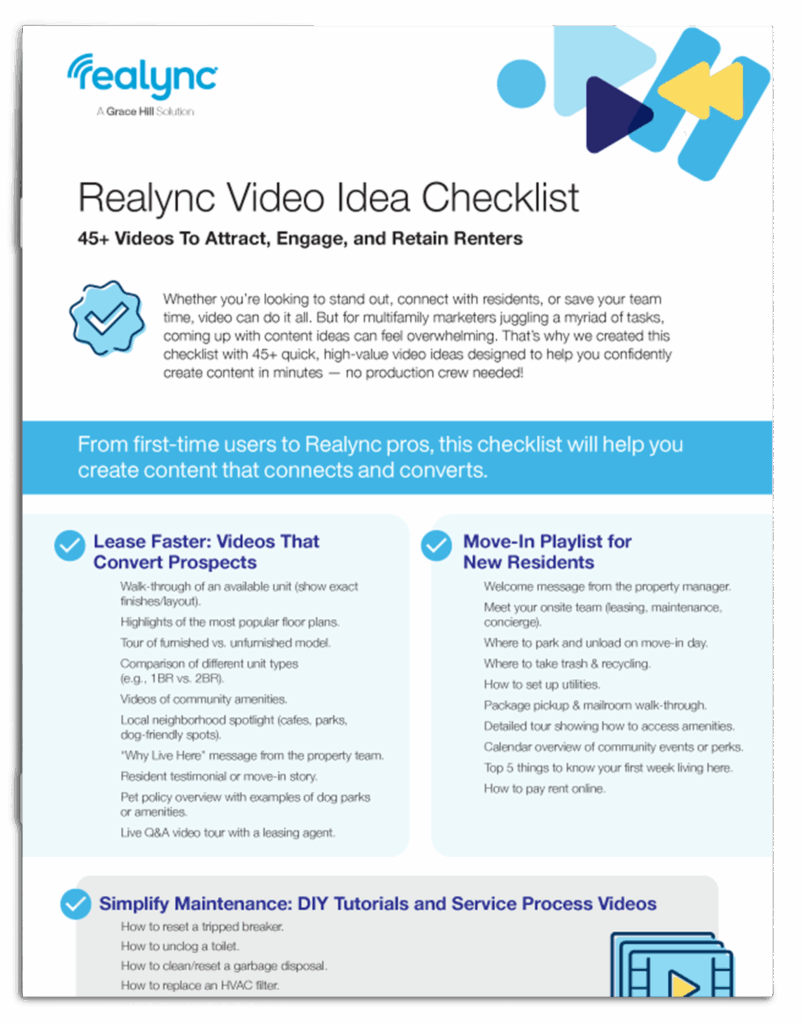
45+ Video Ideas to Attract, Engage, and Retain Renters

5 Proven Hacks for Multifamily Video Marketing Success