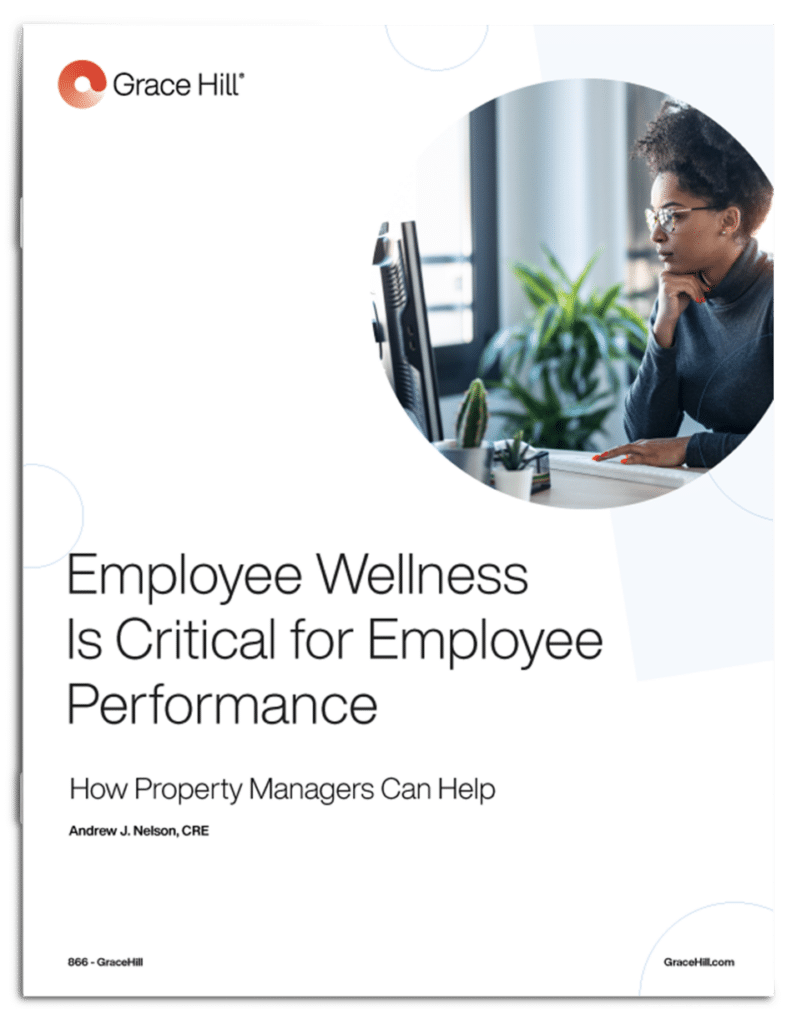

 Customer Support

You know that burnout, anxiety, and isolation all have negative impacts on both your well-being and your company’s bottom line. But knowing how to move that needle for you and your teams can be even more of a challenge.
Happiness experts Audra Lamoon and Colin Priestly-Wall from Livewire Performance Ltd will provide a rush of contagious energy from the get-go, along with solid takeaways you can immediately implement to effect change for a positive impact.
Welcome. Those of you who are joining us for this Science of Happiness, we are so glad that you are here. I am Tara Mcvoy, the marketing manager at Grace Hill, and I'm happy to welcome you. I'll be seeing behind our guest experts today who are going to share really great tips, and also great conversation, and good, good energy for today's webinar. I'd like to take just another thirty seconds to let a few people climb in. But if you would like to let us know in the chat, we'll be utilizing the chat quite a bit in the webinar today. So climb onto the chat and let us know where you're joining us from, who you are, what company you're with, and where you're located. Steve, with Audra, hi, Denver, Colorado. That's great. Thank you. New Orleans. See, Petersburg, Florida. Oh. Phoenix, Arizona. I'm walking my goodness. We're doing a coast to coast showing up for this. Thanks, everybody, for telling us where you're coming from California, New York, South Carolina Myrtle Beach. Wow. Access. Welcome, everyone. Thank you so much. Of happiness with Grace Hill and Livewire. We are absolutely delighted to have you all here. We have a lot of track to cover. And for a little bit of housekeeping, we will be using the we will be using the chat quite a bit. So please thanks for getting what that warmed up. We'll be utilizing that a great deal. We also will have a q and a operating, so make sure that if you have specific questions, I will be are trying that for all of you, and we'll make sure to jump in and have those addressed. Thank you again for being here for the science. Happiness, we will also be sharing the recording with everyone who registered today, but you are not going to want to miss this conversation. So let's go ahead and get started, and let me tell you about our two experts with us today. We have Audra Lamoon, and she is the chief happiness officer at Live performance limited, you'll be able to see her beautiful face on this slide, and also we have Colin Priestley Wall, who is the lead empathy consultant at livewire performance limited. I asked them, since this is a webinar about happiness, I asked them what makes them happy, and Colin said that one of his favorite things is to walk about in the world, meet new people, get introduced to new cultures, and even if he can't travel a lot right now because of COVID, he can he said, always look up, and that's a way to experience the world in a different way. Also, we have Audra and what makes her happy and this is a great visualization is to be out in the yard with her hair and braids and her Wellington boots on and her wheelbarrow and lots of animals. Just being out and out doors. So I'm gonna hand it over to both of them now. Again, remember, please be having the chat ready. We'll have a lot of questions for you. And if any other questions come up, just pop them in the q and a. Thank you so much. Thank you so much. Yes. You say yard and we say garden. So hello everybody. Mhmm. From the UK, Colin and I are coming to you from your future. With five, six, seven or eight hours ahead of you looking at all the different states you actually. It's so lovely to see you all from all these different parts of them. The US. Thank you, and some from the UK too. So, yes, thank you. Let's immerse ourselves in a little bit of happiness first of all, shall we? What makes you happy in life? Well, go My dog. I really love to swim. I love going underwater. I think I laugh uncontrollably when I swim. Well, I love to me in armpit. I I laugh at animal speech. Food wise? Anything chocolate? Chips and queso. Coffee makes me happy. French and those value cuisine. Good cheese on red parts. As long as I didn't do it. I don't. I'm thirty five year old woman. I don't do At moment, man, I hear my daughter by now. Seeing my family happy makes me happy. My mom, my makes me happy. Any one on what time with my kids, they are some great individual people. I get really happy if I, like, pass a test or who could grade on a test? I know the program of Oprah. I would say going places, I can't see anything in like tuck in ride of a house all day. Taking maps. Big groups of my friends in one place. I live at the beach. The sun comes out you my friend, Elliot. I love it when I run into like an old friend. I haven't seen in a long time. The conversation ends up going for you think it's gonna go an hour, but it had some more like three hours. Living each day, as if I was right at my eye use. Being creative makes the app learning new things. Making music is a pretty farc feeling. First thing that actually comes to mind is seeing other people when they're happy. I'm just glad I'm still around. I didn't think I'd make it this far. I guess just flying Nice. Isn't that lovely? How lovely is that? Oh, my did that woman say far? So that's absolutely outrageous. Very naughty lady. Very naughty. Okay. Colleen, over to you. Hi, everyone. It's wonderful to be with you today from freezing cold UK at six PM ish. Looking forward to my cocktail after this. But first of all, let's talk about happiness. And today, it's how we manage ourselves, it's how our lives have a huge impact on our psychological well-being and how we create our own energy levels, but we're in charge. So today is going to take you on a small tour for fifty minutes of how we can look at science, theory around happiness, enjoy and embrace. So we've got lots of notes in the in the chat box there. Lots of chocolate by the sounds of it. Must be blue women in on the on the course here. And long conversations with friends, I think, meeting people at the minute. That's the one thing we can't get our heads around, especially in England. We we just come out of one lockdown and gone into another. So it's like we're so close to getting to touch and hug people, but we're not yet. So we'll get there we'll get there soon. So we're looking forward to that. But over the course of the next hour, we really want to talk to you about understanding why tapping into your own happiness in the workplace is so important. Because there are obviously natural benefits having happy people work for you, that just imagine all these properties that you people are working on, all these people you're with right now, you know, how many of them are truly happy, you know, the the world has taken a bit of a a dive in the happiness stakes. So we want you to know why relevant to really tap into that. Understanding the science and psychology behind it, of course, because Yale and Harvard are just two of the entities that have been researching this subject, especially in the last year or so, and it shows just how much happiness underpins the success of a company. So that's always interesting to learn too. You guys have got one to fifty to hundreds of properties. So if you understood what makes people tick them how they can tap into that, I'm sure would increase those productivity levels. So Increasing yourself awareness is really important because on a personal level, you need to be able to understand how to make yourself happy first before you can even attempt to make other people happy, so we wanna give you the tools today just to tap into that. And it's just an hour, but if you want the longer course, then Colling goes into far more detail about the science exhibit for that too. And the final thing is to understand that you can't go chasing happiness. Right? Happiness doesn't come in the form of a car or holiday or a diamond, but it might for minutes, but not sort of forever. So Chasing happiness isn't really gonna work. It's how you can get yourself personally into state of happiness. It's gonna last a much longer time. So let's look at some facts before we move on. And I just wanted you to see if you knew any of these facts because I found them quite disturbing at So let's get the miserable stuff up the way before we get happy. But only thirteen percent of employees around the world they say are actively engaged at work, and I found that completely disturbing, but also understandable. You can imagine in this day and age, you need you think about your workforce, how many does thirteen percent equate to? It's quite scary to think that only thirteen percent of them are actually engaged. So how do you find that out from your people? How often are you checking in on your people and that's something to be really mindful of. Right? So two thirds of the people, their employees feel overwhelmed. And I think again, today, that's just so true with the pandemic. Haven't they got enough to be going on with without this on top? And we've been speaking to lots of clients, especially in the multifamily industry. And, you know, people are overwhelmed on their day jobs anyway. But to think that they have their own fears, especially with the COVID nineteen, and then their guests and colleagues fears manifest, What does that do for them? How does that affect their productivity? On average employees can only focus For seven minutes before changing screens, I've actively tried to stop myself doing that, and I thought, wow. So what's going on? For to be only focusing for that long. That doesn't seem very long at all, does it? It's quite frightening to think that's all that they can do. So, again, another statistic that's not kept fitting with our happiness thing at the moment. So moving on, and I think this is something very much to do with the telehealthboat, the technology today. I'm just trying to move my screen around. Excuse me. We get anxious after only ten minutes away from our phones. And it made me think it's my phone. Who's got their phone near them right now? Oh, no. What are we gonna do? And we checked them about a hundred and fifty times a day, and I thought, that can't be right. But that is a product of today's technology because obviously, when I was a child, I was out and about all the time, so I never really had a phone to worry about when I was told to be youngster. But anyway, but, Colin, this is your your statistic here. And again, I think we can all relate to this at some level, but nearly sixty percent of us are saying sometimes how we actually live is very different to what we say we manage our lives by. We're proud. We're human race. We don't want to be seen in some light. So sometime we paint perhaps a rosy picture when actually the reality is different. And that's concerning. So we are in charge of our happiness. We can dial it up and dial it down. It's not being done to you and we're going to talk about that through the session today. But it's an important one to think about. How do we sell it to others? And then finally, there's the fifty percent assume that they're going to work on holiday. So, you know, there you are on your vacation and do you set those standards and those expectations for yourself? Are they imposed upon you at work? And I remember the days when, yes, we all had to answer our telephone and our emails when we were at work, and when we're on holiday and I just that was just so bad and who had a really enjoyable holiday with someone who was always on their laptop or was on their phone or or if you were. And I actually made the decision, a conscious decision years ago, because I felt that I was just burning out. And I thought, I'm on holiday, yet I'm still working. This is no holiday. So I managed everybody's expectations, including my own, and said I am not taking my laptop on holiday. And I will not be responding to emails, and the British are exceptionally good, I may add, get putting out of office messages on emails. Are we not Colin? A very good Oh, yeah. Brilliant. That that's very normal to an out of office thing. And we might make them a little bit more exciting right now. But it used to be we will not be accessing our emails until we're back from our holiday on such and such a day. And that work wonders for me. It was the best thing ever the world didn't end, the business carried on, and I had a wonderful holiday. So I can completely recommend not working on your holiday, and I hope to goodness that your companies don't you not too. Now I think we have a poll, don't we, Tara? We do. And in the process, I just wanted to point out to both of you point that I could relate to also from Steve, a lunch that you can appear to be happy even when you're not, especially because of social media and it's hard to let people know when they're hurting. But let's see what of these six things out our participants agree with. So if you all will enter in the poll, which of these six points you relate to most, and we'll give everybody about a minute to answer, we see some answers coming in already, But be sure to get your answer in because we wanna talk about and look at which one applies the most to this group. Is it feeling overwhelmed? Working on holiday as Audra pointed out. It doesn't look like we're having a problem with engagement so far based on these poll results. But I'll give everybody about ten more seconds, make sure you get your answer in. And only one, yes, seth right now. Unfortunately, later on, you can choose more than one. For this one, choose the one that is the very best Kelly says she's tried to click three. Well, the pasting itself. So I'll wrap it up now and we'll see what our clear winner is with some several runners up Yeah. Overwhelmed. Amazing. No Over overwhelmed is for sure the winner. Yes. Surprises. And I think there's a lot of it today in terms of the last year, with COVID, with the pandemic, people feel they should be working more. There's an extra tation from perhaps businesses that people are working more and longer, because they're not in the office, perhaps because they're logging on earlier. And we have to be really careful that we're not -- we're managing our own time. So it's not surprising that you're feeling overwhelmed. I think it's a very current thought, so no surprises there, Roger. I don't know what you think. I wouldn't call it a winner. Yeah, the overwhelm is completely No surprise to me, whatsoever. And and this Yeah, climate for sure. I'm glad to see the top one only, you know, thirteen percent of employees have looked too, but I'm glad about that statistic. I'd hate to think that. Only thirteen percent of employees were engaged at work. So I'm happy about that one. It's interesting to me that the other the other answers all had fairly close, you know, fifty fifty percent assuming they will work on holiday was the biggest margin with twenty three responses, but gaps between what they say that was nineteen votes and getting anxious after ten minutes away from the phone, thirteen. So it's it's all fairly well balanced out at the bottom. Sorry. No, no, it's Okay. Good to say. And Kelly, yes, she I I feel you'll struggle, Kelly. She says she struggles to have a healthy work life balance. And actually, before the COVID pandemic, that was massive anyway. Globally, people are how do we get this the balance or the blends as it soon became. Right? And and that is again, you know, where where you talk about working in your genosomes, where when is it that you work better, but I think with the the pandemic, what it's taught us a lot to do is I'm much better working in the mornings. This is my, you know, my productive time, so I'm gonna do that and maybe have a sure today. I might start early or might not, but I'm much more productive. And I I plug in times with my family, my pets, even my house chores because it breaks up that day. So, Kelly, that's what I do. I literally actively plug in. I've got house stuff to do today. I've got pet stuff to do today. I've got gardening to do today. And then I'm, oh, yeah, I've got some work to do today as well. But, you know, you get stuck, don't you behind the laptop or something? I think you can't move on or you should, absolutely. Some really good stats there. Thank you very much for those feedback. Thank you. Right. Okay. Yes, so you can see, although we don't need to state, but we know there is a real case, commercial case for psychological well-being. We've got some more stats here and that the link has provided at the bottom where we have this from. But if you look at some of these, we're hitting higher sales by forty percent forty six more percentage of people are more sad fight with their jobs. We haven't got a problem with engagement on here. So that's good. Thirty percent more and more productive. And one hundred and twenty four percent less burnout if businesses are supporting the well-being agenda in work, and we all have a case there. We all have ownership of that for ourselves. Well-being for one person might be stepping outside and taking in the air and looking up as it is for me. For other people, it will be to change a day to work as audra says in the morning and in the evening, and the flexibility that's around that. But we also get more creative. We get more engaged. We get more creative. We're great performers. So there is no debate around a commercial reason to face into psychological well-being in the workplace. So we're hopefully going to call you more agendas through this session today, and I'm going to deep dive into some of it shortly. So, here we go. This is the theoretical part of the session. So, take in what I'm staying. I'm going to walk through this graph, walk through this quadrant. I'm going to focus on thriving through this. This is about you know, what is thriving. And we've got the true excess, as you can see here, the vitality excess and the personal growth excess. And the vitality is the state of being strong and active, combined with the personal growth which is do we feel as though we are getting better in our roles. So these two elements, so that's high vitality with high personal growth. Creates a psychological state of thriving. So we're prospering and we're flourishing because we're developing but we're doing that with energy. The other three quadrants that you can see combined highlight three other psychological states that but really helpful for us with our self diagnosis around thriving. So I'm just going to walk through those for you now to give you some explanations. High vitality with no growth, so that's stagnant, right, is a period of recharging. And this could be really helpful to understand. Sometimes when we've gone through real rapid growth, we've delivered a big project, we've been at high energy, we need to take some time to consolidate to rest and recharge. But when it's, so when it's when we're there, we actually sometimes feel uncomfortable about recharging and we're taking time back, but we need to because we've been full on the go. So please don't be aware, don't not go to the recharging space. Otherwise, we can fall to decline. Being in the state of the decline is when we're stagnant and we have very low vitality. In this state, we're much higher risk of health issues. So we need to be aware, and we know that point where we suddenly feel demotivated. We feel tired. We feel stressed. We don't have the resilience. So we're falling into that decline. And another one we need to be aware of is the final quadrant to bound a burnout. You know, I've heard people talk about burnout, Auder and I have talked about burnout. We talked about it with Taterra previously to this session. Burnache is something that we're all experiencing at different levels. We own how we feel in Burnache. We own how we're going to be. So I'm saying to you today, we feel perhaps like we're growing and moving forward, but we don't have the energy to keep up. We're running after the bus. Running after the train. We often feel out of control in this space and that we feel our growth is being done to us. We're not in charge of it. And it's a useful place to think about how you're going to diagnose that to discover where you might currently be. So I'm just going to throw out a question. I'd love to understand with our audience today, where you feel you might be. Are you richard Are you taking some time out? Are you thriving? Are you growing high energy, high vitality? Or are you feeling in decline Maybe you're feeling lost, you're feeling done too, or you're burned for burnout, which is again, you know, a space where we need to lift up So I think, Carrie, we're going to have a chat there or a poem just to understand where people are. And the chat, yeah, let's get on the next slide shows the the questions that we want folks to consider the you know, what's the let's just check-in the chat what the current energy level is right now? How people are feeling? We've got some thriving. We have, yes, we've got some. Rest and recharge? We hadn't good to see. Continuing sort of get burned out. Yeah. Yeah. I mean, it's so important to rest and reach charge, and we feel guilty sometimes, we're all we've all fallen to that place, so don't, you know. - That's the climb, got part thriving. That's interesting. Sarah, part of the time, part thriving. So you just look at it once together. That's an extreme of both. Wow. So you need to focus in, Sarah, focus in on what you're thriving is giving you. And then when you're feeling decline, focus on what makes you thrive and remember those things and face into that. But great point, Sarah. This matches too a lot with the overwhelmed feeling that we saw from the poll I think is seeing decline and tiredness. Is that related? I wonder to the next question possibly. Possibly. Yeah. So when we say do you feel you are growing in your role today. We're not talking about now. We're talking about in your position in your business. Do you feel that you're growing? Are you learning? Can you feel the elastic band just be bit more stretched? Are you feeling that you are learning? But so yes, are you Yes. Yes, it's Yeah. Could be. Yeah. Absolutely. Well And it was a good one. Just a a good comment a moment ago from a chap who was saying that he stated that he needed to recharge and didn't want to grow, wasn't progressing or anything, Lars and his boss honored it. I think that is really lovely, very progressive -- Right. Yeah. -- matching there. Love that. Okay. Learning to pivot from the original plans. Yep. Michael Peddle's plans out the window, hadn't you? Yeah. There's no point during an interview return. Everything changes every week. We need to be agile. We need to enjoy ambiguity. But if we don't connect with an ambiguity, sometimes that's tough, you know, some people like structure, and that's important. So we have to play for everybody. Yeah. It changes daily. Some days there are feelings of being overwhelmed and stressed. Rose of the day is optimistic and hopeful. Great. To focus, remember how you feel when you're optimistic and hopeful and bring it into your gaze when you're perhaps feeling more overwhelmed. That I thought the point that you may call in about being close to the burnout cauldron is when you feel you're growing is being done for It's not it's being done to you rather than coming organically. And for me, I think definitely the pandemic has been an example of needing to grow, but that's not within my control. It's being done to you. And and that's a very common feeling because you you're overwhelmed. You've you're cluttered. You don't quite know what's happening, but you feel its growth, and then it's a step back. But remember, guys, and we'll talk about this in a minute, we own how we feel. We're in charge. Okay. So, some great reflections and great to see everybody engaged with some of these remember what you've said and remember how you're going to face into that. So what are we going to do then if you want to move to a different quadrant So we've put the chart back up here. And if you think about where you would like to be, where do you want to move into? And maybe we can share some of those things in the chat. Because if you're thinking to yourself, well I'm in driving, but I need to take a break. I need time to stop. I'm not good at that. Let's go into recharging, feel how it feels like to be there, or if you're in decline, or you want to lift up to be more rich charged to move back to thriving. Where would you like to be? That is my next question. While they're typing away, their answers there. I'll give an example, if you like. I remember now I was getting I was burning out. I definitely well, I started up the company. This is twenty years ago, and I thought, oh, can't wait to run my own company. I'll get all the time off I need. Well, that never happened and I just didn't stop. And I think ten years in I decided this is ridiculous. I'm so tired. So I decided to give myself Fridays off and a four day week, and I remember putting that from LinkedIn years ago, and people went, you're mad. Your business will never survive. A four day week are you crazy? But I gave myself writers off and Friday was the day when I volunteered at animal sanctuaries, and that's my passion. So I was like fueling my passion and taking a break from work, I didn't think about work for that whole day, and that put me straight up into the recharging quadrant is where I needed to go. And then before I could even start to think about thriving again, and it's worked for me. I have to say, since the pandemic appeared, you can see I've gone back to five day weeks but I'm working my way back up to recharging them all day week. Yeah, amazing. And some adjusting points coming through. People are saying they'd like to move from bound to burnout into thriving. Well, yes, thriving feels like the ideal But as somebody else was rightly pointed out, perhaps there's some rest and recharge needs to happen before that. You know, it's important to take into that. One of the examples that I have is when I was in a thriving place and I was in business and delivering projects and feeling the energy, feeling the deadline, liking the pressure, And then all of a sudden I thought, well I need to move to recharge. And I really had an issue with allowing myself to take a bit of time to recharge. It took a number of people to say you need to slow down, need to stop because what happens, your performance starts to get affected because in the thriving is not continuous. We're not machines. Hey, some of us think they're machines. But So, it's so important after prompting just to take the time, maybe a shortened day, yeah, Terra rates that the question. The question that I have is about that recharging. I think something that I personally get concerned about in terms of taking time to recharge is that I'll go into entropy, and I'll I'll never go back, you know, that there's so there's enough and when do you know that you've had enough recharge time. That's a great question. Well, I think it naturally will happen, because if you're naturally coming from a thriving place, in my experience, you will know when it's time to start moving again, and you'll know when it's time to turn up the volume, turn up the dial, and you'll do it naturally. Because if it takes you time to move into recharge, from thriving originally. You're going to be someone who likes pays energy, commitment, delivery action. So the bigger thing is stopping it, not starting it. So I think allowing yourself to just go with your own flow, go with your mood, ask ask other people. It's a really powerful piece. Ask your peers, ask your boss, ask people who don't normally work closely with how they how they may feel and where they may work from and how they move around the quadrant because everybody's in this, right? So we're all going through this process. We're all experiencing different levels of this. And we can help each other. So the network is really important. So I think just trust your own energies and go with the flow find out how other people your best mate perhaps, how would they tell you to move through? And that's something we'll talk about briefly in a minute. But I hope that's helped. And we can go back to some questions if you need more help with that. We've got a Q and A session at the end, so that's good too. I definitely felt that after doing a full day week, and then that becoming normal, I was just as productive. I didn't actually announce it to the whole world, at the time, I tested it first, and no one really realized I was doing it for a week. And then I sort of like wax lyrical about clever am I? How clever am I? But I got such a lot done, and I knew that I had a four day period week to do it in and that took the pressure of myself. And I think a lot of people have pressure on they'll put pressure on themselves. So stop it. As we say in England, stop it. Don't do that just now. But I think that leads into the fact is the choice is real. You really can choose to be happy. You can choose where you want to be. It's a thought process first. You've got to decide that, you know, in order to be happy, I have to drop this, or I have to concentrate on that, or I maybe have to shove that project, or maybe I need help with this, and I know sometimes resourcing is really difficult, but you have to personally make the choice Okay. I wanna move into a different quadrant, so I'm gonna choose to be in that quadrant. So you've actually made a physical decision. You move into that quadrant, and then you could be in the process of being happy because you will feel immense relief and happiness when you do that, and choosing your attitude is absolutely doable. Of course, there are things that prevent that. These toxic thinking tracks that we get. Right? And that's not good, Colin, is it? No, we don't like these are our enemy. However, they can bring us to a nice place, so it's important to understand what they do and who they are. So our next piece of theory this evening this morning this afternoon is depending very often and is talking about top to thinking chops. So, just looking at some of these bubbles here on the screen, so toxic thinking chops are the way our mind convinces this of one thing. When really, in reality, it's completely untrue. So we may be thinking to ourselves that we are over worrying something or having a worry going on that really comes from our own mind. It doesn't come from fact of reality. We grow the fiction. And the danger is that we grow it and it's much. So these inaccurate thoughts are usually reinforced to negative thinking patterns that we might have. We tell ourselves things sound rational and truthful in the moment, but in reality only served to trigger feelings of negativity and pessimism. And we are then not looking at focus. It's the enemy of focus. We need to move away from that procrastination. We need to move into focus. It's the So these thoughts are irrational or possibly even wrong, I might say that. It's not the event that causes your feelings of negativity. It's your response to it, it's your mindset. So we're in charge of our mindset. We read the Marsh in Seligman's piece just before this on the last slide. We are in charge. We own our feelings. We own our thoughts. Don't allow the traps to grow, to expand, to create. We like to create the extra excitement or the extra drama, perhaps. So we've got some examples. I think ourselves and all just got a great example around her own experience in this. And then we'll ask for you. Oh, gosh. Yeah, for me, my toxic thinking traps. And I see that Tamela Caval is on here, and so actually she can testify this story. I have always been afraid of technology always to the point where I shake or shook and would like to beat myself out about it. So before I go to an event, I'd tell myself that the technology would fail, then I'd look an idiot, blah dee blah. And I was doing this gig and I told myself the night before how horrific what it would be if the technology failed, and then I got up on the stage, and the technology failed, and I go into complete meltdown, and Tamela was there with a not a sort of a physical slap around her face, but she turned around and said to me, the goodness sake the story or the information's in your head, you're just gonna have to deal with it. Just forget the technology. It's not what you do. Get up and tell the story. So I thought, okay, consider myself Tilda. And as I'm about to go on and tell the story, she's, you know, working vigorously behind to get the technology up for me, and it worked as if by magic. Thank you very much. Tamela. I'll never I'll never forget that. Technology hot flashes, she says, yes, it's horrific. Mhmm. But that was though I had to learn to go, because I'm never going to be a technology with it. So let's just let it go, right? And stop creating events with technology and I This is why Terrace is here. She's gonna she does music in the polls, etcetera. And so I would say my toxic thinking trap is right in the middle there. That self critical piece, the compare and despair. But I came across a positive note that said, comparison is the thief of joy, and that totally relieved me of that. And I've never compared since I read that, I thought how brilliant is that, comparisons of people joy? Yeah. But we can do a little parlour and find what the audience What their toxic thinking traps are? Fantastic, yes. And then this time you do have an opportunity to answer. It two. You can choose two. You can choose two. Yes. That's reminding me to call in when you were saying about having the, finding the best balance of recharging, ask your maid's ask your boss, ask other people, but with the technology thing too, Adra, finding other people to help you with the things that you know you might not be, then you can take it out of your I think finding other resources is really good advice from both of you. We're amazing people, but we're not sometimes we're not always amazing all of the time. Sometimes we have to admit that we can't do something. That's okay. Yeah, focus on the strengths. Well, we definitely, I give folks a few more seconds to answer because we basically have a tie breaker between two of them right now. You have an opportunity to tip one one way or another, but there's definitely two contenders and then, you know, some some middle ones. Ah, it's changing now. Alright. And your final final five seconds, you could change the results. Oh, I love this. I've just read something in the chat box from Lisa. Sometimes the meanest person you'll meet in a day is yourself. That's so true. Really? That's so true. Stop it. Alright. Let's see how we did with our Oh. Oh, same as me, look. I'm not alone. Unhelpful worry, you know, alone urgent. Yeah. Unhelpful worrying. Yeah. There's a lot I mean, I can I can relate to that? Absolutely coming in second there. I mean they're very real feelings aren't they? Wow. And what else have we got He was also saying he maybe procrastinates because he's waiting for the perfect idea to but is that unhelpful worrying You know, you're worrying that your idea isn't going to be top notch. Comprastination is the -- I'm an enemy of focus and we need to we know ourselves when we fall into it saying, oh, I'll do it later. It's going to be awful. It's not going to work, oh, and we just feel like the energy is draining. So you need -- you're in Chicago popping out of that, guys. You've got to be able to pop out of it. So chat to others, talk to talk to peers, talk to your best friend, have a glass with somebody online and see what they would say. But we need to move away from procrastination. My example here is focusing on the negative. I had a real issue a lot of times when I was just everything was going to be a disaster. Everything was going to go wrong. Nothing was going to work. It wasn't going to be as effective as it should have been. And I was really an really feeling like some of the people in the in the chat here, you know, we can be mean to ourselves, we're hard on ourselves, and we're our hard -- we're our worst self critic. I haven't really fallen into that. So you've got to be able to feel that actually why are you feeling these thoughts? Where are they coming from? Where's the route? Where's they drive from? And really attack the route and focus on it will be good. Get examples, get discussions going. Speak to somebody who will help you understand actually once reality. And that seamlessly moves us to this next slide. Thank you, And what I would like you to do, we've got some questions on here. We've talked about the trap you're falling into. What would help you come out of a trap is understand which ones you're falling into. So, we've got a clarity on that already by the poll we've done. It's important to acknowledge before and we need to acknowledge that we're in this place. What I want you to do is to understand -- I want to ask you two questions. The first one is what would your future self say your future self is, it won't matter in the bigger scheme of things. Sometimes you hear people say, Will it measure in twelve months from now? Probably not. But we've been saying that, don't we? So what would your future self say to you? And what would your a passionate friend say to yourself, they may say, Look, take a break, recharge, rest. You've been six days a week, five days a week, ten hours a day, twelve hours a day, take your foot off the pedal. What would your compassionate friends say? So really think about that. I don't know if we have time to go into to understand where people are feeling and where what the future self is saying and the compassionate things they could use on that one if you like. Yes. Yes, we do. We do. Yeah. We can do. Well, people are thinking, especially because this is a a significant question that you've asked but I know we do wanna see people's answers about, you know, what would your future self say? What your friends say? Yeah. Yeah. Just tell you what my friends are saying, pull yourself together. I like to have a whole smack you around the face thing. Move it out. Slow it out. And I think I always give good advice to other people, but don't take my own advice. That's what, you know Hey. What would I say? Yeah. Definitely. Only love traps, this Tamela Coval, is saying only love traps. Well, she needs to tell us about that. That's the whole other course. I don't even fall into them. Steve didn't have any of those traps on there. And I said, well, we did take some of them off. So okay. So anyone gonna give yourself some good advice. Well, I've seen Yeah. My friends say that I do everything for my friends but nothing for myself. I think you right there? Yeah. You've got to take care of yourself, haven't you? Oh, look, you'll hurt yourself. We'll say you've already handled it fine. Yes. Yeah. Exactly being hard on yourself great examples, great great great builds really. Stop worrying. Doesn't do yourself any good. Yeah. Usually, what we're I'm seeing too in the chat is that it gets you worked up over something that will take away your focus You know? And -- Yeah. -- and sometimes that the stress of being afraid you're not gonna be able to do well. Like, Audrey, you were saying, the technologies not going to work, keeps you from being able to focus on the actual content and, you know, just being present. Yeah. Melissa Palmer is saying inviting the universe to stop the technology work, and it's ridiculous. Yes, Melissa is saying too, focus on your accomplishments, not the impostor syndrome, Oh, yes. Yeah. Absolutely. Steve Hunter, don't let don't let perfect be the enemy of the good, you know, collaborate again is another word that's being used. Oh, I like that. I love that. I've learned to take a time out once a week to count my wins from the Willy Gray Love that's Samantha. That is great. My compassionate friend would say believe in yourself. Yes. Good. Because you'll do It will work out one way or another is also what Kelly is saying. You know, it will work out. Yep. Yes. And how does it feel when you believe in yourself? What are you feeling like at that moment? I mean, you wouldn't want to move away from it, would you? So remember how it feels to feel like in that moment. Really good. Oh, and Katerina, she's put some good points in there as well. Why? That's how I take a break. You did amazing and that's enough give yourself the credit you deserve. Take a break. Breathe, you've got this. I like the way Americans say it. When we say it like in England, you got this. That's -- it is. Living that space, absolutely, Steve. Yes. It would. And we can. We do. We will. It's easy to do once you decide that's what you're gonna do. Right? Great things. Really good. So just continuing that, then you need to capitalize on this positive thing. I mean, you hear us talk about that today. So think again getting you to really use some of that positive energy right now. Think of the recent time when you felt really good. What does that feel like? So just think about some of these questions and we can release the questions. Yeah, we felt really good. What does it feel like? To today, walking the dog, the dogs are in there. That's good. Thank that's Audra. A choice between staying in bed because it's so dark and cold or walk the dogs. And I was I had to be dragged out, I'll be honest. But when I did, oh my god, it was amazing. I felt set me up for the day, so glad I made the effort. It's cold. Yeah. And I'm coming back to my consistent message, which which I was speaking about the very start of the session this afternoon, look up, sometimes we're looking down, we're looking in front of us, look up into the skies, see the space, feel the energy, That's my guru coming out. October says, finishing a project isn't that an amazing feeling. Oh my god, I've got there. I got there. Yeah. Yeah. Yeah. Absolutely. Definitely. Good next question. Great. What did it make you feel grateful for? Well, here we're going to be moving into gratefulness, but what did it make you feel grateful for when you had that recent time that was really good? And you felt really good. Just simple things. Share with us what what does it make you feel grateful for? I was grateful for the nature and even nature. Other people being appreciated, it's amazing. Oh, forest spent, love that. -Yeah. -being being able to work, young. Now, being able to work, the ability to work with so many people don't have that right this year has cut millions of jobs, right, globally. So, yeah, being here. I'm having a job now isn't as secure as it was a year ago. So, you know, it's -- we're all -- it's in change. So be grateful for little things. To make a positive difference, brilliant, for your health state. Fantastic. So next question, what did you do to help create this positive feeling. So you've done it, you've made it happen. So what did you do? How did you put yourself there? Can you share with us? With glass. Yeah. Yeah. That's the mind shift took a breath. Brilliant. Who knew that taking a breath could be so powerful? There we go. Ask for help, lovely. Get feedback. Give me a deadline Gina says I'll make it happen. Absolutely. Take the pause. Give me the deadline. That's really fun. It's lovely. Okay. Really good. And the final one, just to get us just thinking through this, what's the positive insight you can take with you into the future? Take with you into the next hour after you leave this this afternoon. How can you change the next hour to make it more positive? What one thing can you do? Look at what angels put. My husband and I take gratitude walks each week. Oh my God. I love that. I love that. I wanna come on a gratitude wall. No. They do a virtual wall, miss Yeah. Let's round the old, but you do round your office table. I'll do round mine. Okay, perfect. We'll do that. That's brilliant. Meditating and staying calm also Alison is saying not overreact, you know, and stay calm and again stay focused on the solution. And Jay Thompson is to make himself that he has to be the priority more than anything else? Nice. Exercise is one. It is. And Steve Matre has another great which is to be vulnerable and to be willing to put your ideas out and that -- Yeah. -- more will come back rather than sort of holding it in. People respects the vulnerable absolutely. Yeah. Yeah. And just even being aware, I think An and Audrey, would you agree that just being aware that when you're falling into toxic thinking, that's something that Victoria pointed out, but just even catching yourself Yes. Well, you can catch it in the moment and you can turn it. Yeah? Absolutely. And have a plan to get out of it. So you know, what is it what is your go to? I have, like, you know, chocolate and a cup of tea is usually my thing. Well, get the dog and I'll you walk around the block, and it might turn into a field walk or a beach walk, but I clear my head and I think just for that moment, I'm not actually gonna pay any attention to the problem. I'll let it settle somewhere else, and I'll come back with a fresh mind and deal with stuff afterwards. I try not. To figure it out while I'm away from it, you know, to enjoy it. I love Angel Angel Williams saying, Tell the other two members, thank you. I mean saying thank you at the end of the day, at the end of national Yeah. Brilliant. Yeah. Alright. Always remembering that this too shall pass, Stephen says, yes. Nice. He reminds me that the sun will rise tomorrow. It makes me crazy. Is Yeah. I love that. It's true, isn't it? Well Thank twenty mantra from Jay. Yeah. I love that. And has to grab me read my bible. They say, if you just pull your bible open it to any page that there is a message for you that you needed to hear that day, apparently they say that. And I've got a little bible that I turned to, actually. I call it my gratitude book, so people journal, don't they? I actually have a gratitude book, and it trained me over the last five, six years to be thankful for five things at the end of every day. So even it's been a horrific day, it doesn't matter what's gonna I still find find things to be very grateful for, and it could be the sun on my face, breathing, clean air, having time to sit down and cuddle with my puppy, whatever. It's tight, they're generally little things actually, but I find that that really helps me you know, keep happy. So it sets me up to be at the end of the day and at the beginning of the day as well, which is lovely. And here are some more benefits. According to all the science that Yair and Harvard and everybody have done that, you know, if you do create their anvil in there, gratitude journal, you are more happy and more optimistic. You couldn't be more successful unsuccessful, and and physically healthier. Now that's gotta be good, isn't it? So your immune and gets better, the more grateful and happier you are, and sleeping better, of course, which is great. And there's a wonderful thing that you can sign up to for free called TUT Universe, t u t, and it's the whole mantra is thoughts become things. So if you believe in the power of the universe and all of that, you know, you might like that. So sign up for daily positive affirmations. They're really good. It says Monday to Friday, and some days they're amazing messages just for you. It's fabulous. And also, if you're looking to create more of a culture of happiness in the play, so I think we could all do with that right now. I really urge you to read the book by Tony c Zappos, a little picture up there. Here was the CEO of Zappos, which was bought out by Amazon a few years ago for something like one point two billion dollars but this gentleman, he sadly passed away a week or so ago and and a fire was so sad. Mhmm. But he was a guru who was responsible for making happiness in in cultural places, and his great idea that he came up with was he actually paid people two thousand dollars to leave his company if they didn't wanna work for him. What about that? It's almost worth joining, isn't it? But how lovely is that? You know, it probably saved him a lot of money in the long run, but he said, if you, you know, we take you on board and you you you just don't feel like you're fitting him company. I'll give you two thousand dollars to leave. I just thought that was amazing, but it's a number one best seller in New York Times, so I suggest to do that too. So you can choose happiness and and gratitude and all the things that comes with it, and it's like everything else. It becomes contagious. And once you start that behavior, was it three weeks or thirty days to create a new habit? You can create those habits of being grateful and happy. That's for sure. Okay, and we have another book surprise surprise, but again, it's a cheap and cheerful book, but how do you break up with your phone? I don't know, I still have my phone here. So clearly, I'm not it's not worked for me. I need to read it again after this session. So there's a book by Catherine Price called How to Break up with your phone. It's a thirty day plan that eases you into the separation of this experience. And it gives you the opportunity to own and be in charge of your phone and not let your phone be in charge of you So how or how does that sound? Those of you that have been on the WhatsApp, those of you that have been on the messenger while you're on the screen, while you're taking covered tea. It's all going on. Sometimes It's not you. It's me. I love that. I love that. Yeah. Just Oh, yeah. There we go. Sorry, Colin. You're about to say it? No. Are you gonna do that plan? Are you doing the thirty day plan, Tara, or Colin? Or is anybody gonna do the plan? They're gonna break up with their phone. I'd love to hear that. I'm not gonna be able to do a thirty day phone free time, I can say for sure, but I definitely want to work on having increased periods of time where my phone isn't even within my site, sort of what we were talking about in the chat before about like taking a break, kind of getting away from the things that are causing you stress, and that social media and the constant demand demand can you a lot of stress, so I definitely am gonna work on that for sure. And I think the other thing is it's it's about being in charge of this Is it the last thing you look at before you go to sleep? Is it the first thing you look at in the morning? Maybe we change that up a bit. Yeah. My friend recommended how to break up with your phone to her last week because she didn't it's very helpful there, Collin. So thank you, Kelly. Thanks for calling. Alyssa, Alyssa. Sorry. I wish I do I do have a question for both of you that's you know, related to that, the plan and the gratitude journal and choosing happiness and moving yourself from one quadrant to another. In order to avoid comparing and despairing, oh, that person seems so happy or else being overly critical, I really want to move from the current quadrant that I'm in to recharging or deriving, but I'm not doing it quickly enough. What's a sort of expected timeline for really seeing our choices and our actions have an immediate impact. Is it within ten seconds? Is it within a couple of days of doing a gratitude journal, but I'm just sort of curious how immediate these effects can be felt. And are they cumulative over time? Well, I mean, I'll answer first. If you -- I think it depends on an individual. I think it can be momentarily or it can be. If it's a bigger piece, it can take a bit longer. And I think as long as you can feel the movement from one to the other and you're in charge of how you're moving, then that's fine for you. It's rather than trying to structure it into specific time scales. I think it could be moment you know, it might be one morning you go to a work or you go on a Zoom and you see you're feeling overwhelmed, you're feeling burnt out just because of the level of meetings you've got. Then maybe then you can change your meetings for the next day or the next week. So you can be in charge of how that works. So it depends on the level of what you're trying to change. The important thing is that you are in control of how you change it. By either having a conversation or having some thoughts or taking some time out. So that would be my advice. That's so great and that actually moves us straight into another question that just showed up in the q and a. If you do have specific questions, you want to make sure are addressed, you may drop them there, or in the chat, we're monitoring both. But when you recognize and you wanna have more control over your environment, and you know you need to have the conversation about recharging or taking a step back whether that's professionally or personally, can you both give some advice on how to have that conversation. It's a it's a question from Jay Thompson, but it's also things I'm seeing echoed in a chat, people saying, oh, I wish I could. Take a break. I wish I could step back. Do you have some practical advice about about even how to talk about that? Well, audred, I have. Yeah, yeah. So, yeah, I think it's great. And that's a human feeling. And it's, again, it comes back to that. I feel was tapping into the recharge space. So, once we've accepted that, my advice will be to explain during the conversation that you are somebody who wants to be effective and performing your role in the right way. You are somebody that wants to deliver exactly what was asked for them and more And because of the fact that you're feeling you can't, because you need to take time out, it will be beneficial for the business, both from a commercial point of view, and from my own health and my own well-being, that I'm maybe going to take an hour here and there, over the next couple of weeks. And just explain that the impact of doing that will impact in a positive way on the business and on their own personal performance. So you Yeah, I can add to that if you like because I had to do it. I think the most difficult thing is making the decision. That's the most difficult thing because you can procrastinate should I should I should I. And I was doing that. Maybe I should do a full day week. Maybe I maybe, maybe, maybe. And I thought, you know what? I'm never gonna find out, and I said, I'm bloody do it. So I can always go back to a five day week, and it doesn't work. But it worked. It gave me that break, that time, but it is about commission giving yourself permission. You most of the time, it's you put pressures on yourself. So I think when you've got a really good business plan or mental plan or back up plan, it's gonna the reason that you're doing it is to make you more productive and happier and more balanced. Who would want to argue with that? And I think just the productivity because over to I have never been more productive than when I was doing a full day week because that big day was so important to me. I was on it those four days. And not ridiculous. I wasn't doing twelve, fifteen, twenty hours. I was doing proper hours. They know. Saying no. I think that must be in the difficulty. No. No. I can't do that today or tomorrow this week. I I can put you in next week. That? Oh, yeah. The other point is if someone says, oh, can you do this for me? I know it's something we haven't talked about, but can we do this can you do this for me now. You can explain and say, Of course I can, but of course I come to this as well. I can only do this. Explain in the right way that actually you're still the same person, own your deliverables. Yep. Exactly. Well, that is a really excellent note to end on. Thank you so much Colin and Audra both, but we have now run out of time. Thank you everyone who participated And as Audra and Colin mentioned, there are other live wire sessions that go into even more deeply the science of all of this. If you are interested, please do reach out to us at Grace Hill, and we'll work to get you connected. We can also find livewire on social media, but think again everyone. It's just been a terrific conversation. Thanks for your patient, and particularly thank you, Audra and Colin for being here, and I hope all of you have a very happy day, and happy move into the new year. Thank you. Thank you again. Lovely. Thank yes. There is a recording everybody, so thank you. Lovely to talk to you all. Thank you, Terry. You've been amazing. Thank you. Thank you, Colin. Thanks, everyone. Bye bye. Have a good day. Bye bye. Bye. Bye bye. Stop
More Mental Health Tools and Insights
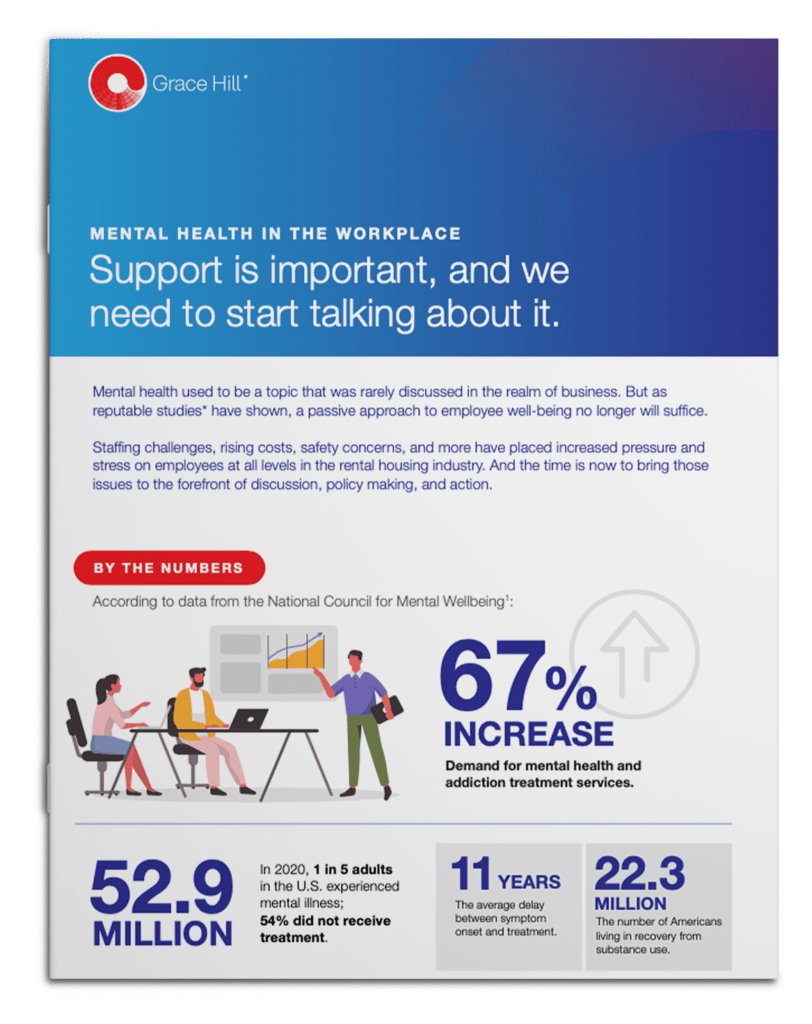
Mental Health in the Workplace

How Embracing Self-Care Creates Resilience and Drives Performance