
 Customer Support


Your organization is exposed to Fair Housing compliance risk.


What Your Score Means
Your results suggest your organization may rely heavily on annual Fair Housing training rather than structured onboarding.
While annual training is important, it often occurs long after employees begin interacting with residents. Without structured onboarding pathways, new hires may make decisions about leasing, accommodations, or policies before fully understanding Fair Housing requirements.
This creates significant compliance exposure for both property managers and ownership groups, increasing the likelihood of complaints, audits, and financial penalties.
Where Fair Housing Risk May Be Entering Your Portfolio
Organizations in this category often experience risk in several areas:
New employees interacting with residents before completing training.
Fair Housing policies explained informally by managers.
Training tracked manually or inconsistently across properties.
Limited documentation available during audits.
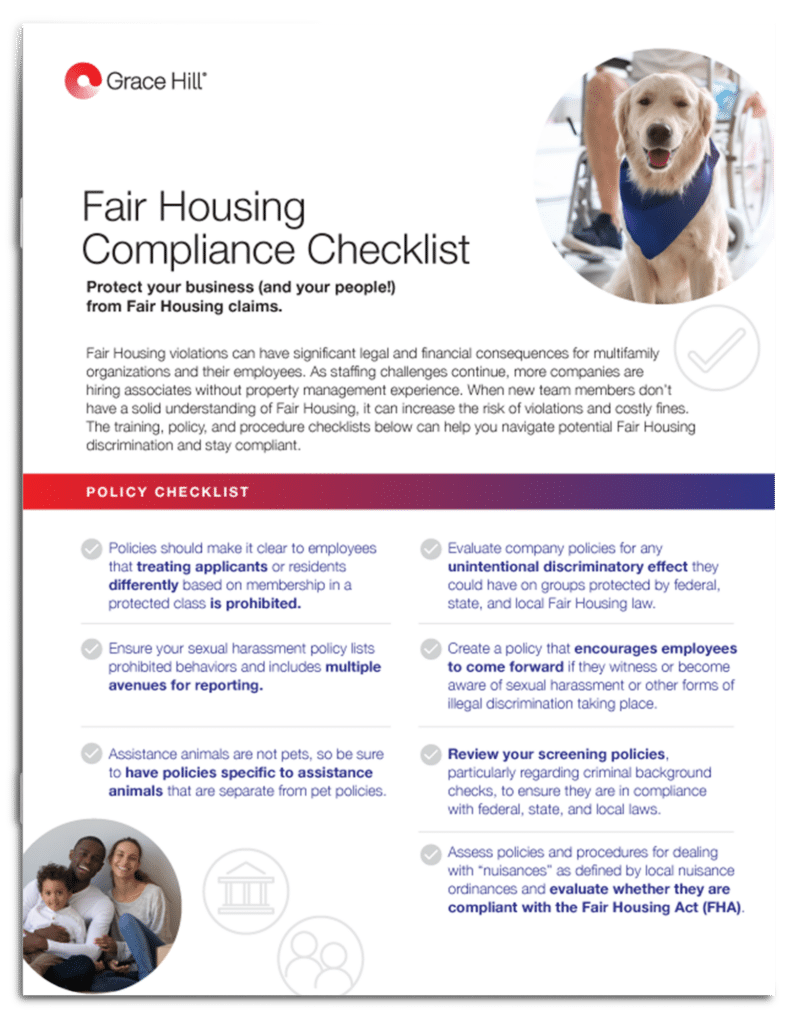
These gaps can lead to inconsistent policy interpretation and increase the likelihood of Fair Housing complaints. To help close these gaps, access the Fair Housing Tool Kit for practical guidance, training resources, and best practices your team can apply right away.
Why Annual Training Alone Isn’t Enough
Most compliance issues don’t occur because teams intentionally ignore Fair Housing requirements. They occur because new employees are still learning the rules while already performing their job responsibilities. When Fair Housing training is delayed or inconsistent, organizations may struggle to demonstrate compliance during audits or investigations.
What Leading Operators Do to Reduce Fair Housing Risk
Organizations that strengthen their compliance posture typically:
- Implement structured onboarding pathways for new hires
- Require Fair Housing training before resident interaction
- Standardize policies and training across all properties
- Centralize documentation and reporting for audit readiness
- Provide managers with visibility into compliance across their teams
This approach helps ensure Fair Housing policies are applied consistently across the entire portfolio.

Recommended Next Steps
Reducing compliance risk starts with strengthening your onboarding process.
Access Grace Hill’s Fair Housing Tool Kit for immediate guidance, and explore Onboarding Pathways to implement structured, role-based onboarding that prepares employees before they engage with residents.
More Fair Housing and Employee Onboarding Tools

Fair Housing Tool Kit (2026 Update)

Onboarding Pathways in PerformanceHQ Preview