


 Customer Support


ON-DEMAND WEBINAR
Taking Care of Employees, Residents and Yourself: A Conversation on Mental Health
May is Mental Health Awareness Month, and we invite you to join us for an important conversation addressing this often-overlooked topic. It has been comforting to see companies meet the COVID-19 challenges with such creativity, heart, and kindness these past 12 months. But as the pandemic has continued far longer than most expected, the daily wear and tear is at an all-time high. Often, apartment industry employees regard their self-care as secondary to the help they provide for the people they serve. While employees and residents are a top priority, we cannot properly pour into others’ glasses when our own glasses are half empty.
Watch our panel of experts as we openly discuss the current challenges of self-care and viable solutions that are working as we navigate this uncharted environment.
Okay, I think we're gonna go ahead and get started and continue to allow participants to join us. Welcome to our Mental Health Awareness webinar everyone. Today, Stephanie Anderson, Grace Hill Senior Director of Content Strategy will be leading our panel of experts in an important discussion on mental health. Here are a few reminders though. This webinar will be recorded and shared with all registrants via email later. And to maximize our time together, we've got everyone in listen only mode. Please enter your questions in the Q and A section and we'll get to your questions at the end of the presentation. Now I'm gonna turn some time over to Stephanie Anderson who will introduce our panelists and get the conversation started. But I wanted to go ahead and say a few things about Stephanie first. She has fifteen years of property management experience. She brings a wealth of knowledge specializing in revenue management, creative marketing and employee development. She's a powerhouse speaker and we're lucky to have her at Grace Hill. And she shares her industry knowledge motivates professionals to great success and disrupts the status quo and out of the box ideas and trends. She's a graduate of the Virginia Commonwealth University, where she holds a English major and women's studies. She holds a Virginia real estate license and is certified as a national instructor for an NAAEI. And this time I'll turn the time over to Stephanie. Lynn, thank you so much. That was a great introduction. I have to say go Rams as a VCU graduate. Anyone who is from Richmond or knows Richmond knows it is Rams Nation. Okay, so I'm really thrilled to be here today and we're gonna have a really great conversation on mental health. And that's such top of mind for so many people now. And I really am excited not only to talk about the topic, but who's going to be joining me here today. Two of my favorites that I have known in the industry for a very, very long time. So it is really my honor to welcome them both to today's webinar. I want to first introduce Kris Tinsley. Kris is the Service Manager and Company Trainer for MAA. If you are anywhere in the state of Virginia, you might recognize Kris as he is well known for teaching CAMT through NAAEI and doing a lot of other certifications through the Apartment Association. He is kind of like the maintenance guru that shares all the ins and outs and is a really, really great instructor. I have to give a shout out to him though because he was just last year twenty twenty NAA's Camt of the Year. So Kris, congratulations on that. Huge, huge honor and I couldn't think of anybody more deserving for that. Kris is joining us from Richmond, Virginia and he works for MAA and has been there for the past twenty five years. Wow, that's just incredible. Also joining us today is my friend Regina Harris. Regina's a regional property manager for Drucker and Falk, also based here out of Richmond, Virginia. I actually met Regina many, many moons ago in the Atlanta, Georgia market, and we have stayed connected for many years since. She has worked for a plethora of organizations leading their executive teams and just has this wealth of knowledge. I always say she has an incredible way with people. And you all know that's my thing is people. And Gina just has a way of leading people, teaching people, and making people want to excel in their careers. And so Gina, thank you so much for being here today. Thanks, Stephanie. So on our agenda today, we're going to be talking about mental health. In this webinar, we plan to show you how to apply lessons learned from the pandemic for future execution. We're going to describe some ways to prioritize yourself as a leader. We're going to go over resources you can provide to your team and then explore tangible ways to boost team morale during trying times, which is really, really important. I want to point out this quote to you really quick before we move on. Poor mental health interferes with a person's ability to complete physical job tasks about twenty percent of the time. Twenty percent of the time. That's huge. It also reduces cognitive performance about thirty five percent of the time. So in case you didn't think that mental health should be top of mind for your executive teams and leaders in your organization, this quote really speaks volumes in terms of your NOI and your bottom line. So if you have company executives that are not exploring the conversation of mental health, this is a great way to start that conversation is to say the proof is in the pudding. It's in the numbers here. Anthem Healthcare, which many of you might be familiar with if you have insurance through them, They asked last year in twenty twenty during the height of the pandemic, they did a poll and not just to those working at Anthem, but those who also use Anthem insurance. And they said, what was the biggest challenge in your workplace in twenty twenty? And as you can see the outline here, what ranks as number one is the support employee mental and physical health. That was a challenge for them. And that could be both personally and professionally, but it was top of mind by forty four percent. That is really, really huge. I wanted to share this last piece of data with you before we dive into discussion today. Mental health in the workplace has become a hot topic. We know that, we're hearing it, and it's been the case for the past few years, even pre COVID. But there's no doubt that there is a negative stigma exists around discussing mental health and specifically in a professional setting. I like to say it makes people feel uncomfortable to talk about it. In fact, many companies don't even like using the term mental health. They feel like it has a negative connotation to it, which is why we ensured that we are using that term today, not only in the title of the webinar, but throughout today's discussion is to try to break the negative stigma that's associated with the term. So according to a report by Oracle, seventy six percent of workers believe their company should be doing more to support the mental health of their workforce. While many organizations want to help employees constructively address mental health, they often don't know where to start. And that's a great segue into today's discussion because we're going to help talk about what's worked for both Regina and Kris and their organizations and start to give some tangible ideas as to where you can start. Okay, so now I know you are not all here to hear me speak this entire time. You are here to talk to Regina and Kris. So let's dive into our first question. I want you to tell me about one lesson that you've learned throughout this recent pandemic. So the past fourteen months and everything that you've incurred. I want you to talk to me about what you learned and where you're going to take that. What one thing would you take or one lesson as you move forward in your future leadership? Gina, I would love for you to start us off. Thanks Stephanie. And one of these, this is probably near and dear to my heart and it's one of the things I don't consider it a lesson for myself. It's something that I think I expanded on and learned a little bit more about myself and with my team members. One of it's related to communication. We all think that we communicate well and that we're delivering the message well. I think the pandemic kind of put us in a different segue of how we communicate, not being able to be in front of individuals. And because a lot of times body language speaks a lot when you're in front of somebody and not being able to do that. And one of the things that is important to me is making sure that we're getting that message down to all levels, down to that groundskeeper, the housekeeper, those that are generally not on a computer. So, they can't sit around and go do the remote thing, getting on the computer or jumping on to email. And I think that was one of the lessons I've learned was is that we need to make sure that we're getting in front of those individuals and getting that same message about how are we, what is our protocols in talking about the pandemic? What are we doing for our employees? What do we have out there? What are we doing for protection and PPE and making sure that they understand what our protocols are gonna be? So, comes down to communication for me. And I wanna say that it's communicating more than over communicating versus just sending out an email. Was more important that we were over delivering that message. And I think that was most important to me and understanding is that it didn't matter how many times we said it, not everybody was truly listening because in their mind, in the mental state that they were at and thinking about COVID, they had a lot of other things on their minds and were they truly hearing the message that we were trying to deliver. So, was more important that we continue to communicate about what our protocols were and what we were doing to assist them and what was available to them. And what were the next steps that we were taking? Because as months went on, it started in March and then April, and we're all thinking, it's going to be all be gone by September, right? Well, now here we are May of twenty twenty one and we're still talking about it. And the other side of it was that as we communicated about it as leaders is that it was important that we were leading by example and that we were walking that talk that we were giving that if we were requiring PPE or if we were safe distancing that we were all practicing that. And making sure that the communication side of that was not just the verbal, it was the actions that we were doing. And that was really important. It was important to me enough to know that it was a lesson to know that the employees understood that I took it serious enough and I was showing that and making that action happen. I think that's great. When you talk about communication, how important is authenticity, Regina, when you're delivering that message to your teams? It's very important. They to understand and believe what because you're leading them and they look up to you. And that message has to be, it has to be honest. They have to know that it's heartfelt and that the message that you are delivering, you're going to execute upon it. It can't just be words. They have to know that you're going to deliver what you're saying, especially in those times, because these were uncertain times for everything. I mean, you had employees that they didn't know what was gonna happen with their children going to having to do virtual learning. And we're not doctors, we don't what the pandemic is going to do or what the if somebody was sick, we were trying to make those educational decisions for individuals. You had to be able to be honest and heartfelt and being open to listening. That's the other side of it as well. We talk about empathy quite a lot when it comes to how we treat our residents, but equally as important as that empathy when it comes to what your colleagues and employees are going through. Correct. So Kris, talk to me about what you've learned this past year. My biggest thing is patience, you know, with everyone, including the residents, including the staff, you know, vendors, contractors, you know, whomever we have, because you really don't know what they're going through, you know, what is their stress level, you know, and you just have to give them patience, give them room and not demand things. You know, I've kind of learned how to change my words around, you know, especially with my site people, you know, instead of, you know, getting them to say, I need you to go do this. Hey, would you mind doing me a favor? Can you go over here and knock this out? You know, but just, you know, patience and changing words around a little bit and kind of giving them a little bit of space and let them dissect what you're trying to get them to do before you start going off the deep end of, Hey, why haven't you gone up here and done this yet? You know, I need you hurry up and do this, you know? And just, you know, that's the biggest thing. It's just the patient side of it. And then keeping an eye on the staff, you know, making sure that they're still doing good. You know, ask them, you know, questions, you know, if they wanna talk to you about personal stuff, then let them talk. If they don't, I understand that on that side of it too. But I still want to know, you know, you're feeling. You know, if you're having a very, you know, my staff, if they're, if I've got one of my techs that's having a very stressful day, I'm going to give them a little bit of an easier job and I'll take over the harder job, know, that side of it, you know, so that they, you know, are not getting too overwhelmed off of it, but just patience and communications. I mean, that's the two biggest things that I'm gonna take away from all of this because without those two, Lord, one knows where we'd be at this point in time in life. Yeah, that's a great point. Something just resonated with me when you talked about checking in with people and asking them how they are. Oftentimes I think we are very busy both personally and professionally and we ask someone how are you? And oftentimes we say that because that's the next thing you say. Hi, Gina. Hi, Kris. How are you today? And you're not necessarily saying it to listen to it. It's more of a greeting or mannerisms that you do versus now we have to ask that question and then truly listen because we want to know how are you and wait for that response for them to tell you how they are because just as you spoke about Kris that's how you're then going to dictate how you're leading them. I'm talking about taking it easier on them or being a better support system to them. You can't do that if you're not listening. Yeah, you definitely gotta give them some time to give us some space, you know, on it and yeah, I mean, it's definitely different than what it was two years ago. That's for sure. Hey, that's a mouthful. Our business protocol has changed. I mean, it's going from how are you servicing the residents? And how are you doing preventive maintenance? How are service teams, especially for our service teams, because they're in the grind with the public. And the expectations were, we can't stop maintaining those buildings and the units. You have to continue to maintain them. And it's how do we give them the knowledge, and to Chris's point, the patience to work through that and understanding. And dealing with the residents, you know, too, with everything going on, you know, I've got some residents that want to be home when we come in and do the work so they can see where we are at in the apartment, what did we touch because they're going to go behind us and clean. Have other residents that do not wanna be nowhere near the property when we come out to do the work orders. They wanna make sure that it is gone. And then that's added stress level there because on the service side of it, you set an appointment, I guarantee you within five minutes of that appointment, every single time, there's gonna be another emergency that's gonna come up that I'm not gonna be able to get to that point. Yeah. Yeah. So that's a real high stress level there. And I'll make sure that I have at least one tech who's basically standing around doing absolutely nothing that can take care of that appointment when it comes in where the rest of us can go to handle that emergency. And that way we can keep the residents happy. You know, we can get everything done like we're supposed to in the timeframe that we need to. They can go back to their normal day, you know, come back to the apartment if that's what they left, you know, and then, you know, now within school, you know, virtual learning and for school, a lot of their work orders are, you know, coming in for appointments at three thirty and four o'clock in the afternoon when school lights up. Well, may not be able to get to all those appointments at that timeframe. Right. There's a lot of the jobs are not five minute jobs. So trying to balance that workload with the service manager and property manager, a lot of that scheduling falls on them. And then next year you get stressed out on that, trying to keep up with all of that, but then also trying to keep the residents happy in the same sense. It's a lot. And then talking them off the ledge after they've been in an apartment that they realize that somebody had COVID. Yes. Yeah. I mean, it's having that communication with them and helping them understand, did you wear your mask? Did you properly say, you sanitizing? But still, there's that worry in there. It goes back to that mental side of it. They have to take it home. It affects all aspects. Man, I mean, we come out of an apartment, we basically fog ourselves and all the equipment and drop the gloves and drop the mask and gather up the gloves and new mask and go to the next one. And then when we get done with that, we fall down again and change up everything again and go to the next one. That's one of the biggest things is adding that ten minute timeframe in between work orders that we're not used to. You run six work orders and ten minutes every time you got a prep, that's an extra hour of the day right there gone. Right. So true. Yeah. So Kris, know, Regina just brought up a minute ago about maintenance and especially maintenance working on the front line. How did you and your other maintenance professionals that whether they're at your property, in your company, or just in the industry, how do you feel when everyone around you is talking about work from home, work from home, work from home, and you don't have that option? How does that feel and how how does that put into perspective in terms of your motivation every day? Well, I can speak for myself and probably fifty or sixty percent of the maintenance that's out there is there's no way we could work from home. That would drive us completely insane. So us, you know, having our normalcy through this pandemic of still going to work Monday through Friday, you know, forty hours a week, you know, doing our normal thing. I think that's what helped us keep a lot of air sanity through this because I have talked to a lot of residents that were forced to work from home. And they first thought was, oh, this is gonna be great. I'm gonna love this. I'm not gonna have to get up and go fight traffic. I can know, just put a dress shirt on and I can still have my pajama bottoms on and all this stuff. Know, within about three weeks, we go back and we do another work order. Well, they're not, they're like, man, I need to go back to the office. I can't handle this. This is this is, you know, you know, they were like, I can't believe it but this is actually stressful. You know, so I think for us, maintaining air normalcy and you know, basically just getting gloves and a mask was, you know, and some spray was the biggest part of air change but everything else pretty much stayed the same. For myself, that's what kept my sanity in place. You know, I can't speak for everybody, but with myself and my techs on my property, that's pretty much what kept us going and kept us motivated. And nothing really changed other than getting masks and some spray and some gloves. And we just kept on doing our thing. We were a little bit more cautious when we go into occupied units. We do go in for vacant units and we do a fogging in the vacant unit right off the bat. And then we go in and start doing our turn afterwards just as a precaution whether the person had COVID or not. We just do it as a precaution all the way across the board. You know, so a lot of that stuff, you know, is a little bit different off of it but we we got to keep our normal seat. Yeah, that's really important. You're keeping a schedule. You're going and doing things. It keeps your mind busy. But I think it's important to note that everyone working on those front lines regardless of what your position is, you know, we really commend you all for doing that because it's been very uncertain times and especially at the height of the pandemic when none of us really knew what was going on and what the future would hold. Really, you know, a lot of heroes working in this industry, no doubt. Agree. So let's transition just a little bit. Let's talk about how you've best supported your employees and your teammates. Kris, you wanna kick us off here? Yeah, mean, far as support, kind of touched base on it a little bit earlier, but I mean, just talking to my techs every single day. You know, every morning, you know, we take about a five minute time just to kind of go over what we're gonna do today, And then ask them, how was your evening? If you were on call, did you get anything? If you're not on call, did you spend time with family? And then during the day we catch up right before lunch, right after lunch. And then at the end of the day, you know, we just go over everything, make sure everybody's still doing good, you know, and I go and I go around and I check on everybody to make sure that everybody's, you know, doing okay. They're not having any kind of hard problems with the job, you know, and I'm not, one that's gonna sit in the office all day. So I'm a working service manager. So I'm out there, you know, changing the faucets to water heaters, painting apartments, turning the apartments, you know, whatever. And, you know, just that part, I think builds a huge amount of support with your team when you're out there and you know, yes, you may be a service manager, but you're the first one in the fire every single time. You know, if there's whatever work order it is, I don't shy away from any work orders. It doesn't matter what it is. I'll be the first one to grab the work order and take off. You know, I've got one of my techs, you know, he's like, you know, are you ever gonna let me actually do any work? He said, all I feel like I do is a parts getter. You know, and because that's the way I am, you know, just to show that, you know, by leading, you know, as a leader, you're the first one to go in here to it. So, with that, you know, that does set a good tone with everybody that's on the staff. So, nobody is, you know, given the bad jobs or the hard jobs or anything else like that. We all work together. We're all going for the same goal. We're trying to keep the property one hundred percent occupied and we're trying to keep all the residents happy. And in the meantime, we keep ourselves happy. Because we joke around and we laugh and we play pranks on ourselves, you know, each other all day long. Which, you know, keeps us going. That keeps them around going within the staff. You know, that, you know, yes, we're going through a pandemic. Yes, things have changed but they've only changed a little bit for us. You know, we still keep the happiness. We still keep the smiles and you know, and I ask the guys all the time, probably fifty, sixty times a day. You're doing okay. Anything I can help you with. Anything's going on. You know, one of my texts today, you know, says, you know, hey, and I may need to take some time off. Okay. Whenever you need to take some time off. He goes, well, you know, do you, is there, is there a better time for me to take it off or not? No. Whatever you want to take your time off, you take your time off. It's your time. You do what you need to do. Get yourself together and then come back when you when you get back. Whatever's here will be here. Whatever gets done will get done. Don't sweat this property one bit when you take your time. And that's, you know, that's the big thing. You know, everybody's got vacation times and whatnot. Yeah, there's not a whole lot of travel time and whatnot. Do some stay vacations. You know, stay home vacations, you know, kind of deal. Just get away for a little bit. Take a Friday off. Take a Monday off. Take a Wednesday off. Whatever you want to take off. But just keep yourself together and for any property managers or service managers or regionals out there, just check on your teams. You know, just a quick minute, five minute, you know, phone call. Emails are great. But I'm old school. Give me a phone call or an in person. We can do in person. We might be six foot apart from each other, but we can still do in person. And it means a lot for sight to see the regional or senior vice presidents come to the properties and just say, hey, we're here for you. We don't get to see you enough like we used to, but we're still here. That's the biggest thing. That's your support. And we're all family. We were talking about it before we got on the webinar that there's, you know, there's no place that you can go inside this industry that you don't know somebody. Yeah. I mean, you can go to California and know somebody in the industry off of that side of it. So, we're nothing but a big family off of this. So, go with it. Even for coworkers that don't work with you anymore and moved on to another management company, I've called them. Hey, you doing okay? You know, everything's going great because that person may come back to you one day and you know, just make sure you always have that open door support no matter what it is. My phone is always on. Anybody wants to talk. I don't care if it's after hours, during hours, whatever. You give me a call, we'll get through. That's great. I mean, I think Kris, you said it right too. And I think some of always asking that question. It's getting down to the personal side of it. I think this really, it opened that door for us to, how are you? How is your family? How is virtual school going? Is there anything that we can do for you? And it's whether it's personal or professional, just opening that up and being there and being present and listening, just listening, I think is a bigger support than anything, just knowing that they have another or an avenue to voice their concerns. The other side of it is reminding the team members, like Krisann said, use your vacation and your sick leave. It's there for a reason. Don't build it up to the, this is the time to use it. And if you are not feeling well, it's okay to stay home. And you have to give them that assurance that it's okay to call out sick. And in the past, it's like, okay, we're so busy, you cannot not be here. We'll figure it out. You've got to be able to and especially not knowing whether it's, is it a cold or is it allergies or whatever it may be. If you're not feeling well and you're not a hundred percent, it's better to be at a hundred percent at work. Take that time to rest and recuperate and come back the next day when you can be one hundred percent. Just in supporting those team members and knowing that it's okay to call out and use that time and do pre schedule your vacation. We have what six months, seven months left out of the year, do it. You've got that time. There's a lot of places you can go to what Kris had just said, that it can be stay vacations, stay at home and do some DIY projects, whatever it is. Go to the local parks, take a week at home. It's okay to sit on the couch and read a book to do those kinds of things. But supporting them and knowing the adjustments we had to make in working remotely and doing the virtual learning, giving them that kind of support and knowing that we had to do it, we had to work with less in the office. Also, allowed under the work remote, we actually staggered schedules. So, that during that time that we didn't, if we had an office team of four, two would work at home two days, know, two at home and two in the office, and we kind of staggered that. So, we didn't, if somebody did get exposed, it wasn't that we lost the entire staff and knowing that that was there. One of the things that we've recently done now that things are beginning to loosen up and the vaccines are out there, D and F is where actually Drucker and Falk is putting out there for those employees that get vaccinated and they have full vaccination that they're getting an extra day off of vacation added to their time. And just letting them know we're supporting that and we're moving that through and trying to get it so that one day we will get back to some type of normalcy. I don't think it's gonna be a hundred percent normal, but I think it gets us there. And it's relief in the mindset of individuals that, hey, I do work with it. All my teammates are all vaccinated. So, I think that takes some of the worry out of it. The other thing that we did is we brought in our vendors. Have them support lunches. Meals always get wins at the end of the day, Eating the team members wins. Especially those maintenance guys I hear. Oh, I'm telling you. They love the food. They love the food. Doesn't matter if breakfast, lunch, dinner. And the other thing we support in just recognizing those that have gone above and beyond doing the employee recognition and making sure that we provided the PPE that it was there for them. You mentioned about incentivizing employees to get the vaccination. I love that you're not penalizing them and I love that you're not requiring it and enforcing it because there's a lot of legalities around all of that and it's comfort level for all employees but you're saying if you do this, you know, there's there's something in it extra for you because that's volumes to a company culture in terms of of what they want happen and you know, with safety always top of mind. So I think that that's great. And Kris, you mentioned some incentivizing as well that your company did last year and this year, right? Yeah, last year we got an extra week of vacation and then this year they're giving us an extra day and a half when you get vaccinated. Wow. You know, it's the little things that are extremely powerful for people. You know, oftentimes you'll have employees that wanna hoard their time, even pre COVID. They worry about what if. What if something happens? What if I need that time? What if I have to someone sick or myself? And, you know, we need those mental health days more than ever. In fact, some companies, you know, offer mental health days separate from vacation and separate from, you personal or sick days. And that's because they're encouraging you to take the time that you need when you need it. It's okay. Every individual needs to understand it's okay to take those days. And it's okay to have a day that if you just wanna call it a mental day, because everybody has a bad day and you need that break. Yeah, then there's also, a lot of the healthcare providers with Cigna or Blue Cross Blue Shield or Bon Securve or whatever it's called, You know, they actually have now where they have COVID support. You know, so I mean, there is extra stuff that you can do on that. If you just need to talk to someone, you know, and, you know, a lot of those people, you know, you look at it there, neutral people. They're not gonna explain you one way or the other. They're not a family member that's gonna go tell the rest of the family or anything else like that. You know, and some people just need to talk and, you know, and that's enough, you know, just enough to get it out there for someone to hear it and just give a couple little pieces of advice and then everything's fine off of it. But there's a lot of stuff that's out there. There's a lot of resources out there. So if you do need extra support or if you're having a bad time on it, there's plenty of people out there. There's plenty of telephone numbers. There's plenty of websites that you can get extra quick help off of it and then make it so the stress level comes back down. Because that's the name of the game is keeping the stress level down. Right. And you just segued it right perfectly. Like, couldn't have planned that better. Promise everyone watching, it's not scripted, but that was great segue into this. You know, we've got some resources on your screen that you can look at to provide employees. I think oftentimes we hear companies worry about the cost of, you know, implementing these. Oftentimes there's things you can do that won't cost at all, but I always encourage people to think about what it's going to cost when you lose that employee. Whether they leave completely or they just become less productive, you're actually losing more in those scenarios than you are if you were implementing, you know, some of these suggestions. And I would love, Regina and Kris, let's talk a little bit about what your companies may be offering to promote health and wellness for the mind and body and just any type of resources, even if your company doesn't offer that you would suggest looking into. Regina, let's start with you. So, at Drucker and FOP, we have what we call an EAP program. It's the employee's assistance program. It's something that, and it was funny, was just talking to an employee this morning and she said, why did I know you were gonna tell me that at the end of my And they just know that I'm very passionate about this because it's you all went to Chris's point, you need an avenue to go to talk about whether it's COVID, whether it's you've got something ongoing personally within your financing legally, your child's got something going on. There's always something going on in your mind that you need somebody else to speak to. And it might not be somebody at work, it might not be your spouse, it might not be, you know, your friend, you need a mutual individual and those type of programs. And I want to say there's a lot of employers that have them and may not be listed as an assistance, employee assistance program, but there's something generally through your health insurance that is provided and D and F would provide this and it's free to all employees. And it can be used if we had a situation, if there was an incident on a site that we could bring this group in to help the employees cope with it, help residents cope with it. So, there's a lot of programs out to Chris' point that you can reach out to and get assistance for. You're not in this alone at the end of the day. There are groups out there, there's telephone numbers you can call to get the assistance. The other side of it, there's other wellness programs that you have within like within Anthem, have other wellness programs that we have that are for physical, that we can do challenge. We do walk challenges within our company that are driven through Anthem and through our wellness program that we can track. There's newsletters that are out there. You just have to get those resources and make sure that you're sharing them with the team members. There's so much out there that our team members don't realize that we have. And it's because we don't talk about them as often as we should, they're not getting down to the right hands. And we just have to continue to, we have to continue, we have to communicate all that. We have to make sure we're sharing those resources. Yeah, that's a great point, Gina. Many companies share them during the onboarding process because it's important to share the benefits, but you probably won't remember when you're inundated with information. And then when you actually need something, you wanna feel like you have some of support and where to go to get it. And keep in mind, a lot of employees may not feel comfortable asking their supervisor directly about that because if I'm going to ask Kris and he's my supervisor, I don't want him to think less of me that I'm asking for help because something's going on in my personal professional life. I would rather be able to have those resources at my fingertips and decide later to loop Kris in, but it's really my privacy at that point that I may not want to. Right. Well, and the other thing too that we forget about is through this past year, many of us may have not gotten our physicals, our normal physicals that we get. That most of your health insurances give you a discount or some type of benefit for getting that. And that is all part of your mental and your physical side of it that you know, you got to get back into that normalcy. Making you know, just go back and look at the resources that you have through your company and what is available through your health insurance that you can tap into. And MMA, what we have here is we have a whole COVID section where if you have any questions about COVID or if you've gone to the doctor and you don't know if you could be released or not or anything else like that, you have the number and they go over everything with you if you have any questions or concerns or just need to have a mental moment or anything, that's a whole COVID section right there. They know that we deal with. They've got a whole bunch of new mental awareness, you know, pages on their websites and stuff that you can go to or like I said, like I said before, you can just talk to someone and it's free. You know, it it's just part of the the the program that we have now, you know, so, I mean, there's different, plenty of different avenues that you can, you know, you can find and in AA, they come out pretty much every day. They have a new part of the email that they send out as far as any kind of new COVID testings, new COVID information, you know, wellness information, mental information. Every day we're getting a new email on a new place that we can click on to or a new number we can call on. So, there are tons and tons of resources for that. So, if there's anybody out there or anybody that knows anybody that's out there that's having a hard time with this, don't let them suffer. Give them what Stephanie's got here on the page now. There's plenty of places where they can go. Get them some help, point them in the right direction. Dial the number if you need to, the phone up there through the ear, something. But definitely watch out for your neighbors, your coworkers, your residents, vendors, contractors, everybody has said before, just keep an eye on everybody. And then one of the first indications is that if we have an employee that generally performs very well, and then all of a sudden you've seen a change in them, whether it's their mental or their physical, you know, some people may not be taking care of themselves as well. Have to, to Chris's point, you need to talk to them, you need to ask them. And if you're afraid to do it, then you need to find somebody that will do it. Say something to somebody if you see that that person is struggling so that they can help them. Because if you had an employee that was performing so well, and then through all of this that you've seen a change, to me, I feel like we have an obligation to say something because that employee is a great employee. It's our responsibility to make sure that we're addressing that with them. Whether it's a performance, you do that whole performance conversation, have that conversation, but at the end of it, it's how can I help you? I see that these things are going on And you can recommend them to Kris's point, Google it. We all have the fun, Google it. If you don't want to use something through the company because you feel that somebody's going to know something, then refer them to the internet. And maybe print some pamphlets off beforehand that they can have it and they can take with them. We're not doctors, but we're there to help guide them and give them that assurance that we're there to help support them. Yeah, at the bare minimum, we got an ear, Bend it all day long. You've been my ear all day long. I'll listen. And follow-up with them. Yeah, follow-up is key, right? So making sure that they you have consistency in that, that they know not just giving lip service, but like you mentioned earlier, Regina, actually acting on that. Yep. Agreed. All right, so I wanna change up the conversation just a little bit because we've talked about taking care of our employees. We've talked about, you know, communication and even with residents. I really want to talk about self care because self care kind of has a little bit of negativity around it sometimes. Know, I'm a mom of three at home with three kids during a pandemic. If I'm going to go get, you know, my nails done or my hair done because that might be my self care, would somebody else see that as selfishness or she's not prioritizing her kid or things like that. And I think oftentimes that happens a lot in the professional setting as well is we take care of everyone else before ourselves. So when you're on the airplane, what is it that they always tell you? Your oxygen mask drops. You must put it on yourself before you help someone else. But that's hard because we all want to help each other, and oftentimes we put others in front of ourselves, We prioritize them. So I want you all to kind of walk me through, like, how are you prioritizing you and how are you taking care of yourselves? Kris, you wanna start us off here? Yeah, mean, as far as prioritizing myself, I mean, I don't know, I guess I may be weird, I'm not sure, but mine is actually work, keeping the property up and running, coming in every day. You know, my, I guess my well-beingness is being at work. You know, that's my normalcy. You know, I'm all good to go. You know, if you probably took that away from me, then yeah, I would be all over the place. I'd be looking for the one-eight hundred numbers. I'd be pulling up this webinar right now and looking for your little click on moments that you've got on there for any kind of help off of it. But for me, it's just doing the normal everyday thing and then making sure everybody is good around me. And you know, and yes, I've gone out and I've done a couple of things just for myself. You know, I've gotten a couple of new tattoos and I've done a little, you know, couple of little quick two or three hour little vacations for myself for a moment just by myself, know, doing my thing, you know, off of that side of it. So, you know, that kind of helps out and you know, honestly, if anybody thinks bad of me doing that, then, that's just the way that they can think because myself inside, I feel good about it. So. Yes. You know, that's that's it. Know, I mean, I I just, you know, do little pieces here and there. And I think it's all about finding joy, right? So, you mentioned getting a tattoo. Now, one might cringe and say, oh, a tattoo, that sounds painful but it's what brings you joy and that's you prioritizing yourself and taking care of yourself. I love that example. Yeah, they say, you wanna get your nails or your hair done, you know, that brings you joy off of it. You know, a tattoo would be bringing joy off me. So everybody's got their own joy and that's the thing. Go find your joy. Right. No judging. No, no judging at all. Not the first one. No. I'll say that at the beginning it was tough for me. I got into it but working from home was not for me. It was hard because like Kris, I'm a workaholic. I love what I do. I don't know why. Just love it. It's in my blood and I can't get rid of it. So, I would work all day long and just keep on working. Then I realized that one, I wasn't practicing what I was preaching. And then two is that it wasn't good for me because I just I sat myself at my desk and I was ignoring the birds, the dogs, the husband, the son and the grandkids. And I began to realize that I need to get out and I need to find a way to do what I was enjoying before because I love gardening. I love getting out and I do love going out and walking. But the one thing that drove me crazy was the phone. I had the notifications on and it's like I had to turn that off. Have not and I actually I turned it off and I have not turned it back on yet because I would get email notifications. Notifications, I would get phone call messages and I was always looking at it. So, it was like a twenty four hour nonstop. And so, had to turn that off in order to decompress. I found myself as you know what, at eleven thirty I'd go out and take a walk around the neighborhood even if it was for fifteen minutes just to get out from behind the desk to realize what I was missing. Turned the news off. Eventually I had to turn the news off because it just became so much. It was overwhelming with all the information and how did I disseminate it? What was I taking in? And it made me worry even more. So, I turned the news off because it was hard to continue to listen to it. I got a little bits here and there. I would look on the internet or I would watch the evening news for only a couple minutes but then it went away and it went back to reality TV, right? And you know it just but it was hard. It was hard at first getting to that because it's staying at home and not being able to go into the stores. I have a situation at home where I have a husband that system was compromised. So, trying to, you know, worried about taking that at home. I had to manage that side of it. And I found myself eventually, I realized, you know, let me go build a bubble somewhere. I found a community that I could build myself around in that poor community. I felt sorry for them, because I'd end up being there for most of the time. But I built my bubble and I stayed in that bubble. So, it got me out of getting into that rut and making sure mentally that I was around other people and been able to have general conversations. I ate in a restaurant for the first time about two weeks ago. It's been over a year. And so, it was being able to go and enjoy that. So, it was tough though at first, it really was. But you have to find those things that you enjoy and get back to doing it. If it's doing tattoos, or if it's doing puzzles, or whatever it may be, those things are still there. So, you can go back to them. Okay, so what you're saying, Gina, is that me, you and Kris are going to get tattoos after this. Oh, are we? That's what I heard. Okay. I'll get, I'll let Kris get one for me. You'll be there for emotional support. There we go, there we go. All right, Regina's our support officer. We got it. You got it. I've watched my husband get them and I'll watch you all can get them. You know, Gina, you just mentioned talking, know, turning off the TV and, you know, having to kind of separate yourself from some of those things. And it reminds me of the idea of you are what you consume. So when you whether it's TV or books or the people you're around, when you're around constant negativity or dark and doom and gloom, you know, it really puts you in in not good mental space. And if you're already going through things like isolation and separation from people, that is just kind of like taking it on, right, till you get to that boiling point. And so I love that you acknowledge that and say, let me cut that off, know, that can wait. There is a book that I'm going to mention in the resources that I love. You can get it off of Amazon and it's not industry specific, but it talks about how to break up with your phone. And for me personally, I get anxiety if my phone's not nearby. And not just because, know, I like social media and I like staying connected to people, but I worry about my parents. I worry about my children. I worry if there's an emergency, is someone going to need me and how can they get to me as quickly as possible? And it's that overstimulation, right? That you have to know everything at all times. Meanwhile, people survived plenty without all of that back in the day. But I think it just starts, you know, helping with that balance. Having to break up with your phone is one way to do that, to have that self control. So I love that you mentioned that. It became a security blanket, I think, and it does become a security blanket. And especially when out on-site, if you're in your phone twenty fourseven, you're not paying attention to what individuals are saying to you. Are you truly listening? Are you more worried about what's on your watch or what's popping up that somebody just texted and you're looking at your watch? You're in front of somebody and they don't feel like you've got there, it goes back to authenticity. Are you really being authentic with them? Are you listening to what they're saying? Are you gonna be able to and the other side of it, if you're not at a hundred percent, you can't be at a hundred percent for your team. Yes. No, you're exactly right. You can't fill up someone else's cup when yours is empty. Half full, right? Yes. Agree. You definitely need to have time. I mean, I've got my phone set up on there at nine o'clock at night. It goes to do not disturb and it doesn't come back off until six in the morning. Yes. And utilize that technology. You know what made me so nervous? Kris, when people would tell me to put it on do not disturb, I had to go and find out about ways that people could still get to me and call me. You can put in certain numbers or contacts or you can set it to where if somebody calls you back to back, it'll still come through. Because again, my anxiety would kick in and say, what if there was an emergency? What if someone needed me? So there's ways to take that technology with automation and really use it to your advantage so that you can take a mental break. Yeah, mine was do not disturb on any kind of apps that we have with the company, emails, Facebook, messenger, any of that stuff like that gets shut off at nine o'clock and it's done. The phone, you call me, the color will rain, but nothing else will work. Right, right. Yeah. And what's gonna happen if they made a decision? They made a decision, it's okay. We've empowered our teams to do that and we need to entrust them to make that. It's something that can easily be fixed. Yeah, if service tech can't get in touch with me and he busted hole in the wall and it wasn't the right spot for a water leak, I'll all can be fixed. No problem. Right. Yeah, that's a great point. Very true. All right. So let's do a quick time check. We actually only have about ten minutes. So if it's okay with the two of you, I would love to open it up to a little bit of Q and A to see if there's anything going on that we can help our industry friends with. And then while we're letting everyone type into the Q and A box, please ask away anything that you would like to myself, Regina and Kris. I wanted to point out the mental health resources. We talked about one of these already. We will share this slide deck after today's presentation with everyone. And so you'll be able to click on the links and it'll actually take you to where you need to go. I encourage you to check out NAA, NMHC, IREM and Narpum's mental health toolkit that was funded by Yardi. It is a great toolkit that talks about isolation, financial stress, pretty much everything that's going on in your personal professional lives. There's podcasts on there. There's webinars. There's things for you to read. So it's a mixed media for you to really digest information in the best way that's most comfortable for you and give you those resources like we talked about earlier. If you don't wanna use your company resources, that is a great starting point for you. The other thing I wanted to mention was at the very bottom there, how employees can mitigate a looming mental health crisis. This is a podcast that I recently found and it is really, really good. And so I encourage you to check that out, not just if you are going through any issues personally or professionally but as a leader in your organization and I use that term leader. That means groundskeeper all the way up to CEO. You are a leader in your organization. You can help others and that podcast will help you to know what to look for and how to help people in the best possible way. Alright. So let's see. Have we gotten any questions at all? Lynn, let us know if you're seeing anything in the q and a. Cedric said this was very encouraging. We've actually gotten so much positive feedback in the chat. Great conversations going on here about what people's personal experiences are and what their thoughts are on this topic. So I love that that we've had a great chat here. I'm not seeing any questions in the q and a at this time. So let's do this. Don't you, Gina and Kris, as we're wrapping up here, I would love to have each of you just quickly tell me one piece of advice maybe that you could give to anyone listening about their personal mental health or handling mental health as a leader. Anything that you want to share? And I know this is kind of out of left field here, so I'll give you a minute to think about it. Gina, you wanna? Yeah, I mean, to me, it's just know that you always have some place to go. We've talked about the resources today. If you know you don't feel well, take the steps to do it. Depression, mental illness is real. Or if you see somebody, I said that earlier, if you see somebody that's not acting the norm, do something about it. You'll feel better when you do. And it's okay to know that you have that, that there's an issue. You're not the only one out there that is going through depression or has a mental illness. And there's an array of things that fall under that mental illness that there's help out there and you're not in this alone. Yeah, don't try to hide it. Don't try to keep it bottled up inside either you know because all that's going do is make things worse and it's just going to keep you know getting bigger and bigger and bigger off of it and you know open up you know and some people don't like opening up. And my thing I've got here is I've got a notepad. If you wanna talk to me about something, but you don't know how to start the conversation, write it down on a piece of paper, fold it up, put it on my keyboard, or clip it on my golf cart steering wheel or something like that. If you don't wanna talk around with other people, we'll go off on one side of the property or we'll completely get off the property and talk about it or anything. But just don't keep it bottled up. Just let it out. You have plenty of resources. We're all going through a lot of stressful things. You are not an island on this. We are all big one nation of of stress right now. So, let everybody understand that we are all there for you on that side of it but you have to, you have to start it. You have to start the conversation one way or the other. Either come out and say it, leave me a note, do a text, an email, something. There's plenty of ways that you can start that conversation, but don't keep it bottled up. Let it out. I just hope out there, whether it's this COVID or if it's financial, personal, something going on with relationships. It's not just related to the COVID. It's bigger than that because there's going to be something else that's going to come down the line. Look at this gas thing. People are stressing out about the gas thing. It's like, how am I going to get to work? Just have those conversations. There's always going to be stress in the life, right? So, it's just how you deal with it and know that there's always somebody out there you can talk to. Yeah, this industry, I mean, like we talked about many times in here so far, everybody knows everybody in this industry. That's the thing, have plenty of coworkers that may be on the same property as you anymore, may not be with the same company, but you know people all the way around your area, you know, that you can refer to it. You can bounce stuff off of and just see what's going on and you know, just take it from there. But you're nobody listening in on this or anybody in the apartment industry by any means whatsoever. You've got somebody to always talk to. Stephanie, think they said there was two questions in the Q and A. Yeah, Lynn can, I'm not Sure. Okay, Steven Wood, he's getting practical. How do you get the add a day if you were vaccinated? Well, with their company, we just automatically have it. So basically you would show proof. You got your little COVID that you got, you would actually send that to the HR department and then you get your debt. That's the way my company works on it. So, it's the same thing. Just check with your company to see if it's something that they have, then it's the same thing for us. If we provide the card that we were given with the vaccine that we received, we just provide it to our supervisor or to the individual that does our time. And then it gets put in through the system that way. And David asks, how do you balance HIPAA when you're trying to support staff? Oh, the dreaded HIPAA. No, you just go ahead, Chris. No, I'll let Regina answer You don't get into, if the employee divulges, that's up to the employee, but you just don't ask those questions. Just, how are you doing? It's those simple questions. It's not what you say, it's how you say it. And if it gets into that side of it, at the end of the day, they're divulging it, you just have to remember, you don't divulge it. You do not expose that to anybody else. You keep that near and dear to your heart. And that way, it's only the two of you. But you just don't ask those questions. You don't ask what it is. You just ask how they're doing. You're not asking anything more than that. It's just a general question. It opens it up for conversation. Yes. Yeah. And if they want to talk about it, that's fine. But just like Gina said, don't push the issue You know, you don't want to come out and ask that, know, just like Regina said, you know, just throw it out there, see if it sticks. And if they want to keep talking, then let them keep talking. But definitely keep it locked in a storage room that you never let out. Right. It's nobody else's business. Okay. That's all the questions I see right now. Well, thank you, Lynn. Well, we are just at our time. We have one minute to spare, so kudos for us to keeping you on time.
More Mental Health Tools and Insights
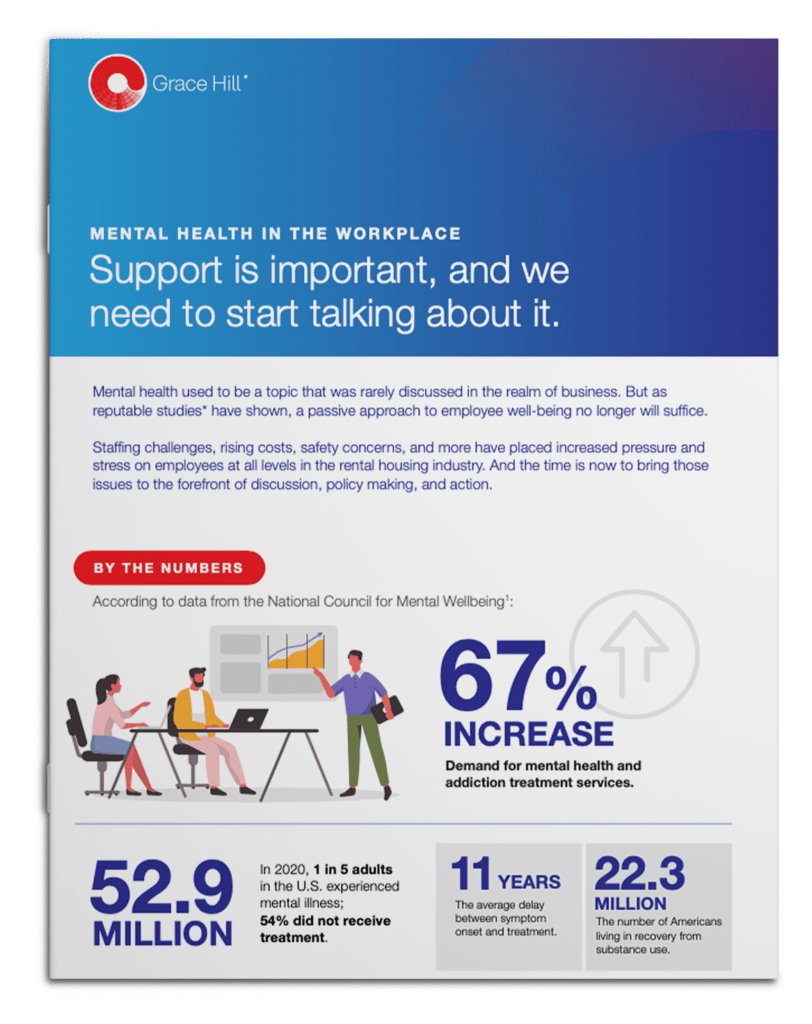
Mental Health in the Workplace
Employee Wellness Is Critical for Employee Performance
