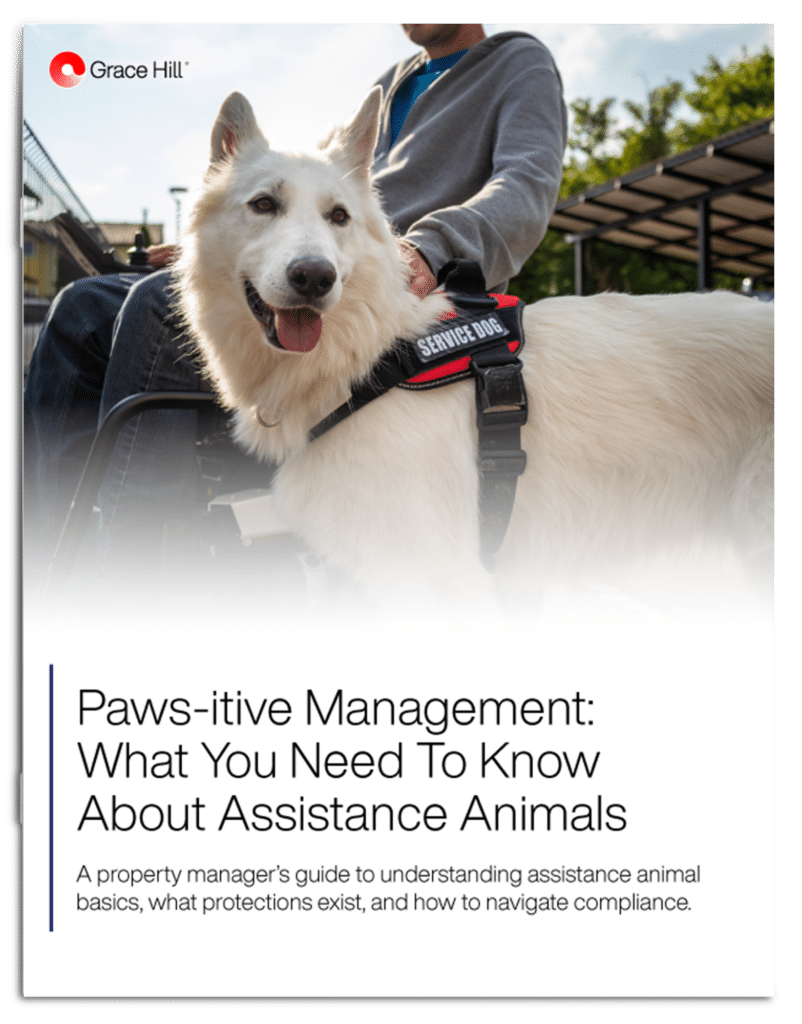
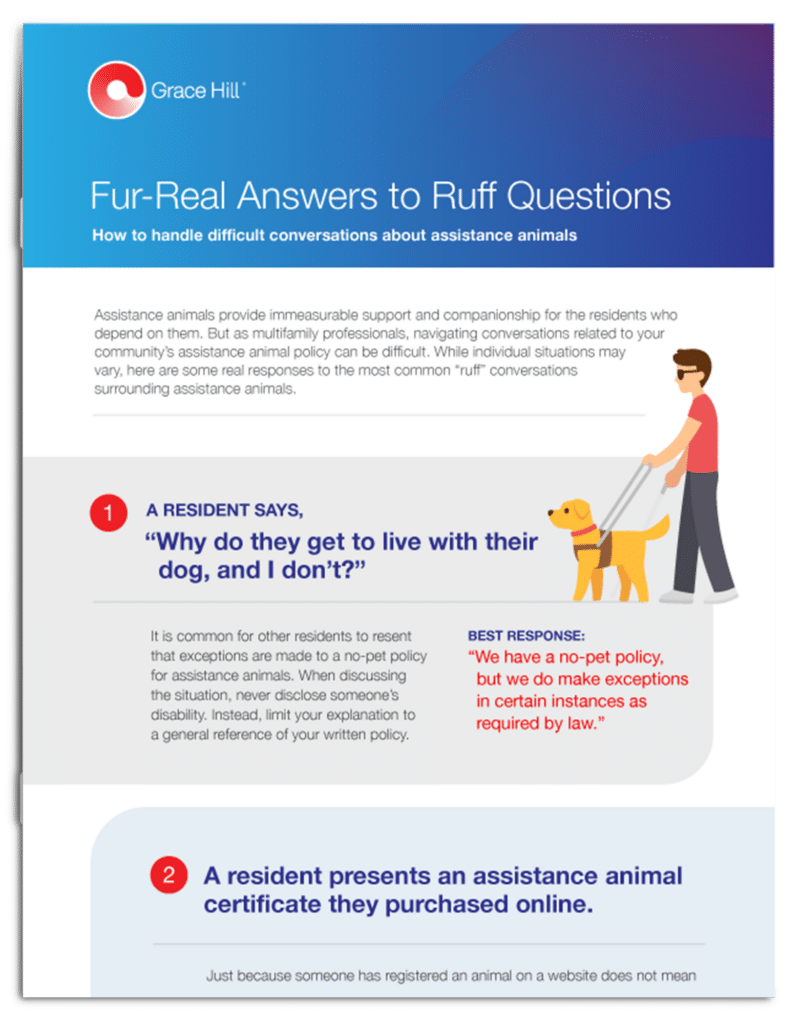
Welcome to Grace Hill's partner spotlights. Today you'll learn why technology adoption depends on education and training, where on-site teams most often struggle with consistency and execution, hint it has to do with pets, how suppliers and operators can work together to drive better outcomes, again, especially as it relates to our pets. My name is Jen Tindle, and I am with Grace Hill as the VP of partnerships and strategic initiatives. If you're not familiar with Grace Hill, we are a leader in multifamily training and recently launched our new supplier training partner program, of which Pet Screening is one of the founding members. I have Arlene Mayfield from Pet Screening with me today. Arlene is the EVP of Sales and Marketing. So Arlene, tell us about your role and what value Pet Screening brings to Multifamily. Thanks, Jen. Thanks for having me today. So as Jen said, I'm Marlene Mayfield. I'm the EVP of sales and marketing at Pet Screening. I've been in the multifamily industry for a few decades now, probably too many to mention. And what we really do at Pet Screening is we are the leading pet policy management software for pets. There's opportunities to boost revenue, as it relates to pets. We verify assistant to animals per HUD and FHA guidelines. We protect assets with better better data, all at no cost, no contract, and no downloaded software. And we'll go through just a few of those things and best practices today. Perfect. Well, let's go ahead and start. Where do property teams tend to underestimate or misunderstand pet policies today? Because, Arlene, I feel like you're best equipped to answer that. Yeah. So, really great great question. I think, from pet screenings perspective, property teams most often underestimate or misunderstand the pet policies in acute few areas. Assistance animal being the first one. This is by far the biggest gap. Many on-site teams still unintentionally treat assistance animals like their pets by charging pet fees or deposits, applying breed or weight restrictions, which they can't do, or requesting improper documentation. There's a lot to keep up with, and the site team members have so much going on on a daily basis. Being trained and on top of that is really difficult for them. So the challenge is that fair housing guidance is nuanced, and it's constantly evolving and changing, not only nationally, but in particular with certain geographies. And so being on top of that is quite a bit of a challenge, and it creates significant compliance risk if the teens aren't possibly trained. Yes. That makes total sense. Yeah. I think there's a couple of other areas as well. There's hidden pets or revenue leakage that we see. Most operators, I think, underestimate how many unauthorized pets exist within their portfolio. So without a centralized verification process, the teams often rely on resident self reporting, which is challenging, visual observation, which I think the site teams love to be out on-site, but they're not out as often as they'd like it like to be, or maintenance staff feedback, which is a big one. When they're going into those units, really for a maintenance or a work order, they find pets without knowing that they are there. Oh, and that is not a fun surprise, I'm sure. Exactly. And it it it could lead not to a safe surprise either, depending on the pet that's in the unit. That is so true. I believe it. I actually have a colleague who works in Multifamily and found out that unexpectedly, one of their residents was breeding puppies in their very small one bedroom apartment. So they very much needed pet screening and actually implemented you guys shortly after. Yeah. Well, that's good. That's that's good to hear. You know, I think there's a few other areas as well. Inconsistent pet policy reinforcement. Oftentimes, policies are driven at the corporate level and pushed down to the site level, but the execution varies dramatically from property to property. I think there's also some risk and revenue balance. I think everyone's looking for revenue, and, you know, that's really what drives the return for the owners. So many teams focus only on the pet revenue and underestimate the importance of liability mitigation, which is huge. Bite risk awareness, we know just on certain bite liability cases that we come across, those can be in upwards of sixty thousand on up to a million dollars. So and then there's fraud prevention, especially with ESAs, and documentation quality. So we see a few different things when it comes to that. That's quite a challenge for the team to keep all of that in their head and to know exactly what to do, which is funny because to some people they may think, oh, pet policies are so straightforward. Like, how hard can it be? But why do they need and require that education and training to get it right? Help help me understand. Yeah. So I'm gonna cover the resident experience first because I think there's no matter what conference you go to or what webinar or blog you're looking at, it's about the resident experience. And I think there's often a misconception that stricter prep policies create friction, which is not necessarily the case. In reality, residents typically respond positive with clearly clarity, consistency, and fairness. A well executed PEP policy actually improves trust and creates better resident experience, which everybody's really looking for. They're looking to make sure that resident moves in and they stay long term. And having that, I think, is very vitally important. The strategic value of the pet data. You know, I often say that when somebody signs up for pet screening, they get the resident data from the resident filling out the out the application. They now and they know what that demographic is of their resident. They now know what the pet demographic is. And without having all of that documentation, they don't know the the pet demographic of their property. So having that is really important because that data can drive ancillary revenue. It could impact their insurance conversations with their insurance carrier. There's operational planning that may need to be done as far as are we gonna add another pet park? Are we going to add another pet washing station? It can impact resident retention. We talk a lot about pets being the new kids. And when you look at the data today, there are more pets in apartment communities than there are children. So people take their pets everywhere. So they're the we all often say that the resident will stay longer if they feel like their pet is really being cared about and those conversations are happening. And it can even increase the asset valuation depending on the increase in pet rent. But the mindset's still shifting and evolving across the industry as the word is getting out. Right. And it is getting out. Like you said, if people have more pets than they do children, I mean, everyone's gotta wake up to that fact that they have to figure out how to care for the pets. That's right. That's right. So let's talk a little bit about how we work together with the Grace Hill Training Partner Program. So what does the Grace Hill Training Partner Program allow you guys at Pet Screening to do that you couldn't do before? Yeah. So we're so grateful for the partnership. So thank you so much. It's really centered around training, onboarding, and technology adoption for the multifamily operators. So the great thing about our partnership is there are so many Grace Hill users, if you will, and there are a lot of pet screening properties and units that have been onboarding. Marrying the two together really gives us the opportunity to make sure that more people are being trained and onboarded properly. So you mentioned that we are a founding member of the new training partner program just launched this year in earlier early twenty twenty six, and it allows the customers to access the free training content from key multifamily technology providers directly inside of the Grace Hill's PerformanceHQ platform. And why does that matter? Because you guys are recognized as multifamily operators, and, now we are able to be part of the PropTech system. And our success depends on ensuring the on-site teams are properly trained on those systems. So it's not just implementing them. It's making sure that that we are to form together as a as a partnership. Right. Yes. Exactly. And to your point, all of this training is free for our mutual customers to access in Grace Hill. So it's amazing for the on-site teams to be able to log in and get access to that pet screening training or for their managers to assign it out to them. And then for supplier partners like you guys, it it helps with customer retention because those customers are then trained and they understand how to use pet screening. Right? There's no doubt. There's so much attrition on-site as we know. And we see that when people are trained properly, it improves the adoption rates. It standardizes the training across all of the portfolios when they're using Grace Hill. We'd like to reduce something that I talked about, just a few minutes ago, operational inconsistency and make sure everybody is trained and they're using platforms, not only Pet Screening, but other platforms consistently, support the compliance and fair housing education, and then increasing onboarding efficiency for new hires on on on-site teams. Let me let me add one other thing. Okay. Think it does reduce the onboarding time, and I'm I'm sure that you guys probably see that with different partners. Yeah. I think that's the only other thing I would add. Perfect. And, yes, having faster onboarding is definitely something that we see because it is simpler if you have all of your products in one LMS, one training platform that you can assign out that training to for your teams. Exactly. Let's get back to the teams. Let's get back to property teams. From their perspective, what does doing pet screening right and not pet screening the company, pet screening the verb actually look like day to day? Making sure that the residents understand the process and view it as fair, transparent, and consistent is key. They're out the pool. They're talking. You know, they talk about everything about the property. And so making sure that they understand that process is key. And then making sure every resident completes the same process. If there is documentation and if they are using pet screening, making sure that they're filling it out whether they have a pet, whether they don't have a pet, or whether they're filling out the documentation on whether they have an assistance animal. Yes. And making sure that the documentation is centralized and verified. So making sure that the on-site team members know where to find any of that paperwork. I think, moreover, assistant animal requests have to be handled compliantly and confidently. Oftentimes, I talk to team members within the same PMC, and they're handling things very differently. One will say, I just let every ESA go through, and the other will say, that's not our policy. You're not supposed to do that. So that consistency is key. Yes. Consistency. And earlier what you said of just being clear. Clarity is kindness. Like, being very clear about what your policies are makes a ton of sense. Absolutely. Well, last question for you, Arlene. What would you say to other suppliers who are thinking about how they could drive better adoption of their product? Yeah. I think that we always think that our product is simple no matter what software company we are, and that onboarding and ongoing execution, is easy. So it's not, though. So you have to make that onboarding as easy as you and as you can to make sure that the teams are implementing it as quickly as they can. And it's not just about the how, it's about the why. Oftentimes, and I said this a few minutes ago, you have somebody from the corporate level pushing a policy down, and the on-site teams have no idea what it's about. So making sure you explain what's in it for them, and how they can increase their revenue, have stronger NOI with whatever product it is, I think, is is critical. I also think that staying engaged. It's never one and done. And, you know, I think we have a tendency because we're so busy in Multifamily, that we think it should be one and done, and ongoing training is critical. It is. Absolutely. Well, Arlene, how could someone learn more about pet screening if they wanted to after our conversation today? Yeah. So anybody can come to pet screening dot com and learn more about pet screening, request a demonstration if they'd like one, or definitely reach out to me directly on LinkedIn, and I would be more than happy to help anybody and point them in the right direction. Perfect. Amazing. Well, I'd be happy to do the same. Again, my name is Jen Tindle. You can find Grace Hill at Grace Hill dot com and our partnerships program at Grace Hill dot com slash partnerships. So like Arlene said, feel free to find me on LinkedIn, send me a DM. And in closing, I just wanna recap the takeaways from Arlene and my conversation today. Technology adoption depends on education and training. And on-site teams struggle with consistency and execution with their pets policies, which is where pet screening can step in. And last but not least, suppliers and operators can work together now by centralizing training to drive better outcomes. Thank you for joining our Grace Hill partner spotlights. We'll see you next time.



 Customer Support