


 Customer Support


In today's competitive workplace, organizations are prioritizing attracting and retaining great team members. But delivering one-size-fits-all leadership styles and recognition programs are leaving employees feeling unseen and unheard. As a result, organizations are experiencing an increase in turnover and employees that only want to do the bare minimum to fulfill their job duties.
If this sounds familiar, it may be time to add leadership language to your professional tool kit! In this webinar, we will help you understand the importance of leadership languages and how to use them to motivate your team members.
Learning Objectives
Review the different types of leadership and motivation languages.
Discover new recognition methods that will motivate team members to give their best.
Consider personalized programs to recognize those on your team.
Good afternoon, we're going to get started here in just a moment. It's going to take a quick minute. And let people get logged in, so hang tight, we'll be right there, but thank you so much for joining us today, and we'll be back in one short minute. Alright. I see our numbers beginning to tick up. And we're going to go ahead and get started. So, hello, and welcome to today's webinar leading -- leadership languages, understanding what motivates your team. My name is Jay Thompson. I'm a senior sales engineer here at Grace Hill. Super excited to be with you. I have been looking forward to hearing Marcy speak for a while now. I have had the distinct pleasure of being a part of her trainings before. But excited to be here and really work with you and hear about this important experience. So I also want to personally thank you for joining us, and I want to extend a special welcome to all of our Grace Hill, Ellis, and Edge to Learn customers. Today's webinar is going to discuss the importance of leadership languages, and how to use them to motivate your team members. But before we get started, just a few housekeeping items. Today's webinar is being recorded, and will be shared with all registered attendees later this week. As an attendee, you are in listen only mode. And this is going to help to, with any kind of outside noise or disruption, so that we make sure everyone can hear today's presentation without interruption. However, if you have questions or you'd like to engage with our guest speaker, please make sure to use the Q and A box that is located on your screen. And now, for the good part, I'm excited to formally introduce today's speaker. So first, I'm going to give you her professional bio, if you will, let me, but Marcy French is a lifelong learner, born into generation x as a biracial unifier and Jedi, which stands for just this equity diversity and inclusion facilitator. Using her unique story, Marcy facilitates tough conversations and creates brave spaces for participants to explore identities, practice empathy, and consider new ideas. She is a member of the board and senior faculty of the National Parmen Association Education, where she applies for more than twenty five years of multifamily experience Marcy, we're going to assume that means you started when you were five. To not only lead, to not only lead, but coach and mentor those in the industry. Marcy earned her certified apartment manager and certified apartment portfolio supervisor designations from the National Apartment Association. She holds a diversity, equity, and inclusion in the workplace certificate from the University of South Florida and is an NA leadership like Sam graduate. Marcy serves as a member of the NAAA curriculum development and program administration committee and previously served as a chair NAAs, diversity, equity, and inclusion committee. So, that's for professional bio, and it is absolutely impressive. But I also just wanted to share personally I have had the pleasure of sitting in again, as I've said, on Marcy's trainings before. And I can tell you, I am in awe not only have heard professionally who she's become and who she is. But I will tell you, I'm also drawn to her character. And who she is as a person. And that is part of the reason why I look up to Marcy, and I want to emulate her in that regard. And I will tell you, I hope today that you will stay engaged and listen. I was just sharing with her. I was recently in a training with her. And I can tell you those conversations that she facilitated have lasted long beyond that powerful training that we went through. We actually were having conversations about it. Even last week. And I am just mesmerized, by the way, Marcy, that you can really take these conversations, lead them with empathy create these brave spaces, provide powerful lenses to really look through. So, I am super excited for all of you that have been able to join us. And really what Marcy is going to be able to bring to the table. So, with that said, if you would please welcome to our virtual stage, Marcy French. Jay, that was the most incredible introduction I think I've ever had. I will send you the check tomorrow. That was such such nice things you say. I I'm here because I love this industry, like most of you, I love what I do. I've had the fortunate ability to meet amazing people like Jay along the way, and Stephanie Anderson who invited me to be here with you all today. So I'd love to just get after it and talk a little bit about leadership languages. What exactly motivates your teams? So what are we gonna do today? We're going to sorry, I'm working off of a new system, so let me close this so I can see what I'm doing. Okay. We are going to unlock the leadership. Excuse me. Sorry. I cannot see my screen. We're gonna unlock the leadership languages that motivate your team because it's not working. When you discover what motivates your team, they are gonna give you the best of who they are, and that's the idea. An engaged team creates a positive cycle of benefits, productivity, innovations, and success. So I want you to be thinking about what motivates you. But in the meantime, I wanna just mention to you what I believe to be the new pandemic. We talked about COVID. We talked about COVID still and all of the things that impacted our industry in the workplace, but I believe now the new pandemic is low engagement. It's a global issue. If you pull up Gallup's state of the global workplace twenty twenty three report, you're gonna find that they are reporting eight point eight trillion dollars is what's being lost because of low engagement. That's enough to make the difference between success and failure for our humanity. When I think about how mind blowing that is, It's not just an issue in the United States. It's an issue globally, and I've had the benefit recently of traveling internationally. And I could see some similar issues in other countries. So what do we do? What do we do about that? We've got right now twenty three percent which is almost a quarter of those working, thriving at work. A quarter. That's it. We've got fifty nine percent quiet quitting. We've heard this term quite a bit recently, and eighteen percent are just loud quitting. I'm done. I'm out. I gotta go. That to me is is astronomical. What are we doing about that? Seventy seven percent of the world's employees are saying, I've had enough And more specifically, the Department of Labor here in the US reports that sixty four percent are leaving their jobs because they don't feel appreciated. I find that hard to believe. Right? We all believe as leaders that we're telling our people. We appreciate them. But are we telling them we appreciate them the way they can hear us. So I want you to think about what motivates you. I'm gonna ask you to put I know it's a question box, but if you can put the statements in the question box, what motivates you? And if Jay, maybe you can read those off as we go. I'm gonna tell you a little bit about what motivates me, but put in the box what motivates you to actually get out of your comfy bed in the morning, get up Look your best, feel your best, and show up to the employer that you work for every day. Or if you're not feeling that motivated, what would motivate you? To give everything you have to an employer. What's important to you? So for me, what motivates me is a little bit of autonomy. So where I work, I have the fortunate benefit of being able to have quite a bit of autonomy. I set my schedule, some mornings like this morning I got up and I started working at six o'clock. I still had to bought it on. I had windy makeup on, and I might have still been in my pajamas. I love that when my mind is working first thing in the morning, I can do that, and I don't have to do it until six o'clock at night. I might take a break and go how lunch with a girlfriend, come back, work some more, I have the ability to flex my schedule. With that ability to flex my schedule, I've been able to have ability to create a facilitation company this last year, which is why I'm here with you. So what motivates me is the freedom to motivate others in what I do. My boss, the person I work for, my supervisor isn't necessarily someone who agrees with everything I speak about or every topic I facilitate on, but he gives me the ability to fulfill my purpose, and to the things that are important to me in my time. And that to me motivates me to do the best job I can for him every single day. I'll give him everything I have. So Jay, are you seeing anybody respond in the comments? What motivates folks to come and give everything they have to their positions. Yeah, we have had some people answering, so Paul says solving his client's needs. Is a major motivation. Jonathan says purpose. Lisa says teamwork. And we're also seeing other such as financial responsibilities, my family, making a difference, money, pride. Love it. Those are the exact kind of answers I would expect to hear. And then my question becomes, does your supervisor know that? Or if you're a leader are you trying to motivate your team members in the way that you wanna be motivated? Because they're why might not be the same. So how are we inspiring our people? In the way that they want to be inspired. So I read the five love languages back in the day. This one time I was married for like ten years. And I thought I would read that book. So when I read it, it was so impactful that I took the learning from it and I'd applied it to every relationship I had. I applied it to my friendships, I applied it to my children, I applied it to my workplace. I was excited to find some years later that Gary Chapman wrote another book called the five languages appreciation in the workplace. That inspired me to do a course for apartmentalized in twenty twenty two called Leadership Library. And that inspired me to write this particular course. So I would like us to talk about five leadership languages that are gonna motivate your team. Gallop is also reporting that seventy percent of people in the workplace are saying that they don't receive praise. Or recognition in the workplace. Seventy percent, there is a disconnect here because if I ask, leaders, are you motivating people? Are you speaking the language that inspires your people? I think a lot of them think they are. But I think there's a disconnect between how I'm inspired and how I inspire maybe my team members. So first one, money. A lot of people you are already commenting in the in the comments that money is is motivating you to do your job every day. I don't know about you. I'm not independently wealthy. I would say that most people are doing the jobs they do because they have bills to pay every two weeks, they have families they're raising, they have lifestyles they wanna enjoy, vacations they wanna go on. So I bet there is a good amount of people that really money is the motivation. It is the language that you can speak to them that will make them do their job well. We've got some folks that do volunteer work. We have people that really do just don't wanna get bored. I had a lovely Porter here at one of the properties that he could have retired a year ago, but he just liked being engaged with people. So for him, it wasn't money. But there are a lot of people that money is the factor. You show up eight hours a day at least five days a week, at least, and you wanna get paid. I also know people that it's fun for them, the money, bonus structure, incentive having incentives, to do better, they like to make it a game. How much money can I make? So there is money. That is a language. So if money is the language, the leadership language that your team member speaks. It's what gets them out of bed every morning to come to work. What can you do to speak that language to them? Well, yeah, we're paying them every two weeks. Right? They're getting a salary, they're getting a paycheck, and for some people that's just enough to get them to do the bare minimum. So how do we motivate them further? We have those incentive programs and we have those bonus structure Let me ask you something. Are you still paying fifty dollars per move in and a hundred dollars per renewal? I say those numbers because, by the way, those are the exact same bonuses I was receiving twenty years ago. How often are we updating our incentive and bonus programs to meet the needs not just of our teams, of our owners, we obviously have fiduciary responsibilities to our investors, but there's sometimes opportunities to get a little bit more creative with these programs instead of just peeling the flat rate per movement and the flat rate per renewal and the percentage of your salary if you hit some KPIs. There are more KPIs, and I think it's an opportunity to talk about the financial with the teams, everybody's driving towards the same goal of the financial, the same goal as the investors, take it out of the box a little bit, and not only just looking at creative ways to motivate your teams with money, but reassessing it more than just once every five or ten years. What if we looked at these incentive programs every year or two and found new ways to motivate our teams, getting feedback from our team members those that are motivated by money will tell you all about how they would make you more money if you paid them more money. Everybody wins. Alright. The next language, the the next language is verbal praise. So many team members like to be told they're doing a great job. You rock. I can tell you not everybody once at the same way. I actually had a team member tell me about three years ago he pulled me aside because we had been bragging about him on the weekly manager meetings. We were telling everybody how he was hitting his financial KPIs, his occupancy was high, his turnover was low, service requests were done. Like, all the things, and we were so excited to talk about how great he was doing. One day I'm doing a site visit and he says, I'm begging you. Would you please stop? He said I appreciate that you appreciate the work I'm doing. But a phone call would be just fine. He was so uncomfortable and embarrassed every time his name was said in a public setting. So I'm thinking I'm giving him all the verbal praise but I'm not giving him the praise he wants, the way he wants it. So that's something to consider. So if verbal praise is the language, the leadership language of your team, there's so many different ways to give that praise. Larger companies, some of you are doing award ceremonies once every year, once every two years. And you parade everybody, the best manager of the year, the best property of the year, the best maintenance supervisor of the year, and you present an award to everybody to them in front of everybody. But if they're nervous, if they're uncomfortable, if they don't like getting on stages, you might actually be torturing your team member. But we don't think about that. We think about how we want to praise our team members, not how they maybe want to be praised. If you do have reoccurring team meetings, either company wide or by position, again an opportunity to say, here's a list of all the people that are meeting their KPIs or doing a fantastic job, taking time to privately meet with a team member one on one, maybe telling them is the way they wanna hear it, they just don't wanna do it in front of a crowd. Hey, Bobby. You're doing an amazing job. I just want you to know how much I appreciate you. For somebody who verbal praises their leadership language, they are going to hear that. Sometimes just a phone call, some of us are remote managing. What if you just picked up the phone or sent an email to say, hey, I see these numbers. We are quick to do that when things aren't going well, but are we quick to do it when it's fantastic and continuing to follow-up? Because if somebody's language is praised, you're continuing to fill their tank by giving it to them over and over again. Alright. Time. So for me, this is my language. This is the language that I want to be shown I'm important or that I'm doing a good job. When I was on-site, my mentor who is also the vice president of my company would from time to time stop by the community and take me to lunch. She would talk to me about my career path, what I was hoping to achieve in my career, what she could do to help me achieve those goals. And I'm telling you, my tank was always so full after I had that time with her. Even if she sat at my desk for an hour and chatted with me about what was going on in my life and what what was making me continue to want to grow, and even how I was with my children, how I was as a mother, like showing personal interests who I was as a human being, met the world to me. By the way, I worked for that company for almost ten years. And it was because even though there wasn't always an opportunity to grow and promote to the next level, I felt valued. I felt like what I was doing was making a difference, and somebody spoke to me in my leadership language. Now I've gotten in trouble because that's my language. Right? So I'll try to spend time with the people to let them know that I care and that I appreciate what they're doing. But if that isn't their language again, They're not hearing it. They're not feeling appreciated. So again, for time, how do you speak the language of time to somebody? That that's their language. It can be simple. You don't always have to take them out to lunch. You could just sit down at their desk talk to them about their goals, talk to them about their family. How are the kids? How is your spouse? How is your mom? I heard she was sick. Those type of things go a long way because we bring our human to work. We wanna feel seen and valued. Another leadership language is support. By the way, the people who speak this language or want to be receiving this language aren't always good about telling you that that's what they need. So I heard I asked people questions about what their language is, and somebody said to me, I really struggled to ask for help. Because I don't wanna be viewed as weak. I don't wanna be viewed as somebody who can't do the job. And then when it comes time, for a promotion, they don't consider me because they think I can't handle it all. So they said to me, when my boss without me asking seize me struggling. See? It's me needing help, needing support. When they give it to me without me having to ask, it means the world to me. I know they see me. They see I'm giving everything I have. I'm organized. I get it. I can manage the project. But sometimes it's just more than I can handle. Step in, give that support. And by the way, that support doesn't always mean you're doing the job. Right? Because you have a job that you're trying to execute as well and do a good job or do great work and deliver on your KPIs. So how do we support that person? It doesn't always mean you do the work yourself. It can show up in ways like finding a new system with so much technology out there right now. I'm surprised how many things we're doing manually. How many things we're doing that take us an hour, two hours, that some computer software or system can do in five minutes. We have programs that actually have KPIs built in that suck the information from our property management software and spit out a KPI report, and then our managers aren't sitting on a Monday morning after they're trying to clean up the trash from the weekend and understand all the drama that happened, creating that report. The other thing about reports, as a leader that I did at some point in my career, I said, if somebody in my organization is completing a report, every week, every month, every quarter, whatever whatever it is, and no one's looking at it, then we shouldn't have them doing it anymore. And that happened actually when somebody on my team started writing funny things inside of the report, to see if anyone would notice. No one noticed. So finally, they brought it to my attention. I don't think anybody looks at this weekly report, Marcy. It's seven tabs long. It takes me three hours. It stresses me out. No one's looking at it. They were right. No one was looking at it because we were all too busy to look at it, and we were having already meetings to discuss the outcome. So why would they have to do the report? Whatever worked for them to be able to come to the meeting to present the numbers, we gave them the opportunity to do that on their own, be independent, present the numbers we are looking for in the format that worked for their mind, and that we could stop wasting their time, creating reports, no one's looking at. So look for opportunities to create support for your teams, to offer help. There's many different ways to do that, like I said, maybe it's taking something off their plate, maybe it's giving them technology that can help make it faster. Maybe it's giving them another team member because they could get more done and concentrate on the business of making our residents happy and satisfied. Physical celebration. This one always makes me giggle because if you've read the book, the five love languages, one of the one of them is physical touch. Obviously, we're in the workplace, so I renamed it physical celebration because we do have team members that wanna be hugged They want a high five. They want a fist bump. It makes them feel excited. They want to keep going. It's a connection for them. I actually used to have a boss will come to the office and high five everybody. Every time we had something to celebrate. I can be a physical touch person, but in the workplace, it's hit and miss. If I'm connected, I feel connected to you, I might wanna give you a hug. One of the things I've learned over time is that not everybody wants you to hug them. And I live in South Florida, so I'll take it one step further. They're not just huggers. They're kissers. Can you believe that in the workplace? They're kissing people on the cheeks. So if I come from a different part of the country and you go in to kiss me, I might be calling HR on you. So Know your audience. Know the way people wanna be engaged physically if at all. Listen, I know somebody who says, don't touch me for any reason ever at all. You have to respect that. Right? But then there's other people that they crave that kind of human interaction. And it can be a way you show empathy. So how can we speak the language of physical celebration and physicality in the workplace without getting in trouble with HR? Handshakes, you have somebody come in, they're interviewing, you have a resident come in, a strong firm handshake sends a message of I'm engaged. A little eye contact with that goes a long way. A pat on the back appropriately. Those high fives, the fist bumps. Again, hugs when appropriate. You have to decide and you have to ask, is it okay? I can tell you, few years back, I lost my mother and that news was delivered to me in the middle of the workday. In a very public setting in my office. I was a little bit of a mess as you can imagine, and the way my boss comforted me that day meant everything to me because obviously we work, we follow all the policies, HR sets for us. But in that moment, I needed a human connection, and a hug was given, and it was well received. So know your audience. Know what's okay, what's not okay, and definitely stay out of trouble with HR when it comes to physical celebration. So now that you think about those five items, did you reconsider what motivates you? And are you thinking about your team that you work with? And what might motivate them based on some things you've noticed? Because by the way, if you're paying attention to your team, if you're really engaging them, you might already start seeing the things that motivate them, what their leadership language is. Because they're showing it and how they interact with the residents, They're showing it in how they interact with their co workers. They might also be showing it in how they interact with you. Do they come in on Monday morning and they're excited see you and they go in for a hug. Are they high fiving you? Do they talk about their pay and how excited they are about the bonus that they just got last quarter? And how they're really working hard to achieve it again for the next quarter, they're telling you their leadership language. They're telling you what motivates them. You have to decide are you picking up the cues that they're putting down because if you don't, they're gonna be part of that seventy percent that says, I'm not appreciated. Because you're spending time with them and taking them to lunch every other month, and that's not how they receive appreciation. So are any of you reconsidering? I don't know if anybody's live in the chat there, Jay. Is anybody telling us they reconsider. What is their motivation, their leadership language? Yeah. We're absolutely seeing people agree with you that I think it's eye opening to see this and really kind of the way that maybe we reassess what's really important to us. So, I, you know, it's a touchy subject sometimes, I think that we have gotten into this habit of just we gotta get the work done. And somebody said that. I was in a meeting recently, and somebody said, you know, I feel like people just wanna come in, they wanna do their nine to five, and they just wanna go home. Nobody cares anymore. Nobody's really engaged anymore. And I said, well, what are we doing as leaders? I feel like we're letting folks down. We are less engaged and as leaders, and we're not showing them that we care about the human that they bring to work. And I've lost my there we go. So we do a good job about recognizing what someone has done. Right? Good job. You hit your revenue this month. Great job. You stayed under expensive. Expenses. Hey, I noticed you got all your service requests done. That recognition about what someone has done. Appreciation is about who someone is, saying thank you is not enough anymore. It's not. People need to feel like they are valued, and people are gonna keep jumping jobs job hopping and going to a location that makes them feel seen and heard and valued and appreciated. I'm seeing people changing jobs more than I've ever seen before. When I tell you, I stayed at a company nine, ten years. I met somebody yesterday who's been at their position twenty years. It's unheard of and I asked him what makes you stay here? Part of it was I could do it in my sleep. I know this job like the back of my hand. So you know what he's not gonna like? A lot of change. He knows every day exactly what he can expect, and he's gonna give his best because he's used to that same pattern of work. So keeping that for him will keep him engaged. But some people are like, I'll just keep looking for the job until I find the right fit. Somebody mentioned on LinkedIn yesterday, are we taking time to interview the companies we work for? We interview the team members that are coming to work for us But the team members are also being encouraged to interview the company. As companies, as leaders, what are we doing to ensure that these new team members are actually going to be seen. So we've unlocked the leadership languages that motivate your team. We've got five of them. So I want you to take that back to your teams, your coworkers, and maybe even your leadership, and talk to them about what motivates you, find out what motivates them, find ways to get creative to create opportunities. Sometimes people just want a day off work. It's so simple. We added three new holidays one year. That was so big because people didn't have to try to figure out to take PTO for things that were important to them. That might not be important to others. What motivates your team will incentivize to give you their best? And we know that translates over and over and over to the success success of the property. It translates to more revenue for the the owners. It's again, the fiduciary responsibility that we have to the investors of our companies. And this is not just property managers. This is on the supplier side too. Right? When you're talking to your salespeople about what engage what causes them to be engaged, you don't have the high turnover in those positions. When you engage your team, you create a positive cycle of benefits, productivity, innovations, and success. Because that really is what we're looking for is for everybody to be successful. It's not enough for our communities to be successful for management companies, our owners' investors to be successful. Our people want to feel successful. They want to leave at the end of the day and feel like I accomplished something. And I wanna come back tomorrow, and I wanna do it again. So, again, I want you to think about some resources. I spoke a little bit about the Gallup State of the global workplace. There's a PDF, it's free, you can pull that report and see all of the things that are impacting lack of engagement, what people are saying, and it is a global pandemic. I'm just gonna call it that. We know that Grace Hills LMS is giving us lots of leadership core is me, French's leadership solutions. I would love to help your companies engage with your team members. How can we learn to hear one another create opportunities to be better leaders, to create programs that engage our team members. You don't even need me to do that. Ask your team What would keep them engaged? What would make them want to come to work every day? What would retain them? What would keep them from looking for a new position? And I believe reading is one of the most important things you can do as a leader. Obviously, not everybody has time. I love to listen to a good audiobook in Carway. I'm driving for two or three hours, but Harry as Truman said, not all readers are leaders, but all leaders our readers. So make sure if you're a leader, you're finding time to take in new information. You're here today, so obviously you care enough about doing that. Couple of books, again, the five languages appreciation in the workplace I mentioned, and no rules rules is another great book. The founder of Netflix talks about culture. The culture of reinvention. We get so caught up and we've always done it this way. It's always worked, but it worked for you. It worked for me twenty years ago, but it may not be working for the team members who are with us today. So I wanna make sure we're taking time. To engage them. Jay, I think this is a place where I can hand it over to you before we get back to some questions. It is. So thank you, Marcy, so much for leading us through this important content. It was fun. It was engaging. I can tell you I have several pages of notes already, and I even got to thinking on rare exceptions, most of us have a boss. And I wonder if we also have a responsibility, like you said, to tell them what really are languages in that regard. So Before we dive into Q and A, and I will tell you, Q and A has been blowing up with some great questions. We did want to let you all know that if your team is struggling with any of the topics that we discussed today, the team here at Grace Hill can help. We truly understand the struggles of compliance along with really that excitement of diversity, career advancement, inclusion, and so much more. With our industry leading policy, survey, training, and assessment solutions, you can proactively set the standard for your team while giving them the professional development that they really crave. So our experts are available for a personalized demo and consultation. Hopefully, I'll get to work with you after today's webinar to discuss your team's leadership and development goals. So if you would, Please take a moment to type in the word, the leadership in the chat box, and a member of our team will be happy to connect with you shortly. So, again, drop in the word leadership in the question box, and we are happy to follow-up with you really about what your organizational goals on and how we can partner together. If you did enjoy today's content, also there is more on the way. Next month, the amazing Christy Wedal will be joining us to share her expert knowledge on neurodiversity. In this webinar, we're going to explore strategies for supporting neurodiversity and multifamily housing. Including how to create an environment that is accessible and accommodating for all. So we hope to see everyone on the fifteenth. Easy way to register is to scan that QR code that's on your screen now, and we'll get you hooked up. All right. And with that said, Marcy, let's get back to some exciting content. So we're gonna welcome again attendees if you haven't already to drop in questions using the Q and A box on your screen. And we'll answer as many questions as time will allow. So Marcy, we will go ahead and get started here. Let me scroll up because there are a lot in there. So One other question, Marcie, when you were talking about the language of support, Kelly asked what happens when you don't get that support? Oh, wow. I think, so I always remind people, make sure you're advocating for yourself I have been on the receiving end of group conversations, right? Somebody reports to me, someone reports to them, and maybe there's two or three layers. And again, the way that it's being presented isn't being heard. I'm always shocked when somebody says I've been asking for help and support in training. And then the the supervisor says, I've been giving you that. Here's a class you took. Here's a class you took. Here's the training we did together, and there's a disconnect still. So making sure you're advocating for exactly what you need and going one step further to follow-up with did you get what you need when somebody said they offered you the support? So if it's a training, maybe you sat down and went through the training of a new process. At the end of the training, do you say back, okay, I think I get that, or hey, that's still not landing. Maybe three or four days later, when you go in to use what you've learned you're finding you're still missing some pieces. Are you following back up with your supervisor to say, I still don't get it. Another piece of the leadership language is also how we learn. I'm a kinetic learner. If you want me to take something in, I need to do it myself. So if you send me an email with a list of stuff, I can follow the list. It's hard sometimes for me to stay focused on that step by step process. So in my perfect world, you're gonna get on a meeting with me. And you're going to direct me, I'm going to do this, okay, great, now where do I go? So that's my perfect world, but I want to do it, So if you want me to watch a video sometimes, that's hard for me if I can't execute while I'm watching the video. So following up to make sure you got what you needed if you didn't letting the supervisor know, and then making sure that the learning style that you need is also being. Expressed. That's awesome. So, actually, let's talk about the flip side of that. So, Marcy Burkeas, How do you suggest we find out what our team's language is? Any specific tools there? I'm you could do it, people don't wanna talk about it. Usually, they do, but you could be anonymous, you could send out a survey, and then you could try to just have the team touch on all of the different types of people, but I think this is something that can easily be figured out by paying attention to your team, but if it's not, you do reviews. I feel like most companies are doing either reviews or annual reviews as an opportunity. I mean, make it an interview question. How do you like to be appreciated? If you get this job with us, how can I keep you engaged? What would be your ideal way of me showing you that I appreciate you. Tell me about that. There's also a question of the places you've worked for in the past. Why did you leave? We ask that quite a bit, but we don't dig in when they say I didn't feel appreciated. Why didn't you feel appreciated? What was missing that would have made you feel appreciated. So it's the good old fashioned how about we ask. But oftentimes, I think, When I'm paying attention to my team, they're giving me the cues if I just watch. Yeah, great insight. And one more question. Marcy is a question from Sandra, and this one I can certainly resonate with. What are some suggestions for people that have a hard time figuring out what they really need. How do we help them figure out what they need? I think that okay. So if I don't know what I need, I just don't feel like it's working out. Right? I think sometimes there is those there are those team members that is just not a good fit, maybe the type of work. Sometimes it's not about the appreciation language, but starting with what they like. So I I back into it from are you doing the job that you feel like you are good at, that you like doing, If not, sometimes it's making that kind of a shift, right? We we are the worst in the property management side. We talk about it all the time, and we're still the worst. We start you off as a leasing person, and you're amazing at sales, and you kill it. So how do we reward you? We stick you in front of the computer so you can look at some financials, post some money, look at the delinquency, and you're miserable. Finding career paths that speak to what people enjoy and then being able to appreciate them for the great job that they do. We're often showing them, we appreciate them, sure we gave them a better title, maybe we gave them some more money, but they put them in a position that they hate getting up to go to every day. So I think making sure we're we've got folks in the right seat, it's the right fit, and then really paying attention to what makes them tick, what makes them wanna keep moving forward. Sometimes we can tap into that by looking at that in their personal life. By the way, I said earlier time is my leadership language. It's also my love language. When my family spends time with me, it makes me feel valued. I show them that as well. My children know I travel a lot for work, I'm really busy. I work a lot of long hours. I'm doing lots of things. So they know that I'm showing them how much I love them by carving out the weekend and say we're just gonna do something together. It's just gonna be us. They feel loved because they know that's my language. On the flip side, I have to make sure what's important to them so that they can feel loved back. So that's a long answer. But I think there's layers to it. You can kinda follow that path. Yeah. No. That's great insight for sure. And then I I'm gonna take this last one for you, Marcy, so they did ask, Wendy asked, does Gracehall have a questionnaire example. We can provide our team members to identify what their language is. I will say, again, drop in that word leadership in the Q and A and allow us to get back with you. But There are a couple of ways we can definitely solve for that. We've obviously got ways that you can create surveys within your LMS just a list of that feedback, and we also offer a robust employee engagement survey as well, which is a great way to really tap into not only details. Of what Marcy is touched on today, but a variety of others as well. And then looks like there's one more related to Grace. So I'm sorry, Marcy, I'm not trying to you're a bundle there. I love it. It's a great sale. So does does Grace Hill offer training certification courses? So we actually are part with the NAA through the Visto. Visto does allow you to obviously earn your credentials. In terms of that, there's a variety. I think there's a new DEAI one out there as well. And then our LMS with our courses can help support the ongoing continuing education credits there. So, again, be sure to drop in leadership in the chat or the Q and A box. We will be happy to follow-up with you. So Yeah. I think the question earlier about, you know, how how do I determine what their leadership language is and how do I ask You know, I've seen those questionnaires go out even in companies I've worked for where they say, you know, if if you want, if somebody wanted to show you you did a really good job, what are some examples, and they give some examples. Pick the example of how you would want to be How would you wanna receive that appreciation or recognized? People could choose things like I'd like a bonus, I'd like a gift, I'd like an extra day off. I'd like public recognition. I don't like public recognition. Those are the kind of questions you can ask because, again, back to the recognition one, we've got extroverts and believe it or not, introverts that do work in our industries and they you don't wanna make them uncomfortable. So asking a couple of those types questions and giving examples, maybe the example helps them identify what it is as opposed to just saying something like Are you a physical touch person? They don't know. Okay. But do you like me to give you a hug when I'm excited to see you? If they say no, not a physical touch person. Awesome. And actually we did have one more question from Jeanette. So, Marcy, hopefully you can learn some insight here. Oh, I take that back there. Just keep coming, Marcy, you're popular. So you had talked about I feel really bad, so bring it in. It's good. Okay. You know, you had talked about really. I as soon as you said it, I wanted to throw up the hallelujah hands on it. Because you talked about really finding efficiencies. Right? Or getting rid of redundancies. And you had mentioned that you knew of some software that helped to pull KPI from PMS systems, Could you share any of those? Do you know any of those off the top of your head? So to avoid being the advertisement for any one specific PMS, Property Management Software. If you know me, you already know what my favorite is. So I'm gonna keep that out the mix, but I will say this. Three of the major players in the PMS world, the property management software, they have a KPI. So, and I've used them. So you can use your own internal system, so whatever you're using as an operating system, you can add a module that also has the KPIs. So it takes the information from the regular operating module and puts it in to the KPI module, and it's customizable. So, you can customize the KPIs your organization wants to see. Maybe it's how many, I mean, I know there's reports too, but how many move ins did you have this week? You just see the total number in one spot with what the delinquency is. With what the turnover is, with what the open service request, and then you get one report and it shows all the things that are important to your organization in a snap, and it keeps your team from having to spend time pulling reports and pulling the one number off the three page report. So double check with who your who your software is and if they offer KPI because I bet they do. That is a great recommendation. Also, Alexander, you had mentioned a couple of the books. Again, do you mind showing those again and any specific recommendations as to maybe where they should start most? So I think the five appreciation languages or the five languages appreciation in the workplace, is a really easy read. I blew through that. I I'm I do like to read but I don't always have time. So this was a really quick one for me to go through. It's so simple. It's quickly applicable to your team. You can immediately There's actually questionnaires in that that you can take to the workplace. And I wanna say there's even a link to You can go on the Internet, and there's links for those PDFs that you can pull down. I really do highly recommend that. This is a conversation I've had over and over again with other people in the industry, and even other trainers are using this material. To discover what makes their people tick. Awesome. All right, I think we have One more. So Mike would like to know, Marcy, do you believe that subordinate should be able to review their leaders? Hundred and fifty percent, yes. Hundred and fifty percent, yes. Full circle reviews, I think, are so important in successful organizations. I know many really great companies do those because we missed the mark so many times. We think we have sometimes we have toxic leaders. I hate to say it, but we have toxic leaders that are meeting all of their KPIs. They're driven, they're amazing. I know every one of you know this situation. You've seen it in the workplace, where they're amazing, the community is full, or all the sales goals are being hit. All of the numbers look beautiful. They leave for whatever reason and somebody on the team goes, thank goodness. I'm so glad it was really difficult because nobody ever got an opportunity and you have to create a culture of open door policies. You have to create a culture of it's okay to go over a leader's head to talk about something that might be uncomfortable to talk with them directly. If you've ever worked for me directly in my any of my organizations, I encourage you that if I'm not for everybody. And sometimes I'm a human being. I see things, and I wish I hadn't said them or I might offend somebody, and I didn't mean to. If somebody isn't comfortable coming directly to me to say, you know what? You hurt my feelings or that didn't feel right or I feel less motivated to come to for you when you act like that. I tell them, go to my supervisor. It's okay. I need to do better. I wanna do better, but I can only do better if somebody tells me, not every leader wants to hear that, but every organization should make that part of their culture because Again, folks are just saying fine. I don't have anybody to talk to. No one wants to listen. I'm not gonna bother. I'm just gonna give my resignation and find somewhere else that might be a better fit. So, yes, one hundred and fifty percent full circle reviews I think are really important. Awesome. And I have to give an apology to Alexandra. Totally my fault. I think I messed up her question there, so I'm gonna ask it one more time. For you as well. So she was asking specifically, have you read the book? Thank you for your feedback, and how do you feel about I I feel so strongly that I've created two different sessions surrounding it, one for apartmentalized, and one for you here today because to be honest, Alexander, I just think it it can be simple. I think we over complicate trying to figure out how to get our folks engaged we've been talking about quiet quitting now for at least two years. The numbers aren't changing that much. People are still leaving. People are still saying that they feel unappreciated. It just seems so simple if we would just if we would just execute on some of these principles. So I can be simple, and I recommend maybe do a book club it's your organization with all the leaders and everybody reads it together and talks about what they're discovering about their teams. But, yeah, I do I feel good about it. I feel strongly about that particular book. Well, that is great advice. Last one I just saw in here, Grace, asked about surveys to gather data about what motivates an employee, and Grace, I think I heard Marcy say the five languages of appreciation that book has some examples of that. And like I said, our team would love to help you also collect that data and show you how to do it as well. So, Marcie, as we close here, I want to thank you. I mean, I, when you first started out with, I think there's a disconnect today and knowing your audience, so really inspiring and motivating. By the way that your employees want to be inspired and motivated. To me, I think that came down to the heart of the message, and these are absolutely phenomenal principles. You deliver on exactly what I said. I knew that if they'd stick around and listen with an open heart, an open mind that you were gonna deliver some really great content. So Thank you again so much, Marcy French for being our expert guest speaker for those of you that attended thank you for attending today's webinar. And that's all for today. Go and make it a great day. Thank you for having me. Thanks for coming.
Speaker
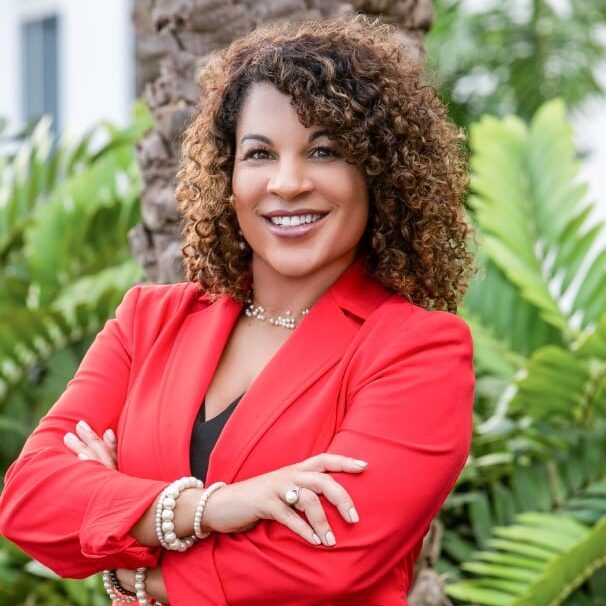
Marci French, CAMS, CAPS
Vice President, NNAEI Board of Directors | National Apartment Association
Marci French is a lifelong learner born into Generation X as a biracial unifier and JEDI (Justice, Equity, Diversity, and Inclusion) facilitator. Utilizing her unique story, Marci facilitates tough conversations and creates brave spaces for participants to explore identities, practice empathy, and consider new ideas.
She is a member of the board and senior faculty of the National Apartment Association Education Institute, where she applies her more than 25 years of multifamily experience to lead, coach, and mentor those in the industry.
Marci earned her Certified Apartment Manager (CAM) and Certified Apartment Portfolio Supervisor (CAPS) designations from the National Apartment Association (NAA). She holds a Diversity, Equity, and Inclusion in the Workplace certificate from the University of South Florida and is a NAA Leadership Lyceum graduate. Marci serves as a member of the NAAEI Curriculum Development/Program Administration Committee and previously served as Chair for NAA's Diversity, Equity, and Inclusion Committee.
More Leadership Tools and Insights

Leadership Lessons: The Power of Influence

5 Ways To Transform Training From Average To Amazing