
 Customer Support


Originally published October 15, 2025
Quick answer: The most important leasing agent skills are communication, active listening, tech fluency, problem-solving, empathy, diplomacy, organization, and persuasion. Top agents pair strong people skills with fast, tech-enabled follow-up to turn more prospects into residents.
Leasing agents are the heartbeat of every multifamily community. They welcome prospects, support residents, and shape the overall experience at your property. But renters expect more than a friendly face — they want quick responses, seamless online interactions, and meaningful connections.
So what does it take to become a top leasing agent? The most successful ones bring together leasing agent skills in both people management and digital know-how to build trust and convert prospects into residents.
In this post, we’ll explore the eight leasing agent skills that truly move the needle, so you can close leases faster and create lasting resident satisfaction. We’ll also cover how to measure these skills and what to look for when hiring.
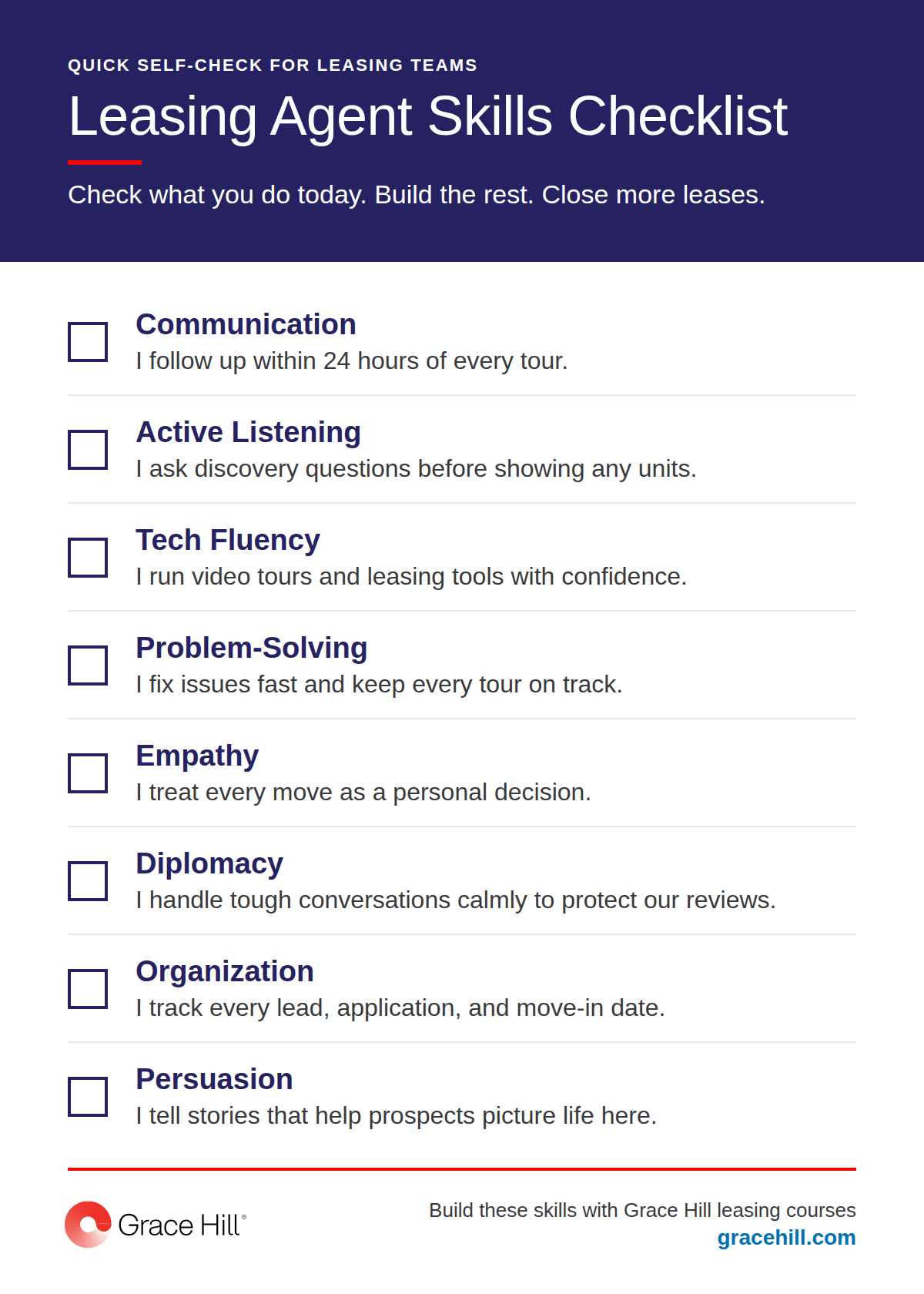
8 Leasing Agent Skills That Close Leases Faster
- Communication
- Active Listening
- Tech Fluency
- Problem-Solving
- Empathy
- Diplomacy
- Organization and Attention to Detail
- Persuasion and Storytelling
1. Communication
Communication is the ability to share clear, timely information with prospects and residents at every step of the leasing process.
Strong communication is the cornerstone of the leasing experience. Leasing agents who communicate with clarity and confidence put prospective renters at ease and set a positive tone for every interaction — from the initial inquiry to move-in day.
Proactive communication, such as following up after tours, sharing updates on availability, and reminding prospects of key dates, keeps the leasing process moving forward and reduces uncertainty. The result? Prospects feel heard, informed, and motivated to take the next step toward signing a lease.
Try this: Follow up within 24 hours of every tour with a personal recap. Name the unit they liked, the move-in date they mentioned, and one clear next step.
2. Active Listening
Active listening means asking smart questions and tuning in to the answers so you can match prospects to the right home.
Listening well is a superpower. So a common quality among top leasing agents is that they listen more than they speak. Rather than rushing through a script, they ask thoughtful questions and tune in to what matters most to prospective residents. Whether that’s budget and lifestyle needs or location preferences and amenities that feel like must-haves, they uncover the priorities that guide leasing decisions.
Active listening allows agents to build trust by tailoring their recommendations and highlighting exactly what will resonate with that specific prospect. This personalized approach helps renters picture themselves as part of your community.
Questions to try on your next tour:
- “What’s prompting your move?”
- “What does a typical weekday look like for you?”
- “What would make a home an instant no?”
3. Tech Fluency
Tech fluency is knowing how to use your leasing tools to respond faster, share accurate information, and give prospects a smooth online-to-offline experience.
Leasing agents depend on technology, from PMS systems to video tours and AI-powered leasing tools. It’s important to understand — and embrace — your company’s tech stack. Agents who are comfortable with these platforms can respond quickly, schedule tours with ease, and showcase units online or in person.
And let’s be clear: Being tech-savvy means more than just knowing how to log in. It’s about knowing how to use your company’s tools to respond faster, deliver accurate information, and create a seamless online-to-offline experience. Tech fluency creates a smoother experience. When leasing teams embrace technology, they meet renters where they start their search — online.
The payoff is measurable. Prospects who engage with Realync videos are 3x more likely to sign a lease, and video helps cut vacancy by 5 to 11 days. Want your team closing faster with video? ➡️ See How Realync Works
4. Problem-Solving
Problem-solving is staying calm under pressure and finding creative fixes that keep the leasing process moving.
No two days in leasing look the same, which is why problem-solving is one of the most underrated leasing agent skills. It has a direct impact on the renter experience.
Unexpected challenges come up every day, whether it’s addressing a last-minute maintenance issue before a tour or finding a way to make the numbers work for a renter with a tight budget. Skilled problem solvers keep calm under pressure and find creative ways to keep the process positive and stress-free. It also builds your community’s reputation as a place that truly cares.
5. Empathy
Empathy is understanding the emotions behind a move and making prospects and residents feel supported.
At its core, leasing is about people, and helping people find their next home is a deeply personal decision. By leading with empathy, agents build stronger connections with prospects and residents alike. Understanding the emotions tied to choosing a new home makes renters feel supported and creates an experience that goes beyond the transaction. That’s what drives long-term loyalty and renewals.
6. Diplomacy
Diplomacy is handling tough conversations with tact, patience, and professionalism.
Even in the most well-run communities, conflicts arise. Tough conversations are simply part of the job, and skilled leasing agents know how to handle them with professionalism and patience.
Whether it’s explaining company policies, managing a disagreement, or smoothing over a negative experience, effective agents approach conflict with tact. By focusing on de-escalating issues and seeking fair solutions, they protect the reputation of the property and keep residents satisfied.
This matters online too. 79% of renters say reviews influenced their leasing decision, so a well-handled conflict protects your star rating as much as your relationship.
7. Organization and Attention to Detail
Organization is managing applications, tours, follow-ups, and move-ins without letting details slip.
Leasing agents juggle a lot — applications, screenings, tours, follow-ups, and move-in checklists; all of which require careful attention. Staying organized is what keeps everything running smoothly and enables agents to manage multiple priorities without letting details slip.
This precision keeps operations compliant and ensures prospects enjoy a seamless, frustration-free experience from start to finish. Leasing agents who are detail-oriented and organized free up more time to focus on what matters most: connecting with residents and prospective residents.
Try this: Block time every day for follow-ups and use your CRM’s task reminders so no lead goes cold.
8. Persuasion and Storytelling
Persuasion is combining sales skills with storytelling to help prospects picture life in your community.
At the end of the day, leasing is a sales role, but the best agents understand that it’s much more than that. Skilled agents combine sales know-how with storytelling, painting a picture of what makes life in your community special. They highlight unique amenities, share authentic resident stories, and help prospects imagine themselves living there. This blend of sales ability and storytelling is what ultimately turns interest into signed leases.
Top leasing agents combine service, communication, empathy, organization, and sales skills with a strong command of technology. Mastering these leasing agent skills helps agents do more than fill apartments — they build lasting resident relationships and thriving communities.
Here’s what that looks like in practice. One leasing agent, Leigh, went beyond confirming appointments and sent prospects Realync videos of the homes they were considering. She signed 4 leases in one week.
How to Measure Leasing Agent Skills
You can’t improve what you don’t measure. Three ways to see how your team actually performs:
- Mystery shopping: Get unbiased evaluations of every touchpoint, from first call to post-tour follow-up. Grace Hill completes 32,000+ mystery shops every quarter.
- Resident and prospect surveys: Benchmark satisfaction against the Kingsley Index™ to see where the experience breaks down.
- Leasing metrics: Track lead-to-lease conversion, response time, and tour-to-application rate by agent.
What to Look for When Hiring a Leasing Agent
These interview questions reveal the skills above:
- “Walk me through how you’d follow up after a tour.” (Communication)
- “Tell me about a time you turned around an upset customer.” (Diplomacy)
- “What tools have you used to manage leads or show units?” (Tech fluency)
- “Describe your current home like you’re leasing it to me.” (Persuasion)
Hire for attitude and people skills, then train the rest. Grace Hill’s leasing courses help new agents ramp up faster. Not sure which credential fits? See the best leasing agent certifications.
Turn Leasing Agent Skills Into Signed Leases
Top leasing agents combine service, communication, empathy, organization, and sales skills with a strong command of technology. Mastering these leasing agent skills helps agents do more than fill apartments — they build lasting resident relationships and thriving communities.
Ready to help your leasing team sharpen their skills? ➡️ Explore Leasing Courses
FAQs About Leasing Agent Skills
What skills do you need to be a leasing agent?
Strong communication, empathy, problem-solving, organization, and tech-savviness top the list for modern leasing agents
How can virtual leasing agents stand out?
Virtual leasing agents should use authentic, well-lit video tours, highlight lifestyle benefits of the community, and follow up quickly with personal touches to build trust.
What are some quick apartment leasing tips and tricks?
Respond quickly, personalize your outreach, use video to showcase units, and know your local neighborhood inside and out.
How can leasing agents improve their skills?
Ongoing training, practice with video tools like Realync, and leveraging resources such as Grace Hill’s Digital Catalog can help agents grow their careers.
Do leasing agents need a certification?
Not always, but a credential like the NAA’s Certified Apartment Leasing Professional (CALP) builds credibility and core skills faster. See the best leasing agent certifications.
How do you measure leasing agent performance?
Combine mystery shopping, resident surveys, and leasing metrics like lead-to-lease conversion and response time.