
 Customer Support


Bite-Sized Breakthroughs Video Library
You're in! You now have full access to every 20-minute expert video—plus new episodes added weekly.
Start exploring the latest industry insights, practical strategies, and expert-taught sessions designed to elevate your team and your properties. Bookmark this page—you’ll want to come back often.
Maximizing Your Grace Hill Suite:
A Comprehensive Overview
Speakers: Kendall Pretzer, CEO (Grace Hill), Tami Criswell, VP of Enablement (Grace Hill), Justin Seger, COO (Hills)
Description: See how multifamily teams use PerformanceHQ’s three pillars—develop people, optimize performance, and promote properties—to turn connected data and tools into faster leasing and continuous improvement. Learn how integrated tools like Sparks MicroLearning, Capture Wizard, Gracie AI, Intelligence Plus, Realync virtual leasing, and reputation management help close skill gaps, act on resident feedback, and strengthen performance.
Everyone, I'm Kendall Pretzer. I'm the CEO at Grace Hill. And joining me today is from Grace Hill, Tammy Criswell, who's our VP of enablement and our special guest, Justin Seeger, is the COO at Hills. Welcome everybody. One of our Grace Hill missions has we help people love where they live and work and we this is our newest mission statement for us a couple of years ago because we really felt it embodied who we are at Grace Hill now that we help people love where they work on the communities, we help residents love living there, as the employees help residents love that and then for our commercial teams about we help people love where they work. Really feel like this mission statement embodies who we are and where we're going. So, with that, I want to talk for a second about a little bit of history of Grace Hill. Originally founded as a training company for the apartment industry, and throughout the years there has been a vision to make Grace Hill apply to more workflows. Through that, through all the acquisitions things we've done, we really have have are foreseeing our mission come true. In twenty fourteen through twenty seventeen, we bought a couple of other training companies. The training company then bought Strategic Solution, which was the policy management company, and then in twenty twenty bought Kingsley Associates pulling in surveys. So, the vision was always to say the feedback from the residents, you know, what do you do about that? The policies and the best practices tell you how to how to solve those problems, and then the training solution helps people really get enabled and engaged on what to do. And then in twenty twenty one we bought Ellis which was really a smaller version of Grace Hill with all the same solutions. In twenty twenty one we bought Ellis which really expanded our the Grace Hill footprint in the same solutions that we had. We also bought the shadow agency, expanding our shopping footprint. Then in more recently in the last eighteen months, we've bought Real Link. So this is how prospects, will see a community is through the RealLink video solution and using video throughout all kinds of other workflows. And then also Hello Data, which is a automating the market survey and all those analytics. So the vision of Grace Hill really has been to expand the footprint from training, and here we are. PerformanceHQ is really built around three core pillars. So three main areas where our solutions work together, to drive success. The first pillar is around developing people, and this is about setting your team up for success and reducing risks through comprehensive content, training, and clear policies. Next is optimizing performance, and this is really how we give you clarity. We help you uncover opportunities and increase your NOI by turning actionable insights. So think connected data. And last, promote properties. This is really about showcasing your properties, building prospect trust and boosting your leads. And the magic of all this is that they aren't just separate tools living in the same place. Instead, they are integrated and they create a powerful feedback loop. So for an example, a skill gap identified in your mystery shopping solution instantly recommends a targeted training course in your learning management system. Or another example would be Gracie AI, discovering in your resident free form comments, that one particular building is experiencing major pest infestation issues, and so Gracie recommends an action plan for your teams to put in place to remedy the situation and ultimately boost resident satisfaction. So that's really what this cycle of improvement is all about. We'll start at a little bit deeper level, in the foundation, so developing your people. And the training solution, provides a full library of content developed by industry experts. It's accessed through PerformanceHQ, and it's critical for both skill development and compliance. It will help you retain your top talent by investing in their growth. It also assists in improving performance and ultimately make sure you're staying compliant with industry specific and up to date content. So training's really the engine of the develop people phase, and that piece provides your team the essential skills and knowledge they need to execute on the insights gathered from other pieces of the platform. So we do this in multiple ways, but some of the most popular ways are through microlearning and interactive content. So introducing Sparx Microlearning, specific to our PerformanceHQ suite. These really are small, short, bite sized courses that fit into your employees' busy workdays, and we know that seventy eight percent of all employees prefer this self paced interactive learning over traditional classroom training or online training. Next, a new powerful addition to our training toolset is our Captcha Wizard. This can save you hours of admin time by effortlessly creating step by step tutorials for any software process. We actually use these internally here at Grace Hill to train our own teams. So the AI piece of Capture Wizard will automatically capture all of your actions, clicks, drags, scrolls, and it will instantly generate the process steps and create AI voiceovers, giving you professional tutorials in minutes. And obviously, trading and policies go hand in hand, and Grace Hill offers over a thousand industry specific policies, and we ensure compliance with electronic signatures and verdict history to mitigate risk. That's especially important, when you consider a single discrimination claim can cost upwards of a million dollars. So of course the highlight, Gracie AI. Gracie is available in your policies twenty fourseven and she can provide you clear, quick responses to any policy related question. And she's pulling this information directly from your company's specific policy content. So this will help ensure your employees save a lot of time and help avoid mistakes. So going back to our cycle of improvement here, spinning a question over to you, Justin. Your teams are managing multiple software systems every day. We hear this from a lot of folks. When we talk about features like Capture Wizard that let your team quickly create and embed custom training for systems like that, How important is that, to you all to speeding up maybe your onboarding process or simply making sure everyone is following the same exact procedure? Well, the first thing I'll say is I've been involved in the multifamily industry for twenty years, and Grace Hill has been along for the ride in some form or fashion the entire time. So, Kendall, I loved hearing that history. For me early on, it was training as a completely new on-site leasing consultant. Ultimately, you and I met working for policy on a policy partner project here at Hills. It's been amazing to see how Grace Hill has evolved. But Capture Wizard is something that makes a ton of sense to me. So recently, we had a really good example of how quick custom training can be helpful. We use Concur for expense reimbursement, one of these many software platforms that everybody has to deal with. And as a fully integrated developer, builder, and property management company, we occasionally run into some administrative challenges with some of our construction superintendents adapting to new software systems. In this case, Concur and credit card reimbursements. This can be a quick fix with Capture Wizard. You can create a simple how to video, not only simple, but how you actually, as a company, use the system and not just generic content. Incorporate it into the platform, then take the next step and link it in your policy and procedure manual on your expense reimbursement policy. Yeah. That's awesome. I love I love that bringing it to life to really give a super close example to how you use it, a generic Concur video. Yeah, so much better than the generic content. Yeah, that's awesome. Thank you. Alright, well let's keep moving and we'll dive into our next pillar, which is around optimizing performance. So this is where PerformanceHQ will help you measure what matters with your assessment data from the full resident life cycle, so resident surveys. In addition, we offer employee surveys and mystery shopping. With all that data, we pull it together with Intelligence Plus. Let's take a quick look at that now. So, Residence Surveys, like I mentioned, are fully integrated into PerformanceHQ, and they offer full data reporting and AI powered feedback. We capture critical insights at each key moment that matters with your surveys, so things like prospect, move in, work order, and pre renewal surveys. All the data from that feeds directly into our analytic engine intelligence plus, and all of it then boosting and supported by the Kingsley Index Benchmark, which allows you to compare your results to the real estate industry's most comprehensive performance benchmarking database. Deeper into Intelligence Plus, and this is really our star solution in PerformanceHQ, it's really the brain of the platform. It will generate tailored recommendations by leveraging two different layers. So the first layer is around cutting edge AI. We will analyze resident freeform comments and bring all those insights to you with actionable next steps. The second way is through curated business rules from our industry subject matter experts. This means every insight is grounded in real world expertise on what action to take next. So it doesn't just show you the problem, it tells you exactly what to do about it. And we tie that entire cycle together with action planning. Your insights are only useful if you do something about them. So Intelligence Plus will actually build includes built in, action plans that will allow your managers to instantly assign tasks, set deadlines, and track progress within PerformanceHQ, which will now connect all of your data, your insight, and execution in one step without going to additional spreadsheets, separate work streams, it will all live here. So we built Intelligence Plus to be the foundation, and we're constantly working to make it smarter, but our next step is deepening its intelligence by integrating Hello Data. For now, Hello Data still provides powerful standalone insights. What it does is it actually draws on publicly sourced data from over thirty five million units across five million properties nationwide, and it transforms that data into visualizations that can help you make smarter and faster decisions, and that's really what it's all about. So, Justin, the sheer amount of data is, we know, is overwhelming, but Intelligence Plus is really designed to cut through the noise and give you clear, actionable steps. Do you have any examples you could share of how a specific insight generated by Intelligence Plus has directly helped your teams? Absolutely. So recently, we've seen a slight uptick in online reviews about lighting concerns at a few of our properties. I think like most of us in the industry, we're in the middle of budget planning season for twenty twenty six right now, hopefully on the back half of that wonderful time of the year. But this actionable data coming from the resident reviews made it really simple for us to prioritize what were going to be multi year lighting upgrades at these particular sites and say, hey, maybe we do this in one year. This seems to be something that's really kind of a problem for some of our residents. So this kind of insight with Intelligence Plus is extremely helpful. Like you said, there's so much data. It's sometimes hard to carve out what's actionable. This was really clear cut actionable data. You know, we hear a lot from our customers, Justin, that people are managing anywhere from, you know, forty to ninety different software softwares on-site. That is just when you think about that, that's just mind boggling what that person that has to, you know, do their job and manage data from this side. And we always hear, I want to consolidate my tech stack. And, you know, our point is you never will just have one. There's no there's not one yet that does everything. But that by pulling some of this data together, that Grace Hill should be one of your three or four or five tech stacks. By pulling this data together and sort of helping show what's going on, that we can hopefully make some of that, you know, and what to do about it, the actions, you know, what is this telling me to make that easier? So excited to hear that's really happening. Yeah. All right, so we'll round out, that optimization pillar with talking about the prospect journey. So we talked about resident journey, now prospect journey, through our mystery shopping solution. And this really helps, you see your property and team through the eyes of prospects. It evaluates all communication channels. So phone inquiries, Internet inquiries, on-site tours, virtual tours, and many may not know property inspections as well. And all of those comprehensive reports, directly recommend skill training courses in PerformanceHQ that will help address specific skill gaps. So it goes all the way down to that skill level. This is really the ultimate example of the cycle in action. So on top of all of that, the powerful analytics dashboard will also allow you to spot trends and dig further deeper into those skill gaps. You can do that by position, group, and even tenure of your employees. So the real value in the mystery shopping isn't just the score, it's actually that analytical depth behind it and the power to identify skill gaps so you can do something about it. So, Justin, how has PerformanceHQ's ability helped your regional property managers drill down into skill gaps, whether that be by position or location, or even employee tenure, like I just mentioned? Is there a way that that's changed the way you prioritize your training and ensure, you know, you're training people exactly on what they need to know? It has. I was having a conversation with one of our regional managers the other day. Know, sometimes I think we take property managers' sales skills for granted. You know, the way the industry works, typically, somebody came in as a leasing consultant. They were a successful leasing consultant. They worked their way up, you know, in our business and became a property manager. And sometimes sales skills can fall behind just because of the sheer volume of other items that they're responsible for. So we've been able to look at by position, by tenure, and say, wow, maybe some of our more tenured property managers that we just assume are doing everything great are really struggling with their mystery shopping scores in particular areas. And it it you know, it makes it really obvious to sort of give them a sales onboarding refresher and make sure that they haven't lost touch with the customer or with their own sales skills. Makes total sense. It does happen. Yeah. Can happen to any of us, right? I mean, you're in the industry for a long time, and there's just been so much evolution in the way our customer operates and thinks that you fall behind quickly. Yeah, for sure. Thank you for that. We'll move into, the final piece of those three pillars that we talked about, and that's really around, promoting your properties. So first up here is RealLink virtual leasing and video tools. This will help you connect, your residents and help you close leases faster. So it's really interesting to me because, you know, it used to be prospects would visit five to eight different communities. And now what we know is they generally will visit two. That means that your online presence must be really good because they are eliminating based on pictures and videos and reputation before they even step foot and meet your teams. So diving in a little bit deeper, to RealLink is our live video intelligence piece, and this is fairly new to the to the PerformanceHQ suite. But this is one of my favorite features because it gives you real actionable insight from your virtual leasing calls without you having to lift a finger. It will automatically analyze every conversation to show how your agents engage, things like tone and pacing and keywords and how well they follow your playbook. From there, it will highlight what went well, and you guessed it, where coaching can help. And that's the best part. You can see the trends across your portfolio and ultimately do something about it. So, Justin, in today's market, your digital presence is everything. Have you seen tools like RealLink help your leasing teams not just get a better quality of lead in the door, but more importantly, build trust and confidence for the prospective resident before they even visit the property? Well, we're in the, exploration phase with RealLink right now, but I know my team has a tremendous amount of enthusiasm about it. My perception is that it's a solution to an obvious problem for us. We don't have a virtual tour platform that allows me to benchmark and see how things are going. This solves that problem. And then the other thing that stood out to me as we've talked about the product is the ability to create customized floor plan and virtual tours that always stay fresh and speak to a specific customer. Right? I can't think of a better way to make a customer feel like you've connected with them than creating a customized specific virtual tour that meets their needs and addresses some of the questions that occurred when you qualified the customer. So I think it has a ton of potential and can't wait to see it in action. You know, one of the things, Justin, as an operator, I know that we've heard from Ruralink, you know, when we were learning about it originally was the whole make ready time. You just lose. You know you've got a unit on notice and now you've got to wait for that resident to move out and you've got to make the unit ready. And if we sort of can't lease it, you know, I can show others, but if I don't have anything to show that sort of thing that if I had this video already done, then I could start marketing that unit the day I have the day I get notice on it. And we've had several owners say it's cut their days vacant from anywhere from five to eleven days. I mean, that just feels like that's money on the ground that you can really start marketing and, you know, and, and with no extra work, I mean, you take the video once and now you've got it to begin really market that unit. And so as soon as I can get it ready, I can get somebody in because I've already leased it. Well, and our customers want authentic content. Right? So to your point, it's real time. Here's here's the unit that's available. This is what's around it. Here's a view out the balcony. I mean, these are things in the past that would take weeks to plan and then a production crew on-site, thirty to forty five days into it. To your point, it can happen as soon as the unit's ready. Yeah. Yeah. And and as soon as it goes on notice. I mean even that. And I like the fact you can use your best leasing person, whoever does that best tour. They can do that and you can just, you can almost, you're kind of cloning them. You can just use them again and again. Thank you. So, finally, we'll look at that last piece of we're still in promoting properties, and that's, around reputation management. So we just you heard some of that. Connecting digitally is extremely important. You may never get to do the old fashioned handshake if you don't connect digitally first. So your online reputation is just as important as traditional word-of-mouth. So seventy one percent of renters not visiting a property if the reviews aren't stellar. They won't visit at all. So managing your digital presence supports attracting those prospects, and you can aggregate that feedback from social sites and major listing platforms. You can instantly summarize your customer sentiment, so really important here, and generate authentic responses at scale, with AI through this reputation management, piece. We also offer what's called a local brand visibility benchmark, and I love to highlight this with the reputation management in PerformanceHQ, mainly because it's the only ORM benchmark that's weighted across five key areas, including reviews and local competitors. There's the key. So you can really gauge your customer satisfaction and inform those strategic decisions. Justin, when it comes to online reputation, most platforms only tell you your own score. But our local brand visibility benchmark is designed to show you where you stand against your local competitors. How how has that level of proactive competitive intelligence helped your teams go beyond just responding to reviews? Well, when it comes to the market component of our business, there's one thing that's not changed in the twenty years I've been doing this. This is a local business. We can measure ourselves against national benchmarks, our own internal benchmarks all day. But until you understand what actually makes your community unique and what the local narrative is, you're really never going to be successful. So these LBV benchmarks give us insights into kind of what the secret sauce is for our communities and brand. And I think it's always our hope that a benchmark like this confirms our brand assumptions and helps us stay current on the needs of our customers. Yeah. You think you think about how we buy products today. I mean, we've all been doing a bunch of shopping right now around holiday season and you think about, you know, you go and read the reviews and you say, well, this one this one breaks this blah, blah, blah, blah. And so our customers are doing the same thing. So to your point, Justin, be able to know what things you should be emphasizing that your competitors don't have or things, you know, that sort of thing. This, if this helps and then allows you to manage that online reputation that's, you know, just a key factor now in how people come to your apartments. That's right. Well, very good. So we'll wrap this up. I think we walked through the entire cycle of improvement, with developing your people, by connecting your training and policies, optimizing their performance by turning all the data, training data, survey data, mystery shop data, into actionable insights, and finally, promoting your properties by leveraging virtual leasing and reputation management. So really, PerformanceHQ is more than just a software suite. It's a completely new operating model, for the Multifamily industry. And we're proud, to be here. It's been a journey, as you saw Kendall walk you through what it's taken to get here. But it's really about that continuous cycle of improvement and you empowering your teams and ultimately improving your, business results because of it. Thank you so much, Tammy, for that, and thank you, Justin, for being here and being willing to tell us how you use the products and how, what they tell you and how they help make your people better and your properties and your properties perform better. We're happy to be part of that journey. Well, thanks for having me. It's always great to spend time with our partners at Grace Hill.
Hello, welcome. My name is Shannon Hanrahan, and I'm a customer success manager at Grace Hill. And I'm Robert McCallan. I'm the senior director of product management at Grace Hill. And today we're going to give you a bite sized breakthrough on Survey Power and how you can turn resident feedback into marketing gold. So today during our session, we are going to look at how you can untap the power of feedback, identify your marketing gold, and finally turn that feedback into brand ambassadors. When we think about online reputation, here is the three or four biggest ways that we look at it. So you have your Apartments dot com feed, and this is where you're getting data extracted containing key survey findings. And then we have the option of having your Google. This is where you're looking when you search for something such as a community. And we here at Grace Hill, we can do some Google redirects with your survey. And so it just prompts our residents to leave a review on Google. There's also the potential to do community website feeds. So this is where you're sending resident ratings and comments directly from our surveys to your community website pages. You've already been collecting resident feedback through your survey. So what I want to show you is how to turn it into your most powerful marketing tool. Reviews mentioning a specific team member, those are going to give you twenty three percent higher engagement on social media and eighteen percent higher click through rates. So one thing we do wanna caution you about is to avoid quotes that are purely emotional. So for example, best place ever, or something too specific without emotional connection. Unit two zero four has good water pressure. So you wanna scan all of your comments for those demand drivers and ask yourself, what is it that's causing that demand? So for example, maintenance speed. Are you pet friendly? What is it about your parking that makes you a differentiator? You wanna edit for clarity, but you're only editing for clarity. So here's some examples of what that looks like. So again, you have your specific details. You wanna look at your emotions, but you also wanna provide that visual storytelling. So you ask yourself, is it specific to your community or your property management company? You wanna ensure, again, I can't emphasize this enough, that no personal information fits into what you're sharing. But you want to make sure that your brand is showcased here and that it aligns with your positioning. So how can you utilize these different comments for marketing purposes? You're looking for both glowing and constructive. So you want to have some cross channel leverage and understand where to put it. So you want to ask your residents for reviews. You know this. Everywhere you go, people are asking for reviews. Welcome all feedback and make sure that you're not gating any feedback, whether it's positive or constructive. But we also caution you to not incentivize and only say, We're only going to take positive reviews or hide negative ones. Because the truth is, is that seventy four percent of consumers check two or more sites before deciding if they're going to even show up to your community. And also, if they don't see any negative reviews or if they don't see any responses to those negative constructive pieces of feedback from residents, they also are going to question. So you want to make sure that you have a strong marketing on your Google, on your Instagram, on your Facebook, any social media. So for example, you don't want to put something such as they provided the information I needed. But what you would like to do is showcase somebody who is on your property. For example, Shannon was amazing. She answered answered all questions and much more. I was excited to move in that day of my tour. So how can you go quote mining? So you wanna take from your raw feedback to marketing gold. And you're in luck if you work with Grace Hill because within our PerformanceHQ, we do have sentiment analysis. So this is going to help you build those demand drivers based on sentiment. So you're gonna scan for those demand drivers. Take your quotes. Circle quotes that mention some top leasing features, especially thinking about your brand. Think about your maintenance response time. Is wifi reliable at your community? Think about pet amenities or anything that you're trying to brand out to your potential residents. And now you're gonna take it and you're gonna refine some of those quotes. You want to polish them, as we say. So this is where you can edit your quote, removing filler words, but you want to keep the authentic voice of your prospect or of your residents right now. So think about how you can tighten it for that maximum impact. And then choose your champion. So you wanna select the quotes that make it clear to who you are. You want the clearest proof for a feature you actively promote. So here is one way that you can do this, is doing even a treasure hunt for you, is that it's not just about quoting a resident, it's really about weaving their authentic voice into every interaction. So I am showcasing how you can do this with those four steps, but this is what it would look like after you do your quote mapping. So you may start with your resident quote that says maintenance fixed my AC the same day I called. If you're utilizing this for social media or for a headline, you might want to switch it up and say fast, reliable service when you need it most. It's still keeping the authentic resident quote, but it's creating something that's going to capture the attention of potential residents. If you're creating a brochure or a testimonial that you're going to give to your prospects after they've done their tour, you may want to put something, Our maintenance team responds quickly and efficiently. And then this is important for your leasing associates to also utilize while they're taking their prospects on tour, is thinking about how you can utilize what residents say on their tour. So you could say something such as, Residents tell us all the time that our same day responses make them feel cared for. So again, I've mentioned this a few times is that you're in luck if you use our PerformanceHQ survey because we now have sentiment analysis. And so this is how Grace Hill can be your trusted partner. We do have support for you. And now I'm going to leave it to Robert. Okay. So think it's really important before we start to talk about content cadence and KPIs and so on, I want to just pause for a second and look at some of the fundamentals and to the people who actually make this work pop. You have the best survey tools, the best AI, the best dashboards, but if you don't have the right people around the table, there'll just be one more initiative that dies after a quarter. So what we've found at Grace Hill is we have done some industry analysis that looks at dissatisfied residents and these are directly linked to short staffing. So in Multifamily, the staff are the product. That's the thing that we're starting to see. And so what we need to do is to make sure that we've got all the right people to pull that data in, pull that information in and then be able to feed that back out again. So when we're doing something like this, we don't need to hire dozens of new people, right? But there are particular roles that you wanna make sure that you have when you are mining and you're pulling out that key gold as we have said in this session. Stuff like your executive sponsor. We need to make sure that you have a sponsor who is saying that this stuff matters, that we're gonna use the resident feedback to drive renewals and reputations and so on. Their job is to remove the roadblocks. They are gonna be approved in whatever budget you have for this, albeit it might be small and to get us moving forward. Then we talk about the community or the property manager. They're the program owner. You need someone in there who owns the outcomes. So they are the ones who are responsible for the scores, the reviews, the renewals. And make sure that we If we're sending out surveys for example, that we've configured them correctly. And then let's look at There are also the people who would look at what themes we're actually taking up and what quotes we're gonna be safe using. And then also looking at our marketing team. Obviously we need the marketing team to be in there. You need someone who can turn those feedbacks that outgoing content. Their job is to pull quotes from the survey data, draft review responses and turn those resident quotes into descriptions and social posts and Google posts and those types of stuff. We could also have data partners, someone who's actually mining the data and aligning that alongside there. They're optional, but they're a pretty powerful thing to do. Me give you some examples of this. We have a mid sized operator that I talk with who had a problem. They had really low Google ratings, more complaints about maintenance and high turnover. Nothing dramatic, just a little bit draggy. It was causing them problems. So instead of pushing to get more reviews, they started to ask people to name the community manager, assign the leasing agent to review the responses. And they set up these teams and they had fifteen minute weekly huddles and the teams just sort of looked across and they looked at what reviews came in last week? What are the wins? How do we pull quotes from those wins in order to move that through? And within six months their online ratings ticked up, the complaints dropped and renewals improved. So all of that ties back to a really strong business outcome. And why am I putting so much emphasis on the people? Because turnover is expensive as well. Average resident retention right now can sit in the fifty percent to sixty percent range And average cost of renewal is around four thousand dollars So that's really important. Once you've got these rules in place, even if it's the same person that's filling in one or two different rules, then everything we're talking about in the next couple of slides starts to become realistic. But you need to assign the roles and assign the people so that we've got all of that in there. Let's shift to the next slide, Shannon. So let's get into the house. So we've talked about why resident feedback is marketing gold and how to mine it. Now let's try and make it real. This slide is your weekly operating system. What you actually do every week so this doesn't die as a great idea from that one webinar. The goal here isn't about posting twenty times a day. It's to be consistently present when prospects are researching you. Across industry, seventy four percent of consumers check at least two review sites and roughly a third check three or more before they make a decision. That means that you have to show up and be there in that platform. That's why the rhythm for this why we're saying we need at least one quote driven, one short video or one Reel or one Google post and a small email or newsletter blurb. These things are important and trying to do that weekly. You can see that that's in there. And then monitoring afterwards that you have, that it's making a difference, right? So we have our KPIs in there. We've worked with organizations, we worked with one in particular, it was about two fifty unit community that committed to doing this. So they've got their team together, they started to look at what was coming in for them, they then started tracking their KPIs. So they're looking at their click throughs. The click throughs were especially powerful because we were looking at if people were clicking through, were they going on to the schedule a tour button? What were our views? How much social engagement did we get? And are they pulling in anything that we need? The other key thing is if you're going back to people and you're responding to them a week later or two weeks later, that is not a positive. That's not going to work out for you. We really need to get within that forty eight hour to maximum seventy two hour framework where we're just replying back, where we're getting that information, we're replying back, we're understanding what they're saying and then moving that so that we can move that through. Let's shift to the next slide and we'll talk about how to do this. So seven day challenge, right? I think I'm a big believer in that learning happens in these sessions. You do learn things, but results happen within the first week of these sessions being done. So this is a way for us to get a playbook here on what to do and so on. So day one publish. On day one we need to look at a resident quote you've already got. Ideally something you've mined from your survey. So a Google Business post, a social media caption, a line on your website or community page. So for example if a resident says 'Maintenance fixed my AC the same day I called' that could become a Google post that says same day AC fixes or residents say yes. A website update, a testimonial on the maintenance. Next stage, days two and three, how do we engage? You have to respond, as I said, one hundred percent of new reviews within seventy two hours. Try and get that in there and make them human replies. If you're seeing the same thing every single time, that just looks like you've either got a bot doing it or that you're cutting and pasting. You want to make sure that you're getting that human link in there. Days four and five measuring it. You're looking at are your KPIs changing? Are you seeing any impact of the publishing and the engagement that you've been doing? Then towards the end of the week you now know what you're putting out there, now know how you're engaging with them, you know how you're measuring it. So let's go back let's optimise what we're doing in here. You go back into your survey data, you get one or two more quotes and you build next week's batch and you just run that through. So that circle that's in there, that's really important. We just keep it going. We had a portfolio who we set a simple seven day challenge. And they were looking at just over a couple of properties, think three. And within a month by going through this, we started to see all three were getting faster review response times, a notable bump in review volume because there's actual engagement there and an uptick in tours. That's the important part. Shifting on to the next slide talking about your marketing playbook how you do this. So prime pick one platform and this is just keep this going. This slide is about connecting the dots between what your residents are saying already and what you should lead with in your marketing. A lot of communities advertise the same generic list great amenities, great locations, But your survey data tells you exactly what really moves the needle. People are different. You don't have a generic resident. So don't build your information based on that generic information. Recently, we had an NMHC Grace Hill renter preference data that residents called absolutely essential stuff. Ninety three percent was washer dryers. Another ninety three percent said air conditioning, high speed internet, about ninety percent. So just looking at all of those different features, adapting what you're saying, adapting the quotes so that they fit the features, adapting the quotes so that they fit the channel that you have in there and then tie that information in to your videos, your social behavior. This matters because prospects are increasingly consuming video and social content. Moving on to the final slide here. I think this is the final slide. What our residents are saying. When we're looking at this, we want to try and make sure that we're pulling this out. So if you've just got a list of here are a bunch of quotes from residents, people have to mine it themselves. That's going to slow things down. This slide is what we should be looking at in terms of a proof board. So if someone really is interested in moving in here, having a bad experience in my previous place around maintenance, I'm going go and look at the maintenance things there and make sure I'm not going to have the same bad experience twice in a row. So breaking it down and understanding that we've got that maintenance, we've got good maintenance, we've got good amenities, the location works for people. Give them something to go to that allows them to find out what they need but easily, simply and overall just meet the convenience of this the most important thing. The last slide's our final slide. And just to tie this all together, let's connect the dots. Your surveys and your online feeds contain all of the stories and the proof that your prospects want. We know consumers check them. We know that renter satisfaction with management, communication and maintenance is tightly linked to renewals and referrals. So if you look at the data that we've given you today, that proves that this is the most important piece of what we're doing. But we need to pull all of that together, mine your surveys, publish at least one new resident voice assay every week and respond to every review within that forty eight hours to seventy two hours. Do this for ninety days and let's see what difference it makes and feed it back to us as well. We'd love to hear more about this. Shannon, anything else to add at the end here? No, I think you wrapped it up very nicely. Thank you, Robert. Thanks, Shannon.
Survey Power: Turning Resident Feedback Into Marketing Gold
Speakers: Robert McAllen, Senior Director of Product Management (Grace Hill), Shannon Hanrahan, Customer Success Manager (Grace Hill)
Description: Discover how to turn everyday resident feedback into one of your strongest marketing tools. Shannon and Robert share practical ways to uncover key insights, highlight what resonates with prospects, and turn satisfied residents into authentic brand ambassadors.
DIY Custom Content: Mastering Grace Hill's Training and Policy Builders
Speakers: Brandon Mathis, Director of Customer Success (Grace Hill), Luis Razo, Solution Architect (Grace Hill)
Description: See how easy it is to create, customize, and elevate your organization’s training and policies using Grace Hill’s PerformanceHQ. Learn how to turn your unique culture, values, and standards into powerful, tailored content.
Hello there. I'm Luis Raso and I am joined today by Brandon Mathis, and we will be covering DIY custom content mastering Grace Hill's training and policy builders. During today's webinar, we will cover how custom content is key for your organization as you continue to differentiate your training and policies from your competitors. We will edit an existing policy with the new policy editor in PerformanceHQ and create a new course with our updated course builder. Let's talk about the strategic value of custom content. We can agree that one size doesn't usually fit all. I would bet that every organization in this room has put in a great deal of effort to differentiate their organization. It's a matter of being competitive at both the local level and globally. Companies spend billions of dollars annually to make themselves different and therefore better than their competitors. We see this in their ways of providing service, improving or expanding products, marketing, and more. Your uniqueness is valuable, worthy, and special. So let's take a look at how custom content and policies and training support and reinforce that value of being you. Did you know that training and development programs are nearly nine times more effective when they're tightly aligned with business objectives? Custom content supports alignment with business needs and performance. With consistent and purposeful expectations, you are able to keep everyone on the same page about what's expected. Your company's vision, mission, and core values matter, and customizing content helps keep them front and center in all you and your teams do. Achieving measurable and meaningful results is important because your company's strategic goals are based specifically on your company's needs and performance requirements. This is what makes them meaningful and your results should be measured against them. Now, there's more than one way to bake a cake and your company's way is the way your team should be baking. Improve productivity and efficiency by clarifying those specific expectations and customizing training that yields the meaningful results. Custom content also improves employee engagement and retention by increasing relevance and motivation because we all need to understand the why, whether it's a policy or why we're attending a training course. Customizing content to align with your company's purpose and needs clarifies what is expected of employees and shows them how their individual contributions fit into the company's overall success, can improve productivity by twenty two percent. Also, employees feel empowered and are more confident when content is designed to achieve specific business results with purpose. And finally customizing content capitalizes on opportunities to reinforce why your organization is a great place to work and amplifies that message. Custom content also supports a stronger company culture and brand consistency by serving as a platform for actively shaping and reinforcing company culture and values through employer branding. Did you know that organizations which align their employer branding efforts with their company culture see an average thirty percent increase in employee engagement levels? Earning a badge or industry recognition as a great place to work is awesome. Custom training and policy content keeps that message and that win front and center. And let's speak for a moment about consistent branding and messaging. Your marketing team cares about this for many reasons and we all should too. Consistent branding across all channels, including the behavior of employees, can boost your brand recognition by more than eighty percent. Next, we'll show you how to edit a custom policy and how to create a custom course. We will begin with editing a custom policy titled Handling of Maintenance Service Request to ensure alignment with the organization's principles and reinforce organizational expectations. To get started, we have logged into PerformanceHQ with the policy admin role. We will begin by clicking Policies from the left side navigation menu. To find an existing policy, use the Search feature at the top right, type Handling of Maintenance and click the magnifying glass to search. Notice how the initial search expands results, even with typos or partial matches. Advanced Search allows users an easy way to limit those results by filtering by exact text match, searching in policy titles only, or by filtering available manuals. To narrow things down, we'll use Advanced Search and under Options, select Exact Text Match. Click the X to close Advanced Search. Now, click Policy five thousand and five, Handling of Maintenance Service Requests. This new version of the policy hasn't been published yet, and we need to add missing details and review it before it goes live. Since this is a revision with pending edits, we will click Edit Pending Revision to begin our edits. Now, we are going to work on making changes to our statement, or purpose, section of the policy by adding missing content. Adding text is quick and intuitive, simply click within the document and start typing away. First, let's add the phrase, Deliver on our mission to make apartment living easy and after we can in the second sentence. Let's also add this sentence at the end of the paragraph, This commitment to excellent service is a core part of our company's values. Let's also make some changes to our standard section by replacing existing text. Replace quickly with within twenty four hours in bullets one and three. In bullet five, add one between within hour. Also, let's replace the system with Property Management Software. Now, we are going to replace Property Management Software with a substitution variable. Substitution variables are enhanced placeholders that keep your policy text dynamic and ensure cleaner version control and consistent updates across PerformanceHQ. To add a substitution variable, navigate to the top menu and find Insert Merge Field. Use the Search Merge field to type in search for PMSYS. Click PMSYS. You can see that the selection has been converted from text to a substitution variable. Let's provide additional context to emergency requests by adding a policy link to replace the existing Emergency Requests bullet. Select Link Policy from the menu bar. Use the search feature and type communicating during to shorten the list of available policies. Once you see communicating during emergencies, you can select that policy by using the arrow to move it to selected policies. Choose Text as the display option, then click Link Policies. Now, let's focus on updating the list of existing resources. Let's replace the third bullet point by uploading a document with more information regarding an emergency contact for after hour service. To link the resource, delete the existing text and click Upload Files. Once the file is selected, a title and description can be added. Once ready, select Save. Finally, let's review how to link to an online course. Click Link Training. Search for Emergency Response and click the magnifying glass to filter the list of available titles. To select the course, use the arrow to the right of the course to move it from available titles to selected titles. Click Link Courses. To preview your changes, select Save and Exit Draft. If you are ready to publish this policy, click Publish. Your published policy will now read Revision two point zero Active. Next, in this demo, we will build a custom course titled Best Practices for Out of Office Email Messaging twenty twenty five, which is strategically aligned with the organization's mission, vision, and core values, reinforcing expectations and branding practices. To get started, we have logged into PerformanceHQ with the training admin role. We will begin by clicking Courses from the left side navigation menu. Next, click Add Online Course. If you haven't fully developed all of the components of your course, it's okay. We will be able to revisit the course to add content or make changes before deploying and making the course available to learners. Now that we are working in the Course Builder, we will edit the course title by typing into the title box, or by pasting a title from another document. Now, we will add a course description. This description will be visible to learners once the course is deployed and should include information about what they will learn. Next, we will set the training hours and minutes, indicating the approximate time required to complete the course. Remember to include sufficient time to consume any linked media and complete any quizzes. Other default settings will remain in place. Now, it's time to update the Course Overview, which is checked to display by default. Over with your cursor over the lower right corner of the Course Overview pane to display and then click the Edit icon. We will now update the pre populated information in the Course Overview to include learning objectives and any other specific messaging. Next, we will begin adding our course content, beginning with the first short course, which appears by default. We will rename the Short Course by hovering the cursor over the right side of the pane and clicking the Edit icon. Your custom content may include multiple Short Courses, or just one. A Short Course may include several learning activities, but each one should be treated as a specific topic or a set of closely related activities or content. Learners are invited to pause or continue training at the end of each short course. We have copied the name of this short course from another document and will paste it into the Name field. We will now click Add Activity to begin adding content. We will show you how to add several types of activity, beginning with an engaging video. Click Upload AudioVideo. Please note that several types of audiovideo files may be uploaded. Click into the first box to select a file from your computer. We will select the MP4 file named Leader Video, Core Values. Select Open to finalize your selection. We will now add a title to the upload window which will display to learners. The learner description is optional, but is recommended to draw the learner's attention or provide them with specific instructions related to the media. We will paste in the title, copied from another document. We will also paste in the learner description, copied from another document. Click Upload to finalize the audiovideo upload. Next, we will add a link to our company policy related to our mission statement and core values, by again clicking Add Activity. This time we will select Link, to add a previously copied deep link to our company policy. First, we will paste in a name for the link. Next, we will paste in the corresponding deep link. Click the box if you would like the linked policy to open in a separate window. Adding a learner description is optional, and may be typed or pasted from another document. Once completed, click Add Link to finalize. Now, we will add another short course to include more course material. Click Add Short Course. Remember to edit the title. We will paste the title from another document. For this short course, we will upload a previously prepared document by first clicking Add Activity. Click Upload Document. Please note that several types of document files may be uploaded. Click into the field to select a file from your computer. We will select the PDF file named Best Practices for Designing Your Out of Office Messages. Select Open to finalize your selection. Click into the Title field to type a name, or paste from another document. We will paste in the name. After clicking into the Learner Description field, we will also paste a Learner Description, copied from another document. Click Upload to finalize the document upload. Now, let's add a Knowledge Check by adding an activity to this same short course. Click Add Activity. From the Add Activity window, click Quiz. Adding a quiz will enable us to record a score for this course and help us evaluate the extent of learning. Click into the Title field and type to add a name for the quiz. Type instructions for the learner into the Instructions field. Instructions might include, Please select the best answer to each quiz question. Adjust other settings as needed before continuing. Check the box to randomize questions, making them appear in a different order for each learner. If you plan to add more quiz questions than required, indicate the number of questions to be served. Use the drop down to select the number of questions you wish to appear on each page. The default setting, All, will display all questions to the learner at once. Click Save and Add Questions to add your quiz questions. Questions may be added individually by clicking Add Question. To import multiple questions at once from a spreadsheet, click Import Questions. You may click here to download the Quiz Question import template and follow the instructions for preparing and importing quiz questions. Once your spreadsheet is ready, click Upload Questions. A window will open for you to select the file you wish to import. We will import the file named Quiz for Designing Out of Office Message. Click Open to being the import process. Additional questions may be added or imported. Once finished, click Save Quiz Questions. Now we have scrolled back up to the top of the Course Builder to add additional resources to the course. Click the Resources tab. Click Add Short Course to begin. Just like adding a short course to the Table of Contents, we will now click to edit the name of this short course. Short courses under the Resources tab are optional for the learner. Type or paste a name such as Resources into the Name field. If adding multiple types of resources, you may choose to add multiple short courses under the Resources tab and arrange them by type or topic. We will add resources which have been used previously in another course, and can therefore be added from the Content Vault. Click Add Activity. The Content Vault serves as a vault for content you upload, as well as the components of Grace Hill's content. When creating a custom course, you're able to mix and match, adding components from Grace Hill content along with your own. Also, when you have updated content in the Content Vault, it is automatically updated wherever it is used in PerformanceHQ. To add content from the Content Vault, click Add from Repository. Content may be located using the search feature and filters at the top of the Add from Repository window. Once located, check the box for the content you wish to add. Click Add Items to finalize. To add another resource in the same short course, click Add Activity again. We will click Add from Repository again, to add a component from Grace Hill's content. We will then type in the name of the content we wish to add. After checking the box next to the name of the item we wish to add, we will click Add Items to finalize. Now that we've added our content and adjusted our settings, we may preview the course as a learner, to see and experience exactly what learners will experience. After reviewing the new course and making any necessary adjustments, click Deploy to make the course available to learners. Thanks for watching today. We hope you enjoyed seeing how easy it is to customize your policy and training content in PerformanceHQ.
Hi, everybody. Welcome. My name is Jessica Ford. I'm a customer success manager here at Grace Hill. I am with Ronald Perrington, and we are gonna be doing a bite sized breakthrough with our, enduring value of traditional mystery shopping in the age of AI. I'm so excited to be here with you, Ronald. Thank you for joining me. So let's dive into it. Let's talk all things mystery shop in the age of Alright. Let's talk about the new customer journey, bot to human. So with the new, customer journey, we have a new starting line, right? AI has entered the mystery shop space. The prospect journey is mostly online. Our first impression is now online, right? Has been for a while, but now more so than ever. Our smart assistant type and AI machine can be used to handle most of these initial questions, right? Works twenty four hours a day. It can handle the basic stuff. Availability, pricing, setting up the tour, and connecting our prospects with teams on the ground. AI is fantastic gatekeeper, but really to what extent. Right? So I have a question for you. Technology is taking over the early steps of of apartment hunting. How much of the entire prospect journey is actually being handled by SparkTools now, and how is that a big positive win for our teams? And I have a secondary question for you. What does this huge shift mean for the old way we used to do mystery shopping? Yeah. So I think, like, the the whole thing isn't being taken over by box yet. I don't think we're ever gonna get to that point. Right? Like, I just don't see a robot touring an apartment home. But what I do see is this early funnel now where people have more knowledge at their fingertips. And I shop a lot of properties. Just I'm gonna be honest with you. A lot of times, I probably know more about the properties than the on-site staff when I get there because, you know, I have chatbots that I can ask questions to. I can use ChatGPT. I can use Google. So I think this is a big win for both, actually, the prospect and the leasing team because now it's no longer like, do you know what amenities we're offering? Do you know what floor plan you're interested in? And I've actually started to see a little bit of this change coming through for when I go toward these properties now. They'll say, did you see a floor plan online that you liked? Or, you know, on the interactive map, which level piqued your interest? Interest. So I think that kind of has sped up that customer journey process. And I think for mystery shopping, I think it's gonna be a twofold now how we do it because we still are gonna have to audit the AI and the smart bots in the way that we've never really necessarily done before. You know, it's being pushed out, but a lot of times you're seeing I see misinformation all the time. From one ILS to the website, there's a There's disconnect on maybe the pet policy or the pet fees. Then you ask the chatbot, and now I got something totally different. And then ChatGPT has given me something different. So I think we're going to see a shift in that. Like, we are still auditing the bot from start to finish. But what is it saying before I even step foot? And then when we go in to tour the apartment, we're still gonna see that more traditional human to human interaction in that type of shop. Love it. Alright. Let's talk about AI being a superpower, instant results across the portfolio. So here's what we love about AI, scaling. Scaling at warp speed, no less. So AI gives us instant feedback for quick fixes, eliminates all those personal biases for fair results across the board, right? And ability to measure all shops and shop types versus just a few here and there when we have the capacity. And it allows us to spot big training gaps across the company or region immediately as well with that big scaling detail, right? But here's my question for you. So we've established that smart tools and AI gives us that instant unbiased data, scales it very quickly. When you achieve this kind of warp speed and scale, where does the human element get lost in the sheer volume of the numbers? And then, again, secondary, how does the human mystery shop help us find and restore that critical emotional connection versus just being so reliant on the data? Yeah. So the human element gets lost when you're when you start thinking about the telephone call. Right? The digital part, when I put in my guest card and I'm looking for that shop, like, there's not a lot of human interaction there. Like, the AI can tell you, did they personalize it? Did they answer your question? But what AI can't do on, like, kind of the phone call part is is it's gonna be able to track, did you say please and thank you? But what it's not gonna be able to track is that excitement in that person's voice. So Jess, could you imagine doing this webinar with me and the whole time I talk just like this? And I'm like, so Jess, yeah, I think the human element gets I can hit the keywords. Right? But that human element is now lost, and I still can get a great hundred percent because I can hit that. So I think when you're looking at scaling, you gotta keep that in mind of, like, okay. So the bot can do a lot of things. It can pick up on you said please and thank you. You asked all the right questions. It's not gonna be able to really tell me that tone in that manner. So I think we're still gonna wanna spot check that, especially if you start to see a decrease in leasing velocity, maybe people booking the tour but not showing up, maybe they're not even booking the tour. So going back into there. And I think just knowing that we are in a people business, so that's going to tell us that human mystery shop is going to be able to put all those pieces together and restore that because I can have a really great interaction with the bot, but then I get to the property and the human interaction isn't great. Or vice versa, can have the bad interaction with the bot, and I still am gonna show up because I need a place to live. And that human can save the day. But if it's all just one, like, if it's a bad experience on the bot and I get there and they haven't read the guest card, I'm like, okay, this is a bad experience at all. What's it going to be like to live here? And you're not going to able to see those types of things in the data from just an AI shop alone. Absolutely fair. Okay. Let's talk about the human heart and why empathy still wins, kind of tagging on what you were just talking about. So there is an irreplaceable human element, excuse me. We just talked about how AI struggles with empathy, instinct environment, the vibe, right? You're just talking about the bot, the human experience, and misses three key human insights. Reading people, just talk about that, testing the knowledge in real time from an operator perspective, right? Naturally going off script, how deeply an agent knows their stuff, and then telling the full story. So, weaving together this, you know, curb appeal, office cleanliness. Again, the vibe of the tour quality compared to that one complete report about the overall feeling of the community, right? So, absolutely hitting it nail on with what we were just talking about. So, in a world of potentially perfect, one hundred percent scores for machines, again, checking the box. What are the one to two most critical emotional insights only a person can capture the visit, capture in a visit rather? And then why is human mystery shopping essential for understanding those emotions and emotions and the feelings behind those emotional insights? Yeah. So I think, you know, the human is going to be able to see everything as a whole from start to finish. Right. So I started the process looking at an ILS ChatGPT, wherever I'm I'm starting that process. And I'm gonna be able to see what that feeling is like all the way through. Then when I get to the property, I'm also gonna be able to tell the curb appeal. A bot's not gonna be able to do that for me. Right? So if there's a whole bunch of trash all over the property and it doesn't look like the photos, now that's where that in person's shop becomes so important. And, also, kind of, like, they might ask you for the close, but did it feel scripted? That's the other thing I think a lot of people can we can do a hundred percent. I recently shopped a property, and they they checked the box. They did all the great things. They even asked me to apply at the end of the tour, which doesn't happen very often. But it felt so scripted, like we were walking through and I kind of felt like on a tour guide. He literally we got to this point and he stopped and he was like, so how are you feeling? And I was just like, this feels like I'm at a museum. So that wasn't something that the bot's gonna say because if it was just a bot doing it, they're gonna be like, oh, they asked the pretrial close. He asked you to apply. But it wasn't the feeling. I was just like, you kind of sound like you hit your life right now. So I think that's where, like, that human mystery shopping is gonna be so beneficial to the sites. Right? Like, are we doing it? And the property I know, like, where no one stood up and greeted me. So this is where you can also check that training that you're doing. So, you know, I knew this company. They're were very proud of their training. They're like, every associate stands up when you walk into the leasing office. They do x y z, And I got there, and none of that happened. Oh, no. And I was just like, so now you need to go back and and check not, you know, are they asking for the sell and those things, but is the training that we've provided sticking with the people. That's where those insights become so much more valuable that I'm not gonna get from a dashboard. I'm not gonna get from reading the report, but what I am gonna get is the And if the person says, you know what? They they asked all the right questions. They did all the right things. They showed me the same apartment tour. They avoided fair housing questions. They even asked me to to apply, but that connection that we built, it wasn't there. So I'm gonna go to the competitor across the street. Yes. There might be a hundred, two hundred dollars more. Maybe they're not offering a great special, but that connection is there, and that's what I'm looking for. Love it. Absolutely. Let's talk about the game plan, how we build a perfect blended strategy. So the game plan really is architecting the blend. Right? I think you and I've had these conversations several times over the last month or so about how those that use AI and the human element are going to win, right? So, again, just kind of doing a checklist about how AI, what their job is, right? Which is check check checking tons of early calls, chats, speed, system rule compliance, but the human's job is really to do the in person tours, the complex follow-up scenarios, checking the feeling and connection, and then we make that whole loop, right, about how the human reports are used to make the AI's rules and guidances, right? If you are building the best mystery shop program today, how would you put the hybrid model together using AI and human element? And then when do you use the AI and when do you use the person? Yeah. So, you know, I think it there's a spot for AI at every phase of the journey. Right? So, like, the first thing I'm looking for is, like, I might use the AI to check my speed time. Like, how quickly are they responding? Is it personalized? Do they answer the questions? That's the kind of the first thing. The problem becomes when you rely solely on AI. It's bot to bot. So an AI isn't gonna be able to tell you that the person went to this ILS and they went to their website, and now the information isn't conflicting. So that's what I'm gonna use, the person to audit it. I'm gonna probably use the person you know, I'm gonna at least audit monthly, if not weekly, depending on where we are. I think the other thing where the AI isn't gonna be able it's not gonna be able to tell you if the lead tracking number is broken and then you call and you get the loop. Right? So I think we're gonna do that. But I do can tell the AI can tell me, here's my speed. Here's the subject lines that your people are using. Here's what's opening and not opening. Here's what I asked, and it didn't respond. You know, I'll ask a lot of times about pet policy or washer and dryers or fees, and they won't tell you. If you're shopping a competitor, you're gonna be able to see if they're using an AI to kind of help you do that, and I think that's a really cool thing. So I think that's kind of, like, where I I start to blend it. And then when I go on the telephone, yeah, I wanted to score every phone call in a perfect world. But again, is that beneficial? Sometimes, yes, I can use the AI to say what is the phone call rate that they're picking up, what are the keywords that they're using. But then as a human, I'm gonna go in and I'm gonna spot check that. I'm gonna go in and pull two to three calls a week per leasing agent, more if we're in a situation where we need velocity or whatever we need to say, okay. So the AI gave it a ninety five percent because it asked all the questions. But, you know, I listened back to it, and they were kinda boring or they didn't build the excitement or, you know, I could tell that the person didn't wasn't gonna show up for the tour because I can listen to tone, and I can listen to empathy, and I can, you know, see it was very conversational. So I think that's kind of, like, the blend we go. But then, like, the moment that that tour is booked and that person shows up to to do the property, this is where the human takes it the rest of the way because I built the relationship. I know, like, someone comes towards with me or I get a follow-up, I want you to refer back to something we did on the tour. Tell me say, hey, Ronald, I know you have sixty seven dress shirts. Remember, those all are gonna fit into this closet. Are your hundred and seventeen Starbucks mugs Starbucks mugs. Right there. Right? Remember, we talked about it could fit on either wall. Maybe add a photo of that, and I think that's kind of where the person comes in. The machine is doing all the work, and the machine can go in and probably eventually, I think, in a year or two, it's gonna be able to pull our tour notes into the follow-up. But, again, it goes back to checking that because I've seen a lot of bad follow ups from the machine, from the AI. You know? One that says, hi. Insert name here. Yes. Yes. Or, like, here's the link to the website, but there's no link. And so then, like, it becomes a game for me. Like, I'm like, oh, was this a human just inserting a template? And the quickest giveaway is kind of like that subject line. So I think, again, it goes back to like we are in a people business one hundred percent. Right? And I think we're never going to be able to get rid of the people. People buy from people. And I actually think the next generation of leasing apartments, my prediction is probably in five years, they're going to be so AI'd out. They're going to want to not have to deal with technology and just can I call someone and talk to them? Can I just show up and make that interaction? Absolutely. Okay. So let's talk about why we need to stay balanced, again, reiterating your point you just made. So there is a risk, of course, of leaning too hard on the AI. The AI focuses just like you said, only on perfect scores, robotic teams, and this is the genuine human connection actually sign that lease and where the importance of the human element is going back to your point is that it's essential to balance the data by providing the deep emotional context and narrative required to turn a high scoring transaction into a lease and loyal resident, which again goes back to your point about connection, right? Which is so, so important. We cannot lose that. So we see the amazing power of AI, but if we lose our focus and let the machines drive, what is the real cost of imbalance to our leasing success and resident retention? Well, that's a good one. I see this a lot, right? So I deal with a lot of AI first or I deal with the bots, and then when I get to the property, the handoff fumbles. And so you're building trust from the beginning. So if the bot is doing great things and it's answering my questions and it's responding and then I get to the property and they have no clue who I am and I have to repeat the same things I've already put into my bot. I'm like, now I'm like, the trust isn't there. You couldn't read the notes. I don't matter. And that people are gonna start to pick up on that. And I think the other thing too is, like, when a human doesn't step in and, like, make an attempt to reach out to me prior to the tour, maybe it's just an email or a phone call, when I get there, I'm like, that's how I start to judge. Now I'm like, oh, that's gonna be a bad shot because the human has no clue I'm even coming in. Prospects are doing that same thing, and it takes one property to create that bad experience for all the rest of the tours that day. And what I've seen is people book the tour, and then they don't show up. And then when I, like, step into a property, I'll call them and be like, yeah. I went to so and so property, and they weren't prepared for me. The office was closed, so I just gave up that day. Like, I went to a property where I could do virtual tours. I could do self guided tours. That is all coming together, and that's why we have to have this balance because it's a trust act. Right? The AI trust, I'm trusting it to do the things. I get there, and you've broken that trust. And it it's not just one thing. Right? It's not that you weren't prepared if you didn't stand up. You didn't know my name. You didn't identify the needs. That starts every little crack. By the end of the tour, if you ask me to apply and I don't trust you anymore, it I'm not doing it. Yep. Absolutely. Alright. So your next move, building a blended program. So let's recap real quick. So the AI's job is to be fast and consistent on checks of the basics. But the human's job is to use human mystery shops deliver the nuance of empathy and connection needing to close the deal and ensure the renewal. So, here's the action item to all of our friends who are watching. Perfect the tech to team transition and this moment is crucial, right? Just like you talked about. We don't want to fumble that ball. We want to take it and run. We want it to be an enhancement on our process to get to our people and make that connection, right? So, we need to use that human mystery shop to specifically test that transition to your point, right? We still have to mystery shop the process. We still have to mystery shop our AI to make sure it's functioning correctly and to make sure that that agent picks up the conversation smoothly and proving the validity of the data that comes back to us. Alright. Well, I really enjoyed our session with you. Thank you so much. Let's talk about one and one final question for you. What is your final one sentence takeaway on why embracing this blended approach where the numbers on the map but the human connection is up the journey? What is the most important strategy for multifamily success right now? I think by doing the blended approach, you can create scalability. You can take the AI to get all the data points, the keywords, what's not working and working. But the human is the most important thing. And so I think for me, like, the strategy becomes is when you're dealing with the human, make sure that your shop isn't to get them in trouble, but it is actually to help them get better and to train them because then what that's going to do is now they're going to treat every single person that walks into the door like a mystery shop because they're not afraid of getting in trouble. Now they're like, this is here to help me. And I think that is going to be the most successful thing that a property can do. I love it. I love it so much. Well, thank you everyone for joining us. I hope you enjoyed our session today. Ronald, thank you so much for joining me. It was a pleasure to see you again, and I hope you all enjoy the rest of your day. Thanks, everyone.
The Enduring Value of Traditional Mystery Shopping in the Age of AI
Speakers: Jessica Ford, Customer Success Manager (Grace Hill), Ronald Harrington, Owner & Chief Training Officer (Rooms With Ronald)
Description: As AI evolves, human insight still matters. Explore why mystery shopping remains essential—and how AI can improve, rather than replace, the process.

Connected Data. One Platform.
PerformanceHQ is Grace Hill’s award-winning platform that consolidates multiple solutions, empowering you to reduce risk, develop talent, boost efficiency, and improve property-level outcomes — ultimately strengthening your entire portfolio.
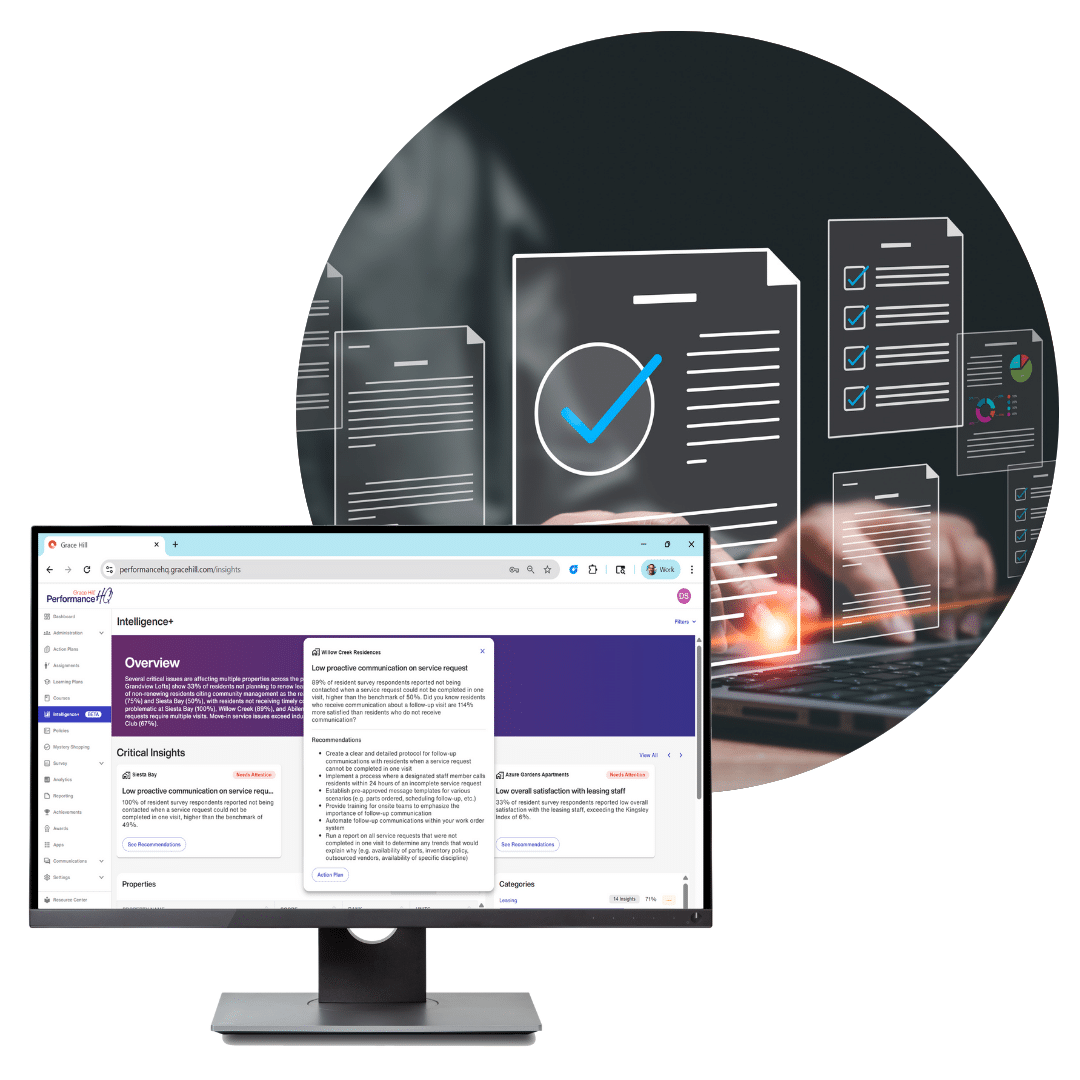
Intelligence+
Intelligence+
Stop drowning in data! Intelligence+ brings your resident feedback to the surface — and tells you what to do next.
- Get powerful, automated insights without the headache.
- Optimize performance with actionable recommendations, helping you know where to focus.
- Boost efficiency, cut the busywork, and drive results with less effort.
Surveys
Surveys
Gain actionable insights with comprehensive survey tools and trusted industry benchmarks.
- Boost resident and employee satisfaction with unbiased assessments.
- Evaluate leasing, maintenance, and management service levels with ongoing and annual surveys.
- Translate survey results into built-in action plans that improve performance.
- Benchmark your property with the Kingsley Index™ and compete for prestigious awards and recognition.
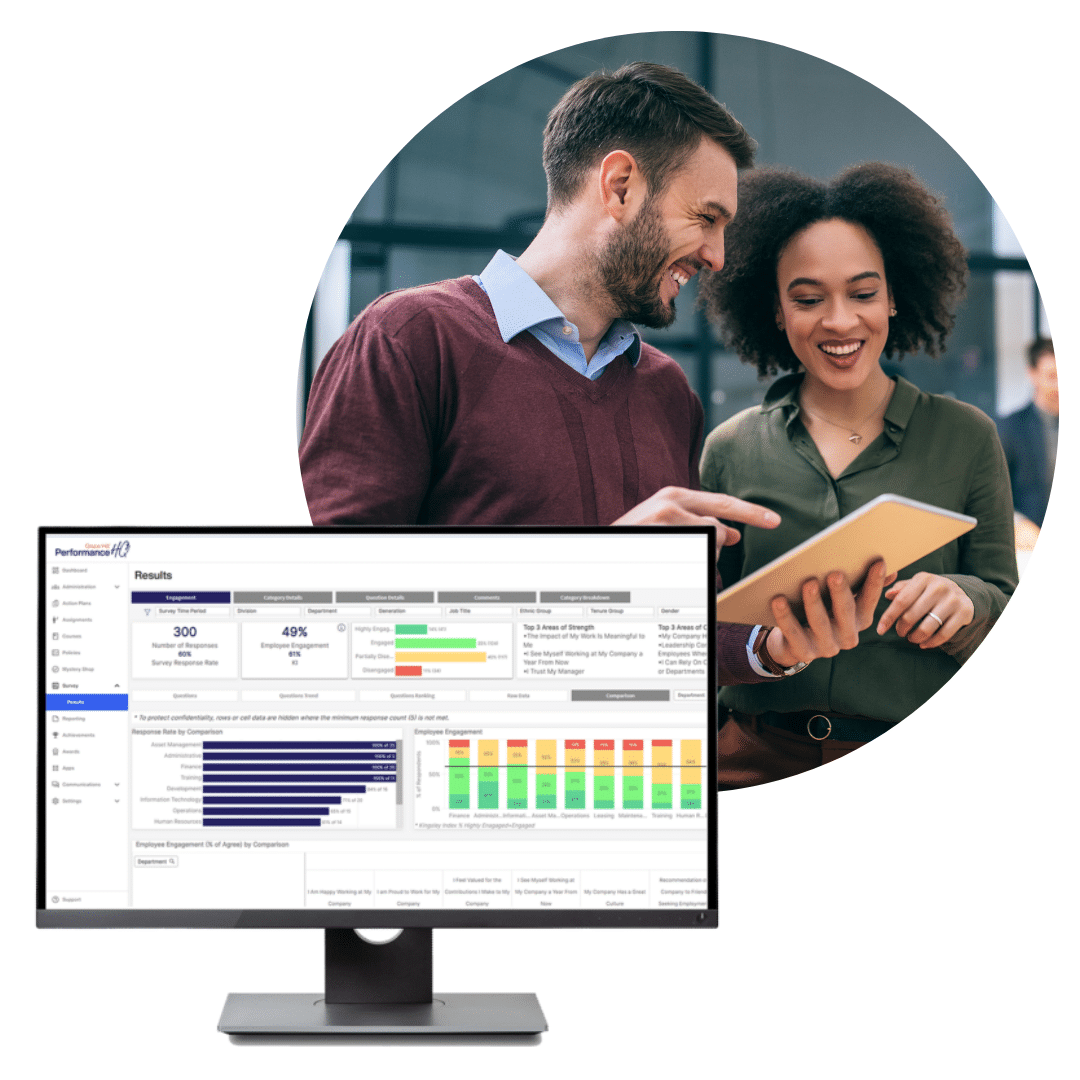
Realync Virtual Leasing
Realync
Virtual leasing and video tools to close leases faster.
- Offer personalized live, self-guided, or pre-recorded video tours.
- Capture, connect, and convert leads virtually with high-quality video content that drives traffic.
- Simplify move-ins with informative video tutorials that help set residents up for success.
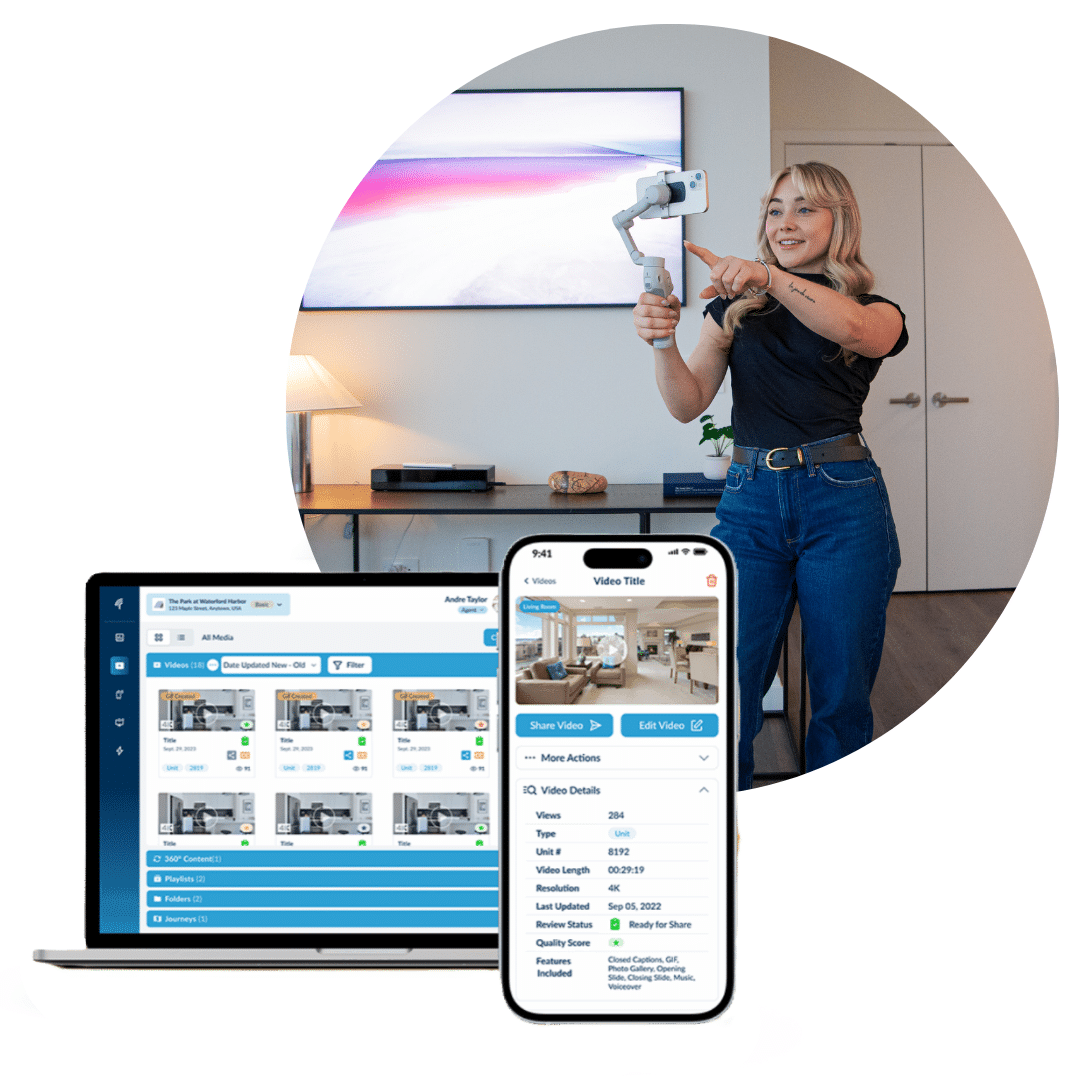
Training
Training
Complete multifamily training content that enables and empowers.
- Engage employees with 600+ industry-specific training courses in a variety of formats.
- Boost retention and quickly onboard new employees with short courses that fit into busy workdays.
- Support a diverse team with Spanish courses and translation tools.
- Save valuable admin time with automated assignments based on position, location, or custom groups.

Mystery Shopping
Mystery Shopping
Get unbiased performance assessments that drive results.
- See your property and team through the eyes of your prospects and residents.
- Gain access to a network of nationwide shoppers that simulate real-life scenarios.
- Review comprehensive reports and recordings that pinpoint strengths and opportunities.
- Access short training courses designed to address specific skill gaps identified during the shop.
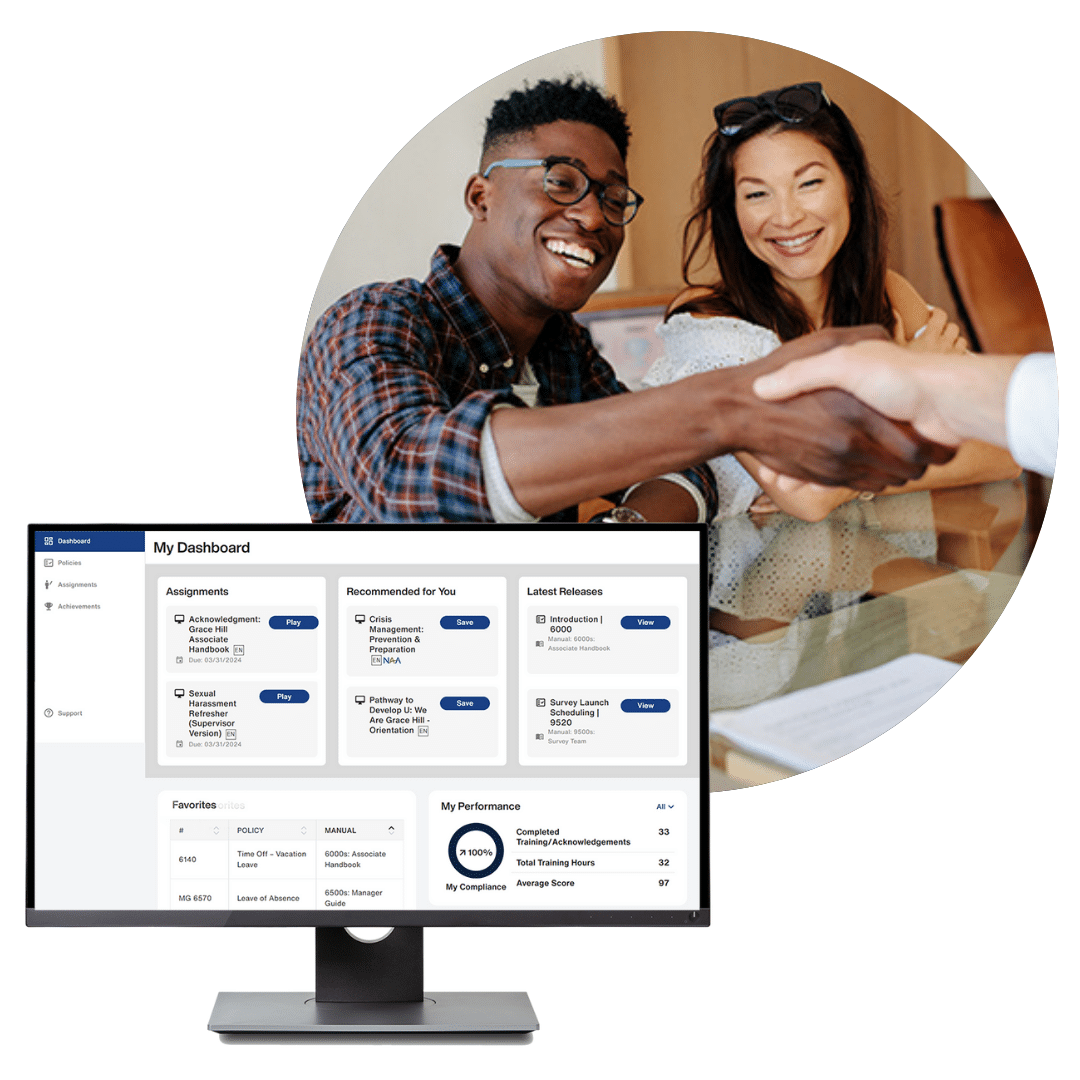
Policies
Policies
Comprehensive policies and procedures that reduce risk.
- 1000+ pre-built, customizable policies designed to jump-start compliance.
- Trust that policies comply with changing laws and regulations.
- Show proof of policy receipt with secure electronic signatures.
- See policy compliance in real time with our graphical compliance dashboard.
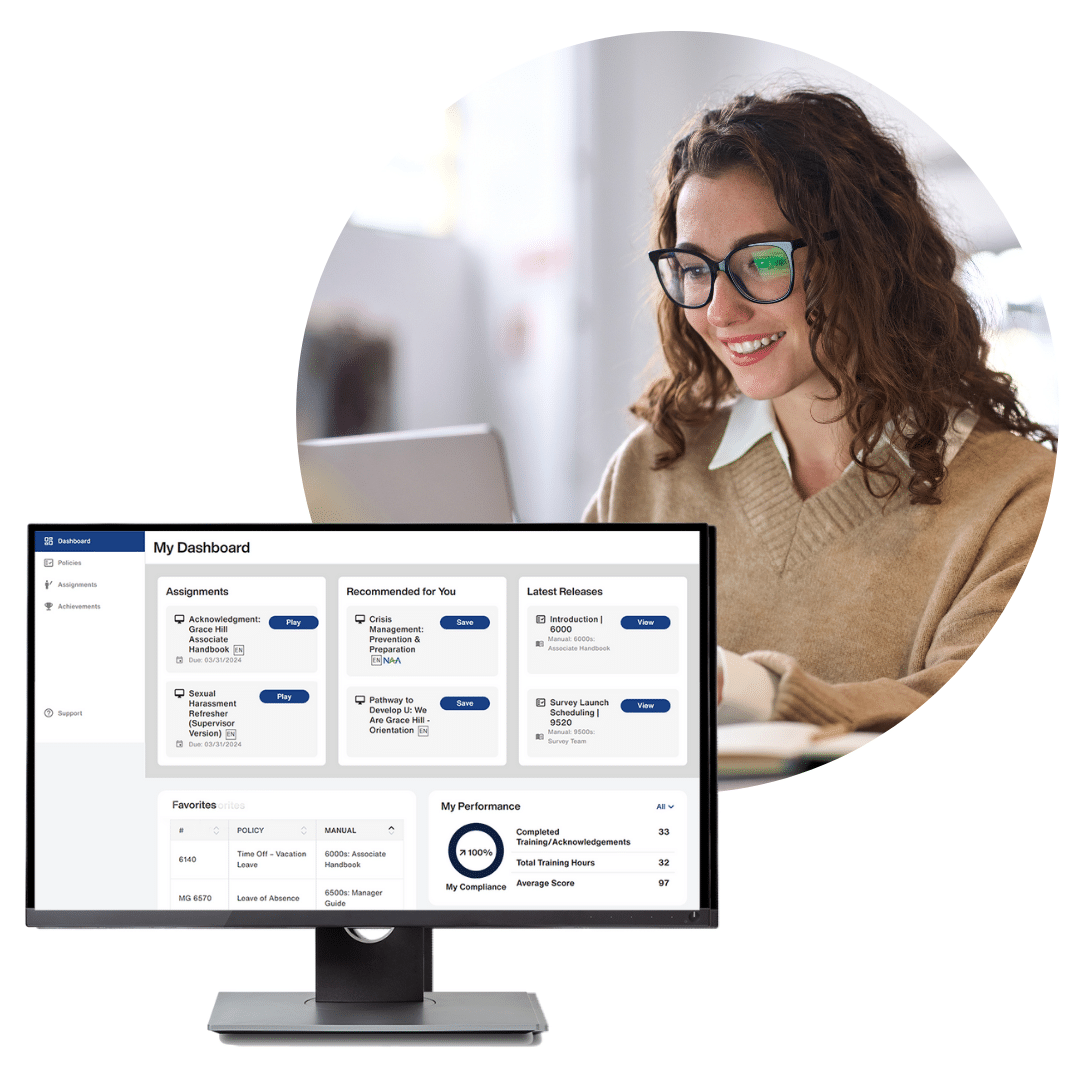
Reputation Management
Reputation Management
Seamlessly manage your online reputation and drive prospects to your communities.
- Streamline publishing and review management across platforms to boost efficiency.
- Ensure accurate listings across directories to improve search rankings and drive traffic.
- Leverage AI to monitor sentiment, flag risky feedback, and respond quickly.
- Benchmark comparative insights with our Local Brand Visibility (LBV) score.
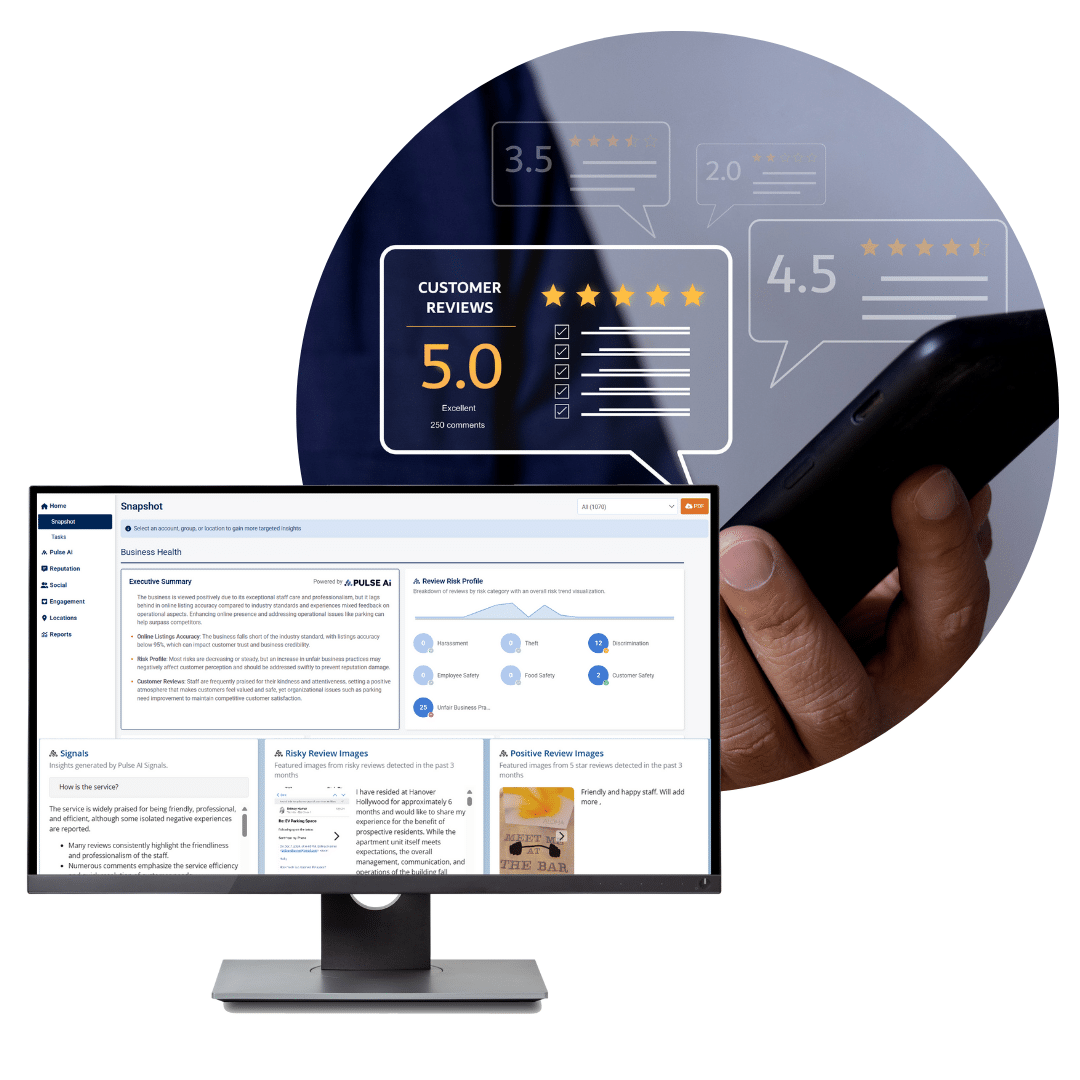
More Multifamily Tools and Insights

PerformanceHQ Preview
Realync Studios