

 Customer Support

ON-DEMAND WEBINAR
Neuro-WHAT? Neurodiversity and Multifamily: Strategies for Fostering Inclusion
It's time to begin a conversation about an important topic in the multifamily industry: how to foster inclusion for individuals who are neurodiverse. As the population of the United States becomes increasingly diverse, it's more important than ever for multifamily communities to be welcoming and inclusive to residents and employees of all backgrounds and abilities.
Join Christi Wedel, Learning and Development Manager, AG Living, as she explores strategies for supporting neurodiversity in multifamily housing, including how to create an environment that is accessible and accommodating for all.
Whether you're an onsite team member, a property manager, or an owner, this webinar is sure to provide valuable insights and actionable strategies for creating a more inclusive environment in your community!
Learning Objectives
Strategies for supporting neurodiversity in multifamily.
Best practices for engaging with neurodiverse individuals.
Benefits of fostering a culture of inclusion
Alright. Well, welcome everyone to our special Grace Hill webinar today, we're going to go ahead and wait just a few moments before we start to make sure everyone has an opportunity to join. Alright. Well, we have quite a few participants. I see that the numbers are starting to, slow down a little bit. We're right at about sixty participants today. So I wanna take the opportunity right now to say hello and welcome to today's webinar. It's called neuro what? Neuroiversity and multifamily. Strategies for fostering inclusion. When I introduce myself, my name is Shannon Hanrahan. And I am an account manager here at Grace Hill. I have been in the multi family industry for just a little over two years. So before I joined the multi family industry, I was an educator for over eighteen years. So I'm sure this will come to no surprise to everyone today's session that this topic is near and dear to my heart. And so I've always asked myself and all of my colleagues how can we foster inclusion for everyone in our everyday situations. I wanna personally thank you for joining us today. I also wanna send a special welcome to all of our Grace Hill, Ellis, and Edge to learn customers. Today's webinar is going to explore some strategies for supporting neurodiversity in multifamily housing, including how to create an environment that is accessible and accommodating for all. Before we get started, there are just a few housekeeping items I wanna go over. Today's webinar is being recorded and we will be sharing with all registered attendees later this week. As an attendee, you will be in listen only mode So this is going to help with any outside noise and disruption and disruptions so that everyone has the opportunity to hear today's presentation without interruptions. If you have questions or you would like to engage with Christy or guest speaker, please use the question and answer box located on your screen. Now without further ado, we're gonna get to the good stuff. So I'm excited to formally introduce you to today's speaker. Fifteen years ago, Christy Edell began her career in the multifamily industry. Initially, the leasing consultant, After working on-site for some time, she became a leasing manager and then she advanced to various marketing positions and later she was promoted to the corporate level as a marketing director, and this allowed her to apply her skills in marketing and sales to create successful campaign. Today, Christie is the learning and development manager for aging Living, and she's been able to provide her experience in corporate level training. She is humble to serve in this field and taking immense joy in witnessing the development of others as they accomplish their objectives. So I want you To take a moment and please welcome to our virtual stage, Christie. Hi, everybody. Okay. Gracious. That was quite the introduction. Thank you so much Shannon. It is definitely my honor to be here today. Thank you. So let's kick things off today. So neuro what? Neurodiversity in the multifamily space. That's what we're going to be talking about today, and we're gonna jump right into the topic here. Let's go right here. So let's start with this. First of all, I just wanted to say again, thank you so much Grace Hill for allowing me to, use my passion and expertise on this this platform. I'm super honored to be here. And I'm super excited about this topic. This topic actually organically. I'm passionate about, because for one, my son was diagnosed recently, about two years ago, as autistic, and he is ADHD and has anxiety as well. And he has giving me permission to share that with this audience today, in hopes that we can broaden the education in these in these areas. So you know, for years, my son struggled to fit into a neurotypical environment, right, the one he was born into. And, it was definitely an uphill battle, and it was very sad to watch him go from this eager, very happy young way to, this depressed little man. And I didn't know what to do, and it was just awful. And so I devoted my self to not only advocating for his rights in the classroom and beyond, but it also made sure that he had the necessary essary accommodations to be successful in school and beyond. And so, you know, after he was settled a bit, I began doing some research and delving into this parallels multifamily employees that I see that are struggling in different areas. And so We're gonna bring all of this together today, and we're gonna talk about neuro neurodiversity, what even is it, and then we're gonna talk through how it how it really relates to our industry and what we can do as leaders to make sure we are providing a safe and an inviting environment both at the corporate office level and certainly at our on-site levels as well. Alright. So more to come on that. I could chat all day about this. But let's talk about neurodiversity. What even is it? Right? That's what we're gonna talk about. We're gonna start with that. And then number two, we're gonna be talking about engaging with neurodiverse individuals and how it's very different than conversating with those who are neurotypical. And we're gonna talk about what all these terms are and why they're important to know. We're also gonna talk about the benefits of fostering a culture of inclusion and what that looks like in the neurodiverse space. And then last but not least, creating an environment that is accommodating to everyone, including those who are neuro diverse. Say that five times in a row, it's not as easy as what you would think. Okay. Alright. So let's begin with defining what neurodiversity is. So very, very quickly, neuro di neurodiversity refers to the natural variation in human brain function and cognitive abilities. What does that even mean? Well, it encompasses individuals with diverse neurological conditions. So that's that could be autism, ADHD, dyslexia, and many other neurological differences. And so embracing neurodiversity, it's essential for multifamily companies because it unlocks a wealth of untapped potential and diverse perspectives. So by recognizing and accommodating the strength of your neurodiverse individuals, you can foster an inclusive and an innovative environment that benefits your company and your communities. So did you know quick quiz that one in seven people have some type of neurodiversity, that's a lot of people, one in seven. So let's dive into the reasons why we should care Now that we know what it is. Why should we care? And then how can we begin to make changes and how we communicate with those around us? Anybody have any questions in the chat? Go ahead and feel free to chat away. Okay. So quickly, let's go over these terms that I was talking about earlier. So we've defined what neurodiverse is. Right? So we know what this first one hit his is here on the screen. Then what is neurodivergent? Because it's a little bit different than neurodiversity. Right? So there are four terms. These four terms that you see that you're gonna hear in this space if you begin to do research. Right? The neuro di diversity movement advocates the idea that our brains are different and that everyone, whether neurotypical or neurodivergent, should be treated equally by individuals in the workplace and external environments. And the self identifying label of neurodivergent originally focused only on those who are autistic. However, in recent years, it's been used to describe anyone who thinks behaves and learns differently to what is typical in society. So being neurodivergent should not be considered an inherent deficit but simply a difference in processing the world around us. And I'm gonna repeat that because that's really the crux of this entire presentation. Being neurodivergent should not be considered an inherent deficit, but just simply difference in processing information in the world around us. And so If you look at the screen here, we have the definitions that are really important to remember neurodiversity, neurodivergent, neurotypical, and neurotypical refers to having, a mind or functioning that falls within the society standards which is deemed typical. So just like it says, neurotypical individuals, and then neurodiverse is a term used to describe a group of individuals who represent the neurodivergent group. Okay? So I know that's a whole lot of information and a lot of big words, but what does it mean again and why should you care? Great question. So educating ourselves in neurodiversity in this space it's so important within our industry specifically. Why? Well, inclusive inclusivity and diversity neurodiversity emphasizes the idea that neurological differences are natural and valuable variations of the human experience. So by understanding and embracing this, the multifamily industry can create a more inclusive and diverse environment. Encompinating individuals with a range of cognitive abilities and needs. And this is really one that that I was surprised when I started doing my research, but not really because it makes sense. Right? If you're gonna be neuroinclusive, Think about how that might affect the way you treat your residents. Right? I would venture to say it's gonna give you better resident relations educating yourself about neurodiversity, it's gonna help property managers and you as staff to interact more effectively with residents who may have different communication styles. Right? They may have sensory sensitivities or behavioral patterns. And this leads to better resident relations. So, and a more harmonious living environment. So it helps reduce stigma and bias. So, again, educating ourselves on neurodiversity helps reduce the stigma and biases associated with those neurological differences. And so what does that mean? Well, It it means it can lead to fairer treatment of residents and prospects and foster a sense of acceptance within the community. And we're gonna I'm gonna give you some tangible examples of what this looks like and how you can actually put this into practice on your properties and within your companies here in just a little bit. So a little bit of background, kind of some nerdy stuff to really set foundation from what we're talking about, so that it all makes sense toward the end. And so all of these things that you see here on the screen These all fall within the spectrum of neurodiversity, and they're all neurodiverse conditions. So neuro differences are recognized and appreciated as a social category similar to differences in ethnicity, sexual orientation, gender, ability. And now keep in mind that this list that you see here is extensive, but it's also often expanding. So this is not all of all of the things that fall within this category. Okay. Is everybody still with us? How are we doing? Any questions? I know that was a lot of information that we just kind of threw out there. Okay. Alright. So I don't know about you guys. But, like, take a look here at this screen. This is a a picture of inside my brain. Right? We have memes, dogs, pizza, gaming, I don't know about you guys, but, you know, sometimes when I'm on my laptop and I have fifty tabs open, that's indicative of my brain sometimes. With all of the different tabs open. And so, you know, can anyone relate there to that, to the meme here on the screen? Oh my gosh. It's like every day we're pulled in so many different directions. And so the reason that I put that that's that meme, if you will, or that graphic is to really point out the fact that every neurodiverse individual is different, right, and the conditions can vary a lot. So much like a spectrum, we we all are somewhat familiar probably with the autism spectrum. And that's really what neurodiversity is all about, is it's very much on a spectrum as well. And it's interesting though it's possible to have more than one neurodiverse diagnosis. Perfect example, again, shared with permission by my son, is he is autistic has ADHD and anxiety. They all tend to run together and it's possible to have additional conditions. So, in autistic individuals, here's what I a couple of things I really want you guys to focus on And it's it's interesting and it's also very useful. In autistic individuals, they typically have difficulties with social communication, interaction and sort of small talk with neurotypical people. So they tend to have these obsessive interests and rigidity. Right? Things have to be just so. But how can those things be used those traits, how can they be used in a positive way at your communities and at your companies? Keep that in mind because I'm gonna give you the answer in a little bit. People with ADHD typically have trouble, planning with focus and with time management. So check this out. This is so cool. So each of these challenges, they they come with a benefit. So in the workplace, the benefit will generally outweigh the challenges if we choose to change our mindset here. So for example, you might find the way that an autistic person talks to be very strange, but The advantage is that they tend to be very clear in their communication, sometimes really, really clear if I'm talking about my son, Whoa. Don't ask if you look, you know, a little chubby in a in an outfit because he he will tell you the truth. Right? Oh goodness. But they're not good at nuances, or euphemisms or, play talk. Right? It's literally black or white. No gray area. So you know with those folks, they're gonna tell you the truth and they're gonna not beat around the bush as we say in the south. They're really going to speak from a place of truth. So their love of order and logic it can extend to a methodical way of working and a commitment to doing every job properly, again, bringing it back to my son because that's my experience. He does not like to do anything unless it's come he's not gonna say an assignment is complete at school. Until it's complete. Right? And so that that's what we find in our work environments too. It's like Wow. An example might be, why does that person take so long to do that report? Well, maybe maybe, and I'm not saying that that everyone who takes a long time to do a report is, but maybe just maybe they have to make sure that it is correct. That doesn't mean that every person is autistic or ADHD that has these traits. But are we asking, are are we asking how can we help you? You know, we don't wanna ask someone about their condition obviously, but ask and be very clear, you know, are there ways that I can help you? Would you like more time to focus on this versus this? Ask the questions and be empathetic in how you're talking to your employees. Another point is you might think that in a person with ADHD is unable to focus, which is most likely true, but one of their strengths is that they can hyperfocus. Put somebody let me know in the chat. If you know someone who has ADHD or even if you wanna share that yourself, where you can or this person can hyperfocus. So when they do that, they're able to work much faster than their peers. Right? So tell us in the chat where might that come in handy or be super effective in the workspace. Also, side note, people who are ADHD are great at multitasking, man. Leasing agents, leasing consultants, leasing professionals. I see you. I was on-site for many years, and man, we are the best at working under pressure. Aren't we? We're the best at multitasking. Side note, quick example here, I personally was one heck of a leasing professional, right, as an individual who is diagnosed ADHD it seemed tailor made for me always something new. Every day is different. But I was the worst assistant manager in the history of all assistant managers. And I tell this story all the time. Why? Because, well, it's my story. It's my truth, but I was being me being put into an assistant manager role was definitely diminishing my strengths and putting me into a position to fail. And so we're gonna get into, you know, how we can prevent that from happening a little bit later on, but I wanted to just share that personal story with you and tell us in the chat. Have you ever felt like, you know, you were amazing in one role? And then once you got promoted or maybe a lateral move or a move to corporate, you were like, oh, I don't know about this. And, you know, how did you handle it? Was it, you know, something where you said, you know, I'm not really I'm not really digging this. Were you afraid to speak up? Because then, you know, someone might saying, oh gosh, they just aren't ready. They're not ready. They need to be trained more. That may not be the case. They just not might be in the wrong seat. Alright. So let's continue here. I was going to interrupt you a little bit Christy and share with you that, we have had a few in the audience that have shared that they do have ADHD and that, this is very relevant to them and where they are. But I also wanna go back to the slide before. When we talked about all of the different types of neurodiversity and a question that we have from Deborah, And she's asking would this include people with traumatic brain, this or a traumatic brain injury as well? Yes. Absolutely. And I want to obviously state state the obvious I am not a doctor, psychologist, psychiatrist, This is just from simply from my research, but I have seen that brain injuries of all types are included in this in the neurodiverse space. Yes. Absolutely. Thank you very much, Christy, for sharing that. And our Taylor is also sharing that her superpower or his superpower is that they can hyperfocus. And so I agree that is a superpower. I wish I had And Canada says, yes, hyperfocus, but there's no way to turn it on or off and decide what to hyperfocus on. That is where I fit in. So, we do have a lot. And so we do have someone who is ADHD, bipolar, and OCD. And they can do a lot of things very quickly. They're very they're a very busy person. They're not gonna sitting still so they get bored easily, but they do really well under pressure. So you love how we're looking at all of the differences in a very positive light here. Gosh, you know, I'm I might be, I might cry a little bit here. It makes me feel so incredibly honored that you guys would feel comfortable enough to share that information. It speaks a lot to your, your your ability to, embrace and know that you're not, an outcast. You are certainly appreciated, and you are loved for who you are. And so, okay, the the coach and me just came out. The life coach came out in me a little bit. But, yeah, that's amazing. And you, you know, what? We can turn it on and turn it off sometimes, but I feel you, Taylor, because Yeah. I'm like, oh, squirrel. Oh, I probably shouldn't hyperfocus on the squirrel when I'm trying to put together a presentation. So, It's fun. I I wake up every day and say I'm thankful for the brain that I have because there are so many awesome awesome ways that I can use and you can use your brain as well. So thank you guys so much for sharing that. That's incredible. Love it. Christy, we have a couple more if you don't mind me sharing. Marissa was shared about her ADHD and autism and has a realization that they need a more structured community where they're by themselves as to opposed to a community with a lot of different LCs. So I think it's so powerful to know who you are and know what your best working environment. And Stephanie shares that working under deadlines also something she does really well. And then finally we have Candice who says, I think social media, raising awareness, for MD communities has really helped to not feel alone. He's still my heart. I love it. Yes. To your point, Stephanie, I think it's amazing that we are we're we are getting there. We are getting there as a culture and in the multi family space where we feel comfortable speaking up and saying, yes, I am autistic. Yes. I have ADHD. Yes. I have mental health issues, but that does not define who I am. And I'm able to use these things to my benefit as opposed to cowering in a corner and knowing that you need to go to a different community, that is just a huge. It's leaps and bounds from where we were just a couple of years ago. So kudos to everyone. Thank you so much, honestly, from the bottom of my heart. For, for sharing. You are seen, my friends. You are seen. Let's see. I think we work here. Okay. So I wanted to talk through and actually, this goes right along with what was shared in the chat box a few moments ago. So what if we turned this idea that we have to first leasing professional or leasing consultant, then we get promoted to an assistant, and then we get promoted to property manager or community manager, whatever that title looks like in your world. There is absolutely nothing wrong with that trajectory. However, if that is not where your strengths lie, I think we do a great disservice in our industry sometimes when we take a very very strong, powerful, excellent salesperson, and we put them in a role where they're typically behind the scenes, managing accounts versus managing people and leads. And so, yeah, I I think that we can do better. And I think I've seen regionals, especially ours at AG Living shout out, quick promo out there. I've seen them put right people in the right seats and not go along with that that trajectory that's in the way it's been for, like, at least twenty, twenty five years. So yeah. So I think that that's that's one way that we can address this. Talking to my regionals and also community directors, you know, let's do that. Let's put the right people in the right seats. And let's painted as in, you know, if you are, let's say you're an assistant and you're like, gosh, I really I I don't like this, or I'm not very great at it, but man, I love leasing. There is no shame in it's not going back down to at least you've sold it. It's it's taking a it's, it's going to the place where you're going to be the most effective, and that's the only thing that matters in the long run. Right? And so kinda put out of your mind that, oh, gosh, what's this gonna look like on my resume? It's it's much more important to be where you're happy and where you are successful. Right? So I'll have to tell you guys, a really quick story about someone who did this in my experience. And this was years ago because I've been in the industry forever. By the way, I think Shannon said at the beginning, it's it was fifteen years. I think that I sent her the wrong information. I've been in the industry twenty five years. So, yeah. Had to disclose that. But yeah, so we were doing this lease up out in the middle of nowhere in Frisco, Texas. And, we had there was leasing agents. I was one of them. We basically, what the leader did at that time was she said, gosh, Christy. You're great at sales and people and all the things leasing, but you're horrible at paperwork, by the way, which I was. Right? We already talked about how bad I was in the as an assistant manager, right, and so we basically released the apartments and someone else was doing the paperwork. Now listen, I'm not saying that's going to work in every situation. Obviously, this is something that we need to be discussed with your regional and things like that. Okay. So don't go back and say, Well, Christie said, because then we'll all be in trouble, or I will. But, no, it was great because it was outside of the box, and we we were super successful at that lease up. And I think part of it had to do with having the right people doing the right things. And also doing what they loved. So that was a big part of it as well. And if you guys have any experiences like that, feel free to share those in the chat box too. Okay. So let's talk through this for a second. So, Roughly ten to twenty percent of the global population is considered neurodivergent. I thought that was very interesting. I did not know that that that was that high. I really didn't. And so if you take a look at the slide here, many highly successful business leaders have openly discussed in recent years about being neurodivergent. But there's room for more effort in this area. So I'm looking at you executives, CEOs, regionals, those people that are in a leadership role, if you self identify as neurodivergent, the rest of the workplace is gonna feel comfortable to come forward too. Again, only if you're comfortable with disclosing that. Right? But just know that that helps your teammates and your teams to feel more comfortable to disclose that type of thing. So you have, gosh, you got Elon Musk, Satash, she Tajiri, Albert Einstein, Justin Timberlake, which surprised me didn't know about that one, and then howie Mandel. So pretty famous people that are out there saying, hey, I'm neurodivergent and proud of it. So I thought that was pretty cool there. Alright. Now getting to the meat and potatoes of this, as you say, in the south, did you know that sometimes companies fear that employing a neurodiverse person might be difficult and expensive. So I'm looking at you executives and corporate office folks they fear that the adaptations that the neurodiverse person is going to require is going to have a negative effect on the rest of the workplace. Well, research shows that the reverse is true. Inclusive workspaces have lower staff absence, and, excuse me, improved performance when you make an accommodation for one individual, the entire workplace benefits. And check this out. Fifty nine percent of adaptations that are made for neurodiverse employees cost you nothing at all zero. Many of the remainder are low cost and easy to implement. So being inclusive towards neurodiverse people, does not have to be expensive nor should it be. For example, allowing your corporate team members to work flex flexibly benefits all kinds of people, not just the neurodiverse. And the economic benefits are enormous. So neurodiverse team members are a staggering thirty to fifty percent more productive than neurotypical people. And this is due to their ability to learn very quickly and to work to their strengths. Again, if you have people in the right seats, working in teams, you might have an autistic person paired with an ADHD so that they can inspire balance, work, and actually support each other, or you could have someone who's very detail oriented working alongside dyslexic. So that together they can produce extraordinary work. Oh, that was a lot. We have was gonna say we have some awesome comments coming from your audience today. And so Jana was this exactly what you just about is that she can also see that the workplace flexibility, including working from home, having open desks, and private spaces in the office can really help a person do their best work, even thinking on-site, having a private place, could be found to help a person do a specific test without those distractions. So I think that was very it was honing into exactly what you said in relates to anybody in the multifamily industry right now. And then Karen had shared that when she had or She has ADHD, and that she finds the field of multifamily to be the most engaging. And as well, she's in a supervisory role. So she has experienced the promotion or promoting of a wrong person and then also being that person to coach them and help them be successful in the wrong role. And so trying to work with those on the spectrum can get the you have to get the best that they can offer. So very excited about this topic. And OCD and love working, in their own office. They can keep their own order and control somewhat of it. I love that. Yes. And it's it's so important. Thank you guys all for for sharing your experience there. That's amazing. And it truly helps people who might be on the call that aren't quite ready to speak up, but hearing from some people at different levels and someone in a supervisory role to speak up is is huge. Right? And so I'm so proud of this audience. I'm so proud of your first of all, just taking the time to attend, but then also to be engaged and truly be passionate about this topic. It gives me hope for, people like my son. And then also for people who are currently right now in the industry, And so I guess you guys can see now why there's just I'm so passionate about it. There's so many people that can truly benefit from this education. Alright. We are moving right along, my friends. So engaging with neurodiverse and individuals. So I'm gonna talk to you guys about five principles for neurodivergent inclusion. Again, try not to say that five times in a row because, oh my goodness. It's hard. And so contrary to popular belief, great minds don't all think alike. I know we've probably all heard that before, as as well as I have, but neurodiversity is the concept that all humans vary in neuro recognition, which is recognizing the unique strengths and challenges that derive from thinking, learning, and communicating differently. So what does this look like in real life? Right, in our in our everyday, on-site life. So it could be something like this. When we plan staff meetings, communication and company wide engagements, we need to recognize this. So failure risks excluding our neurodivergent folks and their contribution So let's walk through five principles for engaging with neurodivergent people. So Number one here that you see is big picture first. Keep the main theme or area of focus of your activity at the front of what you're doing. Devise a clear structure and user journey. So clutter can divide attention, and I've seen this again, and my son and and and lots of leasing agents along the way. It causes people to miss things. And it also increases the amount of time and concentration that it takes to digest information. So again, what does this look like? Let's just take it back to a simple, as simple as, having a staff meeting. Right? I would suggest, and I've seen a lot of people do this well and some, not so much. Right? And so we can do better. Always follow-up your meetings with what your main points were in writing. And don't wait until this is, gosh. We're getting close to write up, so we're gonna send the follow-up email after our conversation. This is definitely not that. This is saying, Hey, This is what we talked about in the meeting, and here's what I'm looking for for you guys to do or not do or whatever that looks like. But always keep the big picture first. So number one on that meeting agenda is your most important thing to get across. Right? And then also second point here, is show what matters. So different members of your team will have different priorities when engaging with you. I'm looking at you property managers. So, you know, and this is gonna mean that you need to provide a lot of information and they're each competing for user's attention. Right? So what this looks like is you need to make sure when someone comes into your office and says, Hey, do you have a moment? Take a deep breath. If you do, and put away the the email, the phone, the TikTok, you know, whatever it is that you're doing, right, close it out and give that person your undivided attention. And that works both ways for and also it really is just to show show common decency and respect, but also it's going to, it's gonna show that person that you care about what they came in there for. Right? And if you can't, if you're in the middle of something, then let them know that. Say, hey, I wanna give you my full attention. I'm in the middle of this report, I don't know. Somebody in the training department, Christie wants me to do some report, right, wing, wink. But tell that person I can meet with you in fifteen minutes. Right? Again, so big picture first, and then show what matters and keep it clear. That's the next point. So all engagement that we engage in has a desired income, outcome. So it's either providing feedback or it's informing or addressing a concern. The work must be clear, compelling and impossible to miss. And then the fourth one here is user choice. So provide choice. What works for one person may not work for another one. And that was mentioned briefly in the comment section in the chat box. You know, do we have a space where we can provide a quiet space for those people who need to work on certain projects paperwork and things of that nature, do we have somewhere we can put them kind of away for a little while so that they can do their best work, right, without five million things going on. And then last but certainly not least, it's be considerate. So consider the overall sensory experience of communication efforts. And if you'll notice, the girl here has her headphones on, and that was not by accident. Creating a welcoming environment to those who need to wear headphones for various reasons, sensory reasons, autism, ADHD, you name it, It's acknowledging that one size does not fit all. And if you're hosting an event at your community, is the atmosphere welcoming and inclusive. And are people gonna wanna spend time there with you? Christy, delaney shared that, their supervisor always says that they are the bumpers on her bowling alley. Because Delaney is detail oriented and can bring her supervisor back to earth when she has a big creative idea. So it kind of went in with the big picture first. And so I wanted to share that note with you. I love that, Laney. And I wish that I really wish that everyone could do that in their office. Gosh, realize that those people who are, you know, it could be vice versa too, realize that you're all over the place leasing staff, Man, you can you can hone them in and you can be the detail oriented one. You could be the one to create the spreadsheets and and and the order and the logic. Right? And then you can let them go and do their things. Right? And so I love the fact that you share that. And I wish that if if we take anything away from this, gosh, start doing just that in your environment. Start looking for those strengths with the people around you that you already have. And it it takes a little bit of, going deeper, if you will. And you know what? Here's a concept. Ask people. Start with your team. Say, how do you prefer to be communicated with? Are there things that we could do that would be more inclusive. Do you feel like you are seen and heard? Do you need to be set apart? Just ask those questions. And I know this is this is being report recorded so you could go back and listen to it, and make some notes if you'd like and just have those conversations with your team. I can promise you even if even if everyone says, no, we're good. We're fine. It's gonna at least show that you have empathy or empathetic toward them and that you truly care for their well-being. Great, great comment. I love it. Alright. So I'm just gonna read the slide here. This is five ADHD terms to know. Again, we're not gonna nerd out on it too much, but these are just high level. So task paralysis. This is important to know. So people with ADHD will typically struggle with things like organizing, planning, sustain, and sustaining attention. Have you ever been talking to someone who has ADHD and they're like, you know, that you can see that they've kind of gone to a different place. You're like, hey, you still there? Wait twice if you need help. You okay? So so that's just something that, that really happened. And and the reason it's important is task paralysis is a real thing. And what that looks like in an on-site environment is, if you've assigned something to someone in your office and they haven't started it and they have started it or they haven't finished it. You can ask the questions. Do you need any help with that? Is there any other questions that I can help you with? Do you need time set apart? For that, task paralysis typically happens when they feel insecure about some part of that task or that project. So just ask a question, and then working memory. Oh my goodness. Yes. The struggle is real. So those of us those of us with ADHD, we struggle with short term memory. I can remember everything that happened five, ten years ago. Don't ask me what I had for dinner last night. Right? Raise your hand in the chat. Right? Are we are am I the only one? Surely not. Right? But we too, we have we have challenges organizing information, and that's why it work. It it works really well for someone who does have ADHD to work with someone who's detail oriented. That can keep them on track, like the bumper theory. I love that. And then this is an interesting one. So we won't dive into this too much because it's more personal, I guess, but it's rejection sensitive dysphoria. And what that means is people who have ADHD are deeply afraid of someone not liking them or them making someone angry because they didn't do a good job. It's totally unfounded. It makes zero sense, but here we are. And then dopamine, this one's important to remember because people who have who are neurodiverse in general, but especially ADHD years, they let dopamine in their brain. Right? So if you can give them an assignment or a task or project to do that they're excited about, they will do it and then Like, they will go above and beyond because it's gonna give them that rush of that dopamine because they're getting something done. And, so just keep that in mind. It's it's kind of a strange one. And then, hyperactivity, that's the one that most people equate to ADHD. And so that one's just the the state of mind where there's excessive physical and mental restlessness. Alright. You see in the in the chat box, Rowan has shared that they use one note to write down everything in their daily notes. And that is a simple way to share with their manager or supervisor. So they can see everything that's done in a day, but it's also their task analysis. So they know when they've done something, they can cross it out. So, and then Dennis shared, we've got plenty of things wrong with me that create some ripples. But I'm embarrassed and I don't want to be labeled, but I'm definitely not normal and it causes anxiety. So Do I need to present a doctor's note diagnosis to manager HR for considerations? It's his question. That is a great question. And considering that I don't wanna give wrong information, I can only just share with you what my experience has been. And you can kind of deduct what you would choose to do from there. First of all, I wanna back up for a second and say there's nothing wrong with you. So let's make sure that we get that part out of our mind and shift that mindset. You think differently than neurotypical people, perhaps, but that does not mean that there's something wrong with you inherently, my friend. Okay? So there's that If you so choose, yes, I you can choose to start off at a, you know, doctor doctor's office. And then, they'll give you a a quiz. I I believe there's all kinds of quizzes online now that you can take. Again, I'm not gonna give you any kind of medical advice because I would be wrong because I don't know you. But, yeah, I would start with either an online quiz or assessment or your local doctor, and just go from there. And you are not required to disclose any of your personal information unless you choose to. So the only time that would be relevant is if you are asking for specific accommodations, But I would say start with step one. Step one is if you feel like you might may be neurodiverse or have mental health issues, absolutely first place to start would be your, primary care, or online assessment. Great questions, by the way. Okay. So how are we doing on time? We're doing good. Perfect. These are the benefits of fostering a culture of in occlusion. So the latest Intuit blog online states that the top three benefits of fostering a culture of inclusion are drum roll, please. Diversity leads to greater innovation. So what does that mean? What does that mean to you? So let let us know in the chat. What do you think diversity leads to greater innovation means? I'm gonna tell you what what what I think it means. And so I think diversity unlocks innovation by creating an environment where outside the box ideas are heard. And so what are the results? Well, this Intuit blog stated that companies practicing diversity don't miss this part. Companies practicing diversity are seventy percent more likely to capture and retain a diverse group of individuals. That's a huge that is a huge percentage, my friends. And then also diversity makes it easier to recruit top talent. Gosh, we're in a time where unemployment is low, in recruiting talented, dedicated workers, finding dedicated workers can be a challenge. And so, you know, a lot of people right now, they're looking for more than just that compensation and perks and packages. Right? They want to feel like they are going to be joining an environment that is diverse. And that means all areas of diversity, including neurodiversity. And also, don't miss this. Diversity can improve your brand's image So any marketing folks on the on the call or CEOs, you know, let us know how you think diversity can improve your brand. Multi family companies that value diversity enjoy better brand perception. This is already taking place in our space. And, you know, one reason could be that potential employees perceive diverse minded brands as being more in touch with their employees well-being and that they're forward thinking. Chrissy Lee is sharing that what diversity or the culture of inclusion means to them is different ideas and the idea that every opinion matters. Yes. It does. I love that. Thank you for sharing. Okay. Continuing on here with the benefits of fostering culture of inclusion. So we're we're basically in this perfect storm environment right now, and so there's pressure for us to diversify the workforce. There's need for innovation and then there's limited labor. And so multifamily organizations that make an effort to retain, retain, recruit, and nurture neurodivergent workers are gonna gain a competitive edge from increased diversity and skills, ways of thinking and approaches to problem solving. So you know, we are all under pressure to integrate a diverse workforce, encourage out of the box thinking to gain a competitive edge while dealing with a workers' market. So how do we do it? Right? So HR folks, I'm talking to you. Hiring neurodivergent workers could be an integral part of the solution to these circumstances. So these professionals could not only help employers turn the tide on the current labor shortage, but also bring into their organizations different and valuable ways of thinking and problem solving that could lead to innovative solutions and give you a competitive advantage. So this was interesting when I found this too. This little piece of, information online a few days back. So despite our increasing focus on diversity and inclusion and equity in the workforce, the neurodivergent group is often overlooked in the diversity conversation. Why? I don't know, but as a result, these individuals often experience higher rates of unemployment and underemployment compared to the general population. In the United States, it is an estimated that eighty five percent of people on the spectrum are unemployed compared to four percent of the overall population. And I don't know about you, but that's heartbreaking. These are people who could be filling our seats right now and be super productive at our company. So it just it it breaks my heart. So how do we make how do we do this better? Right? Well, let's read the slide here. We need to revisit our hiring process. We need to create a conducive work environment, and we need to provide tailored career journeys once once people are in our companies. Any questions there Leiana has shared that diversity forces everyone to think of others' perspective So this allows you to plan better for meetings or events when you know you're going to have answer questions from a diverse group of people, but this also could go into the hiring process as well. How do you have those interview questions? How do you even do the interview process? Mhmm. Great question. And I think that, you know, I I don't know how everybody on the call feels about chat GPT. Use sparingly and wisely, I suppose. But that would be a really good question to to ask chat GPT because I guarantee you get a huge response on that. And I think it starts high level in the very beginning with looking at our SOPs. Right, looking at those policies and procedures that we have in our hiring process and just really doing a a deep dive into into each one of those. And do do these make sense for our de and I groups? And do they make sense for those who may think or learn or speak differently than we do. And I know for me, I, you know, the research that I've done, unfortunately, we're not there yet. But that's great because that means we have a challenge in front of us, and we can do this, right, together as an industry. We just have to make sure that it is, in the front of our minds and that we move to make changes. Oh, sorry, guys. I skipped that too quickly. Okay. Benefits of fostering, again, with the fostering a culture of inclusion. Now, we're gonna talk about we're gonna talk to the executives and hiring managers. And so I'm not gonna read the slide, because there's a lot of data there. But, basically, research has shown many benefits of a diverse and inclusive workspace, higher revenue growth, That's why I said attention executives, higher revenue growth, greater readiness to innovate, increased ability to recruit a diverse talent pool. So I thought that would be really beneficial for our executives. Okay. And so by in embracing diversity and fostering an inclusive culture, you guys can unlock the full potential of your workforce. You can drive innovation, productivity and employee well-being. Inclusive workplaces attract talk talent enhances their reputation and also builds strong relationships with your internal and external customers. So do you feel your I'm gonna ask a few and if you want, you can join in the conversation in the chat or just take these and kinda ponder them. Do you feel your perspective is well represented at the company. You may or may not wanna answer that in chat. Does the organization celebrate ideas and perspectives from diverse groups of people. Do you feel safe discussing diversity and inclusion initiatives at your organization? And what do you like about the company's diversity and inclusion programs? So I'll read the slide here. It's one of my favorite quotes when employees respect each other and get along in the workplace, it's amazing how productivity increases, morale increases. And employees are more courteous to customers. So a couple of things to remember here. Let's take a few moments. We have about three minutes till we wrap up here and just soak in the content and these messages. And if you'd like, go ahead and engage in the chat box of what of what you think. Things to remember eye contact is not required for listening. How many people I think myself included? Your parents said, at me in the eye when I'm talking to you. People who are on the spectrum, do not do well if you If you ask them to or if you're expecting them to give you eye contact, don't think that they're being rude. Typically, they can't process information while they're making eye contact. Again, something that I found out in this research. Force eye contact uses a lot of our focus and mental energy and reduces the capacity to listen and learn. So if you have a meeting with someone who's on the spectrum and they leave and go I have no idea what that person said. It's because they were masking the entire meeting, and they were just looking at you because they're forced to do that because This is the neurotypical society we live in. Right? So we don't wanna do that. You wanna get away from that. I like the second one here. It's not a neurodivergent person's responsibility to disclose at work. It's an organization's responsibility to create a safe environment where where they feel comfortable to. So that speaks to what we were talking about earlier in the chat. Yeah, and just things that cost mental energy prolonged exposure to complex sound and sensory discomfort. Suppressing mental traits. So masking as we discussed a few moments ago. And situations that cause complex emotional responses, eating, cooking, cleaning, self care laundry, and socializing. So in wrapping up here, we we covered that really quickly. I just wanted to go through this this slide while we have just one minute left. So what does this look like for you guys on-site? For leasing consultants, basically providing training on different communication styles, also sensory considerations for your leasing consultants hey. Do we need to get some fidget spinners for the office, that type of thing? For assistant managers, we wanna make sure that we provide clear procedures on everything that they need to do, property managers. This is giving them training on inclusive hiring practices And now for the fun part, so these are just some things that you can see here. That you can provide, either at your community or if you're at the corporate office in a, in an environment where you're interviewing people, you know, have fidget spinners, have fresh water, have, you know, those types of things to, to help people feel more comfortable. And that is all my friends. Well, thank you so much, Chris. And I do wanna share with everyone as we end today. If anyone on your team is challenged with any of the topics that we discussed today, fear not, our team at Grace Hill can help you. And so we understand that there are child and tribulations of compliance along with the excitement of diapers And so I'm gonna have Christie share a couple more slides because if you enjoyed today's session, on a couple slides up we will share with you that in September, there is more on the way. So next month, we are whole post hosting a virtual event, say take your policies from basic to bougie and notice at the bottom, if you join us live, you have option to or you have the opportunity to win a bougie box of fall goodies. And so take your policies from, basic to bougie. And so we're gonna for policy solutions, those for multi family property management and here real world solutions. And I know we don't have enough time for any more questions, but Christie is going to share with you in a couple more slides, maybe her contact information that you can reach directly out to And so I really do appreciate you participating in attending today's webinar. We had great participation. We had great questions. And thank you, Christie. I hope you enjoyed sharing your expertise on this topic, and we hope that you all make it a great day. Bye.
More DEI Tools and Insights
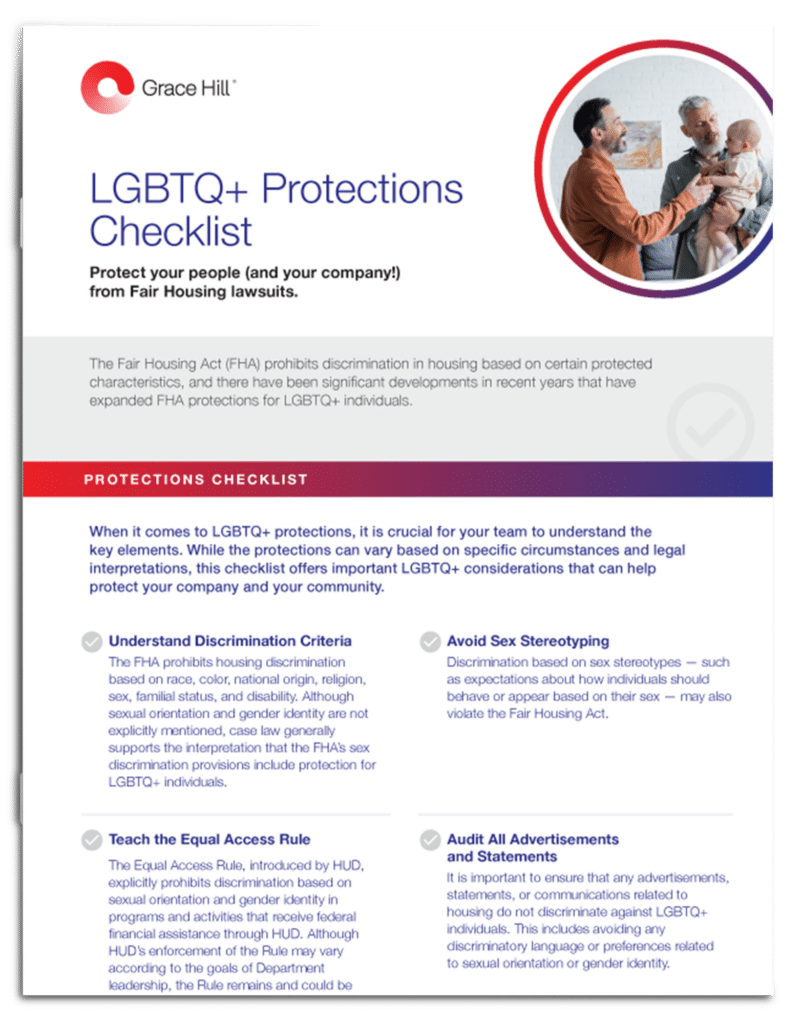
LGBTQ+ Protections Checklist
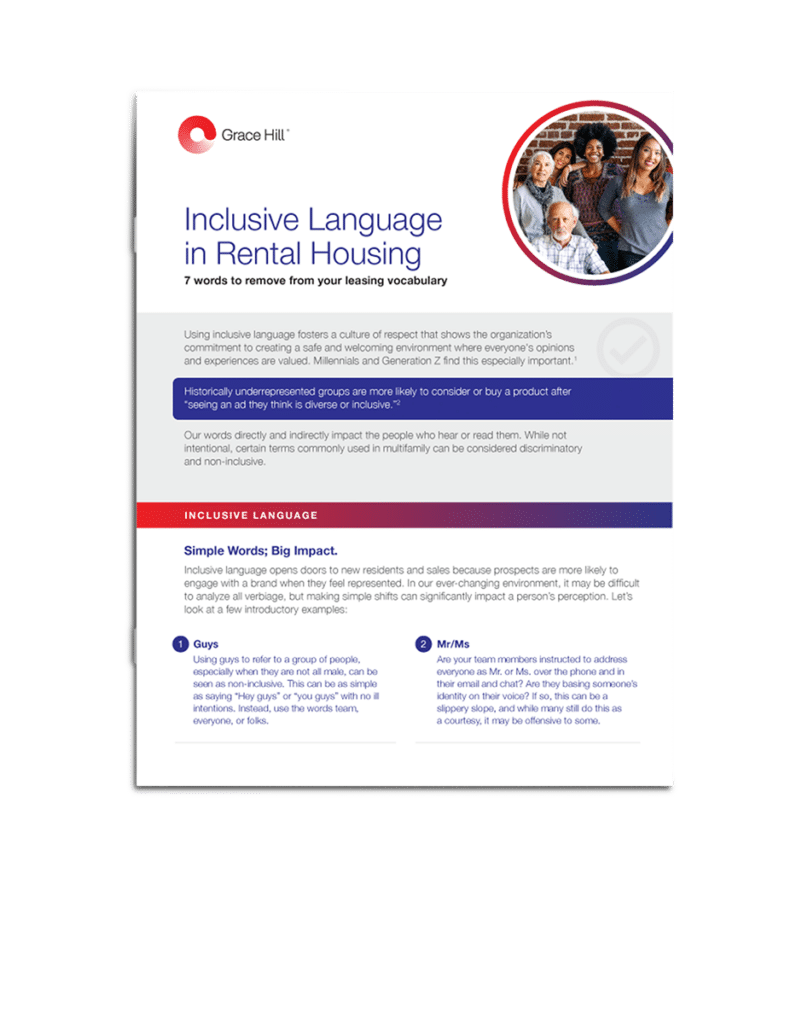
Inclusive Language in Rental Housing Checklist