


 Customer Support



One Platform. Every Signal. A Clear Next Step at Every Property.
PerformanceHQ captures every performance signal and Intelligence+ reads them for you — catching what matters before it turns urgent.
Most operators aren't short on information. They're buried in it — resident feedback, mystery shop scores, training gaps, market shifts, all arriving faster than anyone can read. No team can catch every comment across a portfolio, spot a subtle sentiment shift the moment it starts, or see the pattern that only shows up across time, teams, and turnover. That's what makes decisions hard: not too few signals, but too many, and no time to separate what matters from the noise.
PerformanceHQ brings every performance signal into one place, and Intelligence+ reads them like a trend-recognition engine built for multifamily — applying the same logic at every property and surfacing issues while they're still small enough to fix. A flood of signals becomes a clear next step you can act on now.
Interactive Tutorial: Live Intelligence+ Demo
Take it for a spin below. No setup, no hoops to jump through — just a live look at how Intelligence+ actually works in PerformanceHQ.
What PerformanceHQ Actually Connects
Resident surveys capture how people feel. Training and competency data show how prepared your team is. Mystery shopping shows how the property performs against standard. On their own, each is one slice of the picture. Inside PerformanceHQ, they're read together — so a dip in one signal can be traced back to what's actually driving it in another.

Intelligence+: The Action Layer
Most tools stop at reporting. Intelligence+ goes further — when an insight surfaces, it recommends the specific next step, often the exact training course most likely to close the gap, and lets a manager assign it in one click, without leaving PerformanceHQ.
Why This Beats a Point-Solution Stack
A standalone survey vendor tells you sentiment. A standalone LMS delivers courses. Neither connects to the other, and neither tells you what to prioritize. PerformanceHQ is built as one platform specifically so those signals inform each other — and so the recommended action is consistent no matter which property, region, or manager is looking at it.


"I love how Intelligence+ gives us clear, actionable guidance so we can confidently make improvements that boost resident satisfaction and performance across our portfolio. It's not just a report; it's a playbook for success."
Sara Perry
Director of Brand, Marketing & Customer Experience at HILLS Properties
See Beyond Your Four Walls
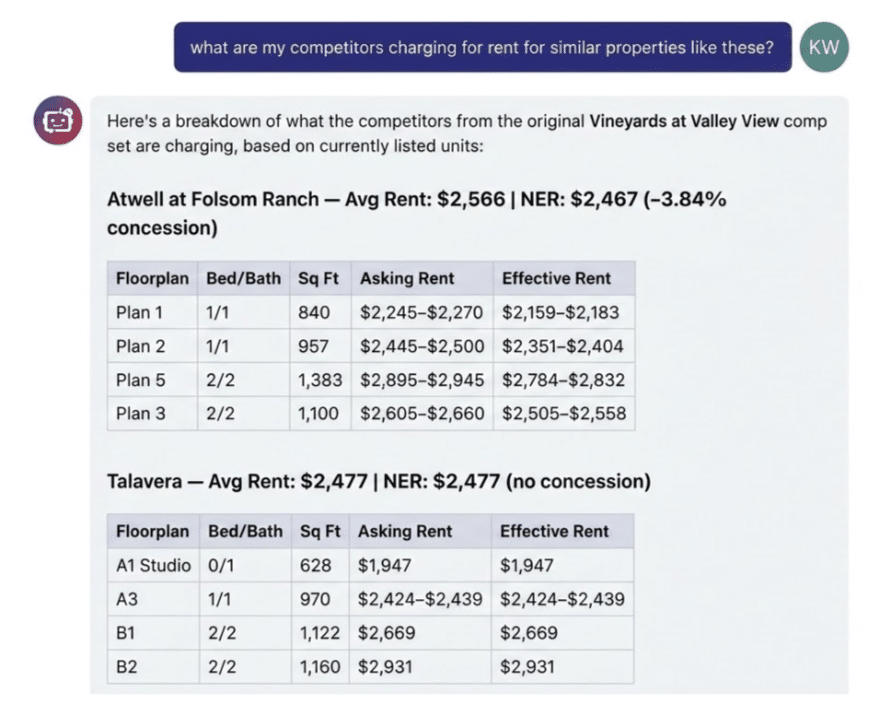
With HelloData market comps built into Intelligence+, you can ask Gracie to pull rent, occupancy, and amenity data for comparable properties in your market — and correlate it directly with resident sentiment in the same conversation. That's how you catch a property still offering concessions while most of its comps are fully leased, before it shows up as lost revenue.

Built on 40 Years of Multifamily Data
Intelligence+ isn't generic AI layered on top of your data. It's trained on decades of multifamily performance data and industry benchmarks, so what it recommends reflects what actually works in this industry — not a generic best guess.
One Platform. Every Role. One Answer.
Owner/Operators & Asset Managers
Owner/Operators & Asset Managers
Resident sentiment and HelloData market comps show up together in one view — rent, occupancy, and amenity positioning alongside how residents actually feel — giving pricing and capital decisions the full picture.

Ops & Regional Leaders
Operations & Regional Leaders
Every property gets its own prioritized action plan, built on the same industry expertise across the portfolio — leaving no one guessing what to do next.

Training & HR Leaders
Training & HR Leaders
Intelligence+ identifies the specific course for the gap at each property, with one-click assignment so the right training goes out immediately.

Don't Take It From Us — Hear From Our Customers
Multifamily leaders who've made the switch to PerformanceHQ aren't shy about the results. Hear directly from operators who've lived through the process — and why they'd make the same call again.
Ready to See What a Connected Platform Looks Like for Your Portfolio?
Use the form below to reach out for your personalized demo.
Success Story
See how Perennial Properties turned resident feedback into a six-figure amenity upgrade with Intelligence+.